


Page 244 - Clinical Anatomy
P. 244
ECA4  7/18/06  6:47 PM  Page 229


                                                       The bones and joints of the lower limb  229


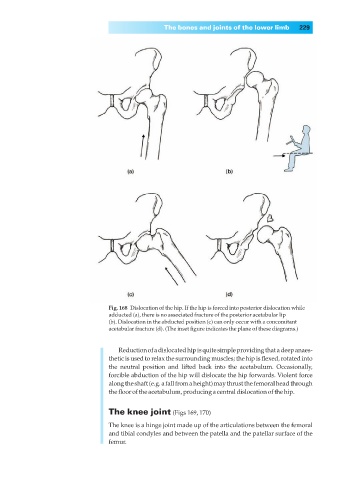
                                        Fig. 168◊Dislocation of the hip. If the hip is forced into posterior dislocation while
                                        adducted (a), there is no associated fracture of the posterior acetabular lip
                                        (b). Dislocation in the abducted position (c) can only occur with a concomitant
                                        acetabular fracture (d). (The inset figure indicates the plane of these diagrams.)


                                          Reduction of a dislocated hip is quite simple providing that a deep anaes-
                                        thetic is used to relax the surrounding muscles; the hip is flexed, rotated into
                                        the neutral position and lifted back into the acetabulum. Occasionally,
                                        forcible abduction of the hip will dislocate the hip forwards. Violent force
                                        along the shaft (e.g. a fall from a height) may thrust the femoral head through
                                        the floor of the acetabulum, producing a central dislocation of the hip.


                                        The knee joint (Figs 169, 170)
                                        The knee is a hinge joint made up of the articulations between the femoral
                                        and tibial condyles and between the patella and the patellar surface of the
                                        femur.

