


Page 25 - Clinical Anatomy
P. 25
ECA1  7/18/06  6:31 PM  Page 10


                 10  The Thorax


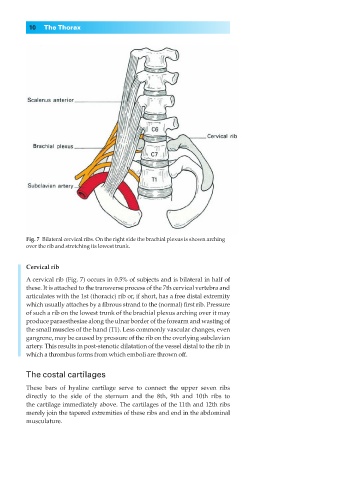
                Fig. 7◊Bilateral cervical ribs. On the right side the brachial plexus is shown arching
                over the rib and stretching its lowest trunk.


                Cervical rib
                A cervical rib (Fig. 7) occurs in 0.5% of subjects and is bilateral in half of
                these. It is attached to the transverse process of the 7th cervical vertebra and
                articulates with the 1st (thoracic) rib or, if short, has a free distal extremity
                which usually attaches by a fibrous strand to the (normal) first rib. Pressure
                of such a rib on the lowest trunk of the brachial plexus arching over it may
                produce paraesthesiae along the ulnar border of the forearm and wasting of
                the small muscles of the hand (T1). Less commonly vascular changes, even
                gangrene, may be caused by pressure of the rib on the overlying subclavian
                artery. This results in post-stenotic dilatation of the vessel distal to the rib in
                which a thrombus forms from which emboli are thrown off.

                The costal cartilages

                These bars of hyaline cartilage serve to connect the upper seven ribs
                directly to the side of the sternum and the 8th, 9th and 10th ribs to
                the cartilage immediately above. The cartilages of the 11th and 12th ribs
                merely join the tapered extremities of these ribs and end in the abdominal
                musculature.

