


Page 322 - Clinical Anatomy
P. 322
ECA5  7/18/06  6:51 PM  Page 307


                                                                The lymph nodes of the neck    307


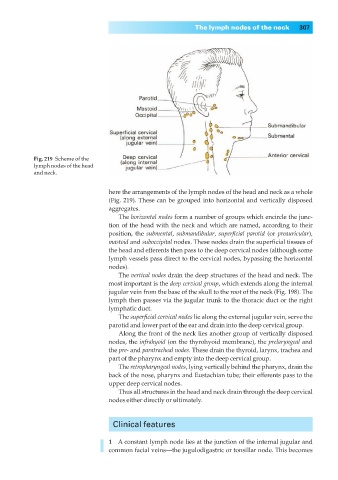
                  Fig. 219◊Scheme of the
                  lymph nodes of the head
                  and neck.

                                        here the arrangements of the lymph nodes of the head and neck as a whole
                                        (Fig. 219). These can be grouped into horizontal and vertically disposed
                                        aggregates.
                                          The horizontal nodes form a number of groups which encircle the junc-
                                        tion of the head with the neck and which are named, according to their
                                        position, the submental, submandibular, superficial parotid (or preauricular),
                                        mastoid and suboccipital nodes. These nodes drain the superficial tissues of
                                        the head and efferents then pass to the deep cervical nodes (although some
                                        lymph vessels pass direct to the cervical nodes, bypassing the horizontal
                                        nodes).
                                          The vertical nodes drain the deep structures of the head and neck. The
                                        most important is the deep cervical group, which extends along the internal
                                        jugular vein from the base of the skull to the root of the neck (Fig. 198). The
                                        lymph then passes via the jugular trunk to the thoracic duct or the right
                                        lymphatic duct.
                                          The superficial cervical nodes lie along the external jugular vein, serve the
                                        parotid and lower part of the ear and drain into the deep cervical group.
                                          Along the front of the neck lies another group of vertically disposed
                                        nodes, the infrahyoid (on the thyrohyoid membrane), the prelaryngeal and
                                        the pre- and paratracheal nodes. These drain the thyroid, larynx, trachea and
                                        part of the pharynx and empty into the deep cervical group.
                                          The retropharyngeal nodes, lying vertically behind the pharynx, drain the
                                        back of the nose, pharynx and Eustachian tube; their efferents pass to the
                                        upper deep cervical nodes.
                                          Thus all structures in the head and neck drain through the deep cervical
                                        nodes either directly or ultimately.


                                         Clinical features


                                        1◊◊A constant lymph node lies at the junction of the internal jugular and
                                        common facial veins—the jugulodigastric or tonsillar node. This becomes

