


Page 397 - Clinical Anatomy
P. 397
ECA6  7/18/06  6:54 PM  Page 382


                 382  The central nervous system


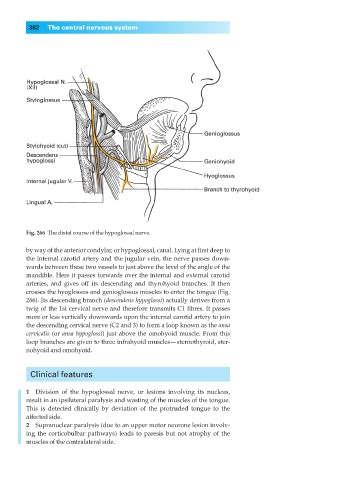
                Fig. 266◊The distal course of the hypoglossal nerve.

                by way of the anterior condylar, or hypoglossal, canal. Lying at first deep to
                the internal carotid artery and the jugular vein, the nerve passes down-
                wards between these two vessels to just above the level of the angle of the
                mandible. Here it passes forwards over the internal and external carotid
                arteries, and gives off its descending and thyrohyoid branches. It then
                crosses the hyoglossus and genioglossus muscles to enter the tongue (Fig.
                266). Its descending branch (descendens hypoglossi) actually derives from a
                twig of the 1st cervical nerve and therefore transmits C1 fibres. It passes
                more or less vertically downwards upon the internal carotid artery to join
                the descending cervical nerve (C2 and 3) to form a loop known as the ansa
                cervicalis (or ansa hypoglossi) just above the omohyoid muscle. From this
                loop branches are given to three infrahyoid muscles— sternothyroid, ster-
                nohyoid and omohyoid.


                 Clinical features

                1◊◊Division of the hypoglossal nerve, or lesions involving its nucleus,
                result in an ipsilateral paralysis and wasting of the muscles of the tongue.
                This is detected clinically by deviation of the protruded tongue to the
                affected side.
                2◊◊Supranuclear paralysis (due to an upper motor neurone lesion involv-
                ing the corticobulbar pathways) leads to paresis but not atrophy of the
                muscles of the contralateral side.

