


Page 234 - Clinical Application of Mechanical Ventilation
P. 234
200    Chapter 7


                                            Oronasal mask


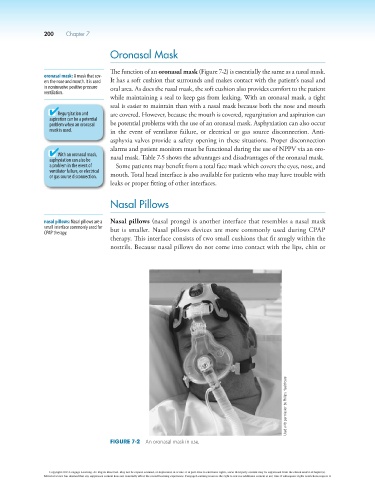
                                            The function of an oronasal mask (Figure 7-2) is essentially the same as a nasal mask.
                      oronasal mask: A mask that cov-
                      ers the nose and mouth. It is used   It has a soft cushion that surrounds and makes contact with the patient’s nasal and
                      in noninvasive positive pressure   oral area. As does the nasal mask, the soft cushion also provides comfort to the patient
                      ventilation.
                                            while maintaining a seal to keep gas from leaking. With an oronasal mask, a tight
                                            seal is easier to maintain than with a nasal mask because both the nose and mouth
                          Regurgitation and   are covered. However, because the mouth is covered, regurgitation and aspiration can
                        aspiration can be a potential
                        problem when an oronasal   be potential problems with the use of an oronasal mask. Asphyxiation can also occur
                        mask is used.       in  the  event  of  ventilator  failure,  or  electrical  or  gas  source  disconnection.  Anti-
                                            asphyxia valves provide a safety opening in these situations. Proper disconnection
                                            alarms and patient monitors must be functional during the use of NPPV via an oro-
                          With an oronasal mask,   nasal mask. Table 7-5 shows the advantages and disadvantages of the oronasal mask.
                        asphyxiation can also be
                        a problem in the event of   Some patients may benefit from a total face mask which covers the eyes, nose, and
                        ventilator failure, or electrical
                        or gas source disconnection.  mouth. Total head interface is also available for patients who may have trouble with
                                            leaks or proper fitting of other interfaces.

                                            Nasal Pillows


                      nasal pillows: Nasal pillows are a   Nasal pillows (nasal prongs) is another interface that resembles a nasal mask
                      small interface commonly used for   but is smaller. Nasal pillows devices are more commonly used during CPAP
                      CPAP therapy.
                                            therapy. This interface consists of two small cushions that fit snugly within the
                                            nostrils. Because nasal pillows do not come into contact with the lips, chin or


                                                                                                     Used with permission by Philips Healthcare


                                            Figure 7-2  An oronasal mask in use.


                        Copyright 2013 Cengage Learning. All Rights Reserved. May not be copied, scanned, or duplicated, in whole or in part. Due to electronic rights, some third party content may be suppressed from the eBook and/or eChapter(s).
                      Editorial review has deemed that any suppressed content does not materially affect the overall learning experience. Cengage Learning reserves the right to remove additional content at any time if subsequent rights restrictions require it.

