


Page 256 - Clinical Application of Mechanical Ventilation
P. 256
222    Chapter 8


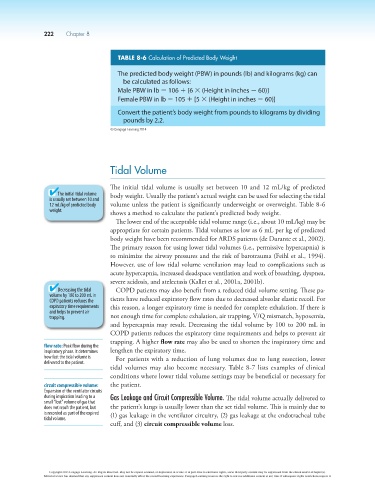
                                              TABLE 8-6 Calculation of Predicted Body Weight

                                              The	predicted	body	weight	(PBW)	in	pounds	(lb)	and	kilograms	(kg)	can
                                                be	calculated	as	follows:
                                              Male	PBW	in	lb	5	106	1	[6	3	(Height	in	inches	2	60)]
                                              Female	PBW	in	lb	5	105	1	[5	3	(Height	in	inches	2	60)]
                                              Convert	the	patient’s	body	weight	from	pounds	to	kilograms	by	dividing
                                                pounds	by	2.2.
                                            © Cengage Learning 2014


                                            Tidal Volume


                                            The initial tidal volume is usually set between 10 and 12 mL/kg of predicted
                          The initial tidal volume   body weight. Usually the patient’s actual weight can be used for selecting the tidal
                        is usually set between 10 and
                        12 mL/kg of predicted body   volume unless the patient is significantly underweight or overweight. Table 8-6
                        weight.             shows a method to calculate the patient’s predicted body weight.
                                             The lower end of the acceptable tidal volume range (i.e., about 10 mL/kg) may be
                                            appropriate for certain patients. Tidal volumes as low as 6 mL per kg of predicted
                                            body weight have been recommended for ARDS patients (de Durante et al., 2002).
                                            The primary reason for using lower tidal volumes (i.e., permissive hypercapnia) is
                                            to minimize the airway pressures and the risk of barotrauma (Feihl et al., 1994).
                                            However, use of low tidal volume ventilation may lead to complications such as
                                            acute hypercapnia, increased deadspace ventilation and work of breathing, dyspnea,
                                            severe acidosis, and atelectasis (Kallet et al., 2001a, 2001b).
                          Decreasing the tidal   COPD patients may also benefit from a reduced tidal volume setting. These pa-
                        volume by 100 to 200 mL in
                        COPD patients reduces the   tients have reduced expiratory flow rates due to decreased alveolar elastic recoil. For
                        expiratory time requirements   this reason, a longer expiratory time is needed for complete exhalation. If there is
                        and helps to prevent air
                        trapping.           not enough time for complete exhalation, air trapping, V/Q mismatch, hypoxemia,
                                            and hypercapnia may result. Decreasing the tidal volume by 100 to 200 mL in
                                            COPD patients reduces the expiratory time requirements and helps to prevent air
                                            trapping. A higher flow rate may also be used to shorten the inspiratory time and
                      flow rate: Peak flow during the
                      inspiratory phase. It determines   lengthen the expiratory time.
                      how fast the tidal volume is   For patients with a reduction of lung volumes due to lung resection, lower
                      delivered to the patient.
                                            tidal volumes may also become necessary. Table 8-7 lists examples of clinical
                                            conditions where lower tidal volume settings may be beneficial or necessary for
                      circuit compressible volume:   the patient.
                      Expansion of the ventilator circuits
                      during inspiration leading to a   Gas Leakage and Circuit Compressible Volume. The tidal volume actually delivered to
                      small “lost” volume of gas that
                      does not reach the patient, but   the patient’s lungs is usually lower than the set tidal volume. This is mainly due to
                      is recorded as part of the expired   (1) gas leakage in the ventilator circuitry, (2) gas leakage at the endotracheal tube
                      tidal volume.
                                            cuff, and (3) circuit compressible volume loss.


                        Copyright 2013 Cengage Learning. All Rights Reserved. May not be copied, scanned, or duplicated, in whole or in part. Due to electronic rights, some third party content may be suppressed from the eBook and/or eChapter(s).
                      Editorial review has deemed that any suppressed content does not materially affect the overall learning experience. Cengage Learning reserves the right to remove additional content at any time if subsequent rights restrictions require it.

