


Page 258 - Clinical Application of Mechanical Ventilation
P. 258
224    Chapter 8


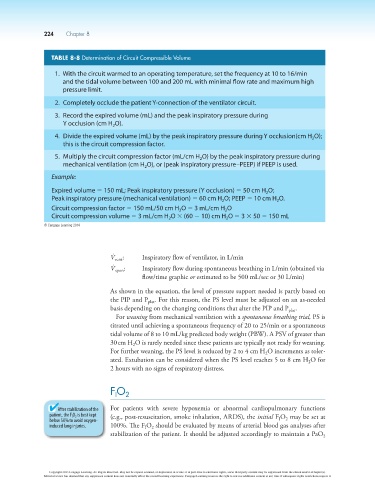
                        TABLE 8-8 Determination of Circuit Compressible Volume

                        	 1.	 	With	the	circuit	warmed	to	an	operating	temperature,	set	the	frequency	at	10	to	16/min
                            and	the	tidal	volume	between	100	and	200	mL	with	minimal	flow	rate	and	maximum	high
                            pressure	limit.
                        	 2.	 	Completely	occlude	the	patient	Y-connection	of	the	ventilator	circuit.

                        	 3.	 	Record	the	expired	volume	(mL)	and	the	peak	inspiratory	pressure	during
                            Y	occlusion	(cm	H O).
                                            2
                        	 4.	 	Divide	the	expired	volume	(mL)	by	the	peak	inspiratory	pressure	during	Y	occlusion(cm	H O);
                                                                                                             2
                            this	is	the	circuit	compression	factor.
                        	 5.	 	Multiply	the	circuit	compression	factor	(mL/cm	H O)	by	the	peak	inspiratory	pressure	during
                                                                         2
                            mechanical	ventilation	(cm	H O),	or	(peak	inspiratory	pressure–PEEP)	if	PEEP	is	used.
                                                       2
                        Example:

                        Expired	volume	5	150	mL;	Peak	inspiratory	pressure	(Y	occlusion)	5	50	cm	H O;
                                                                                              2
                        Peak	inspiratory	pressure	(mechanical	ventilation)	5	60	cm	H O;	PEEP	5	10	cm	H O.
                                                                                                  2
                                                                                2
                        Circuit	compression	factor	5	150	mL/50	cm	H O	5	3	mL/cm	H O
                                                                                 2
                                                                  2
                        Circuit	compression	volume	5	3	mL/cm	H O	3	(60	2	10)	cm	H O	5	3	3	50	5	150	mL
                                                               2
                                                                                 2
                      © Cengage Learning 2014
                                            #
                                            V     vent :   Inspiratory flow of ventilator, in L/min
                                            #
                                            V      spon :      Inspiratory flow during spontaneous breathing in L/min (obtained via
                                                      flow/time graphic or estimated to be 500 mL/sec or 30 L/min)

                                            As shown in the equation, the level of pressure support needed is partly based on
                                            the PIP and P . For this reason, the PS level must be adjusted on an as-needed
                                                        plat
                                            basis depending on the changing conditions that alter the PIP and P .
                                                                                                      plat
                                             For weaning from mechanical ventilation with a spontaneous breathing trial, PS is
                                            titrated until achieving a spontaneous frequency of 20 to 25/min or a spontaneous
                                            tidal volume of 8 to 10 mL/kg predicted body weight (PBW). A PSV of greater than
                                            30 cm H O is rarely needed since these patients are typically not ready for weaning.
                                                   2
                                            For further weaning, the PS level is reduced by 2 to 4 cm H O increments as toler-
                                                                                              2
                                            ated. Extubation can be considered when the PS level reaches 5 to 8 cm H O for
                                                                                                            2
                                            2 hours with no signs of respiratory distress.

                                            F O  2
                                             I

                          After stabilization of the   For  patients  with  severe  hypoxemia  or  abnormal  cardiopulmonary  functions
                        patient, the F I O 2  is best kept   (e.g., post-resuscitation, smoke inhalation, ARDS), the initial F O  may be set at
                        below 50% to avoid oxygen-                                                 I  2
                        induced lung injuries.  100%. The F O  should be evaluated by means of arterial blood gas analyses after
                                                         2
                                                       I
                                            stabilization of the patient. It should be adjusted accordingly to maintain a PaO
                                                                                                                 2


                        Copyright 2013 Cengage Learning. All Rights Reserved. May not be copied, scanned, or duplicated, in whole or in part. Due to electronic rights, some third party content may be suppressed from the eBook and/or eChapter(s).
                      Editorial review has deemed that any suppressed content does not materially affect the overall learning experience. Cengage Learning reserves the right to remove additional content at any time if subsequent rights restrictions require it.

