


Page 278 - Clinical Application of Mechanical Ventilation
P. 278
244    Chapter 9


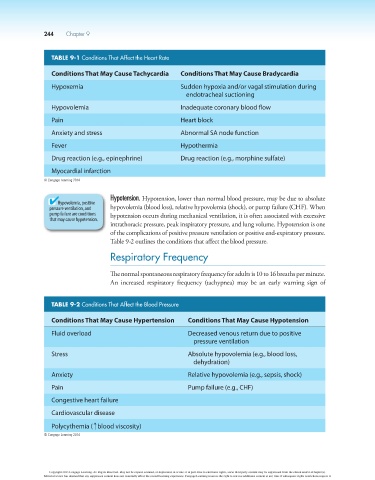
                        TABLE 9-1 Conditions That Affect the Heart Rate

                        Conditions That May Cause Tachycardia      Conditions That May Cause Bradycardia

                        Hypoxemia                                  Sudden hypoxia and/or vagal stimulation during
                                                                    endotracheal suctioning
                        Hypovolemia                                Inadequate coronary blood flow

                        Pain                                       Heart block
                        Anxiety and stress                         Abnormal SA node function

                        Fever                                      Hypothermia

                        Drug reaction (e.g., epinephrine)          Drug reaction (e.g., morphine sulfate)
                        Myocardial infarction
                      © Cengage Learning 2014


                                            Hypotension. Hypotension, lower than normal blood pressure, may be due to absolute
                          Hypovolemia, positive
                        pressure ventilation, and   hypovolemia (blood loss), relative hypovolemia (shock), or pump failure (CHF). When
                        pump failure are conditions   hypotension occurs during mechanical ventilation, it is often associated with excessive
                        that may cause hypotension.
                                            intrathoracic pressure, peak inspiratory pressure, and lung volume. Hypotension is one
                                            of the complications of positive pressure ventilation or positive end-expiratory pressure.
                                            Table 9-2 outlines the conditions that affect the blood pressure.

                                            Respiratory Frequency


                                            The normal spontaneous respiratory frequency for adults is 10 to 16 breaths per minute.
                                            An  increased  respiratory  frequency  (tachypnea)  may  be  an  early  warning  sign  of


                        TABLE 9-2 Conditions That Affect the Blood Pressure

                        Conditions That May Cause Hypertension       Conditions That May Cause Hypotension
                        Fluid overload                               Decreased venous return due to positive
                                                                       pressure ventilation

                        Stress                                       Absolute hypovolemia (e.g., blood loss,
                                                                       dehydration)

                        Anxiety                                      Relative hypovolemia (e.g., sepsis, shock)
                        Pain                                         Pump failure (e.g., CHF)

                        Congestive heart failure

                        Cardiovascular disease
                        Polycythemia (cblood viscosity)
                      © Cengage Learning 2014


                        Copyright 2013 Cengage Learning. All Rights Reserved. May not be copied, scanned, or duplicated, in whole or in part. Due to electronic rights, some third party content may be suppressed from the eBook and/or eChapter(s).
                      Editorial review has deemed that any suppressed content does not materially affect the overall learning experience. Cengage Learning reserves the right to remove additional content at any time if subsequent rights restrictions require it.

