


Page 88 - Clinical Application of Mechanical Ventilation
P. 88
54     Chapter 3


                                                                                                            © Cengage Learning 2014


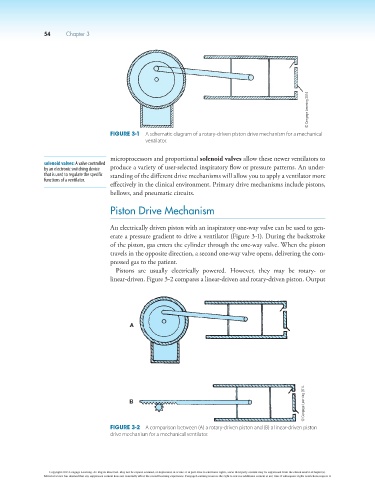
                                            Figure 3-1   A schematic diagram of a rotary-driven piston drive mechanism for a mechanical
                                                       ventilator.


                                            microprocessors and proportional solenoid valves allow these newer ventilators to
                      solenoid valves: A valve controlled
                      by an electronic switching device   produce a variety of user-selected inspiratory flow or pressure patterns. An under-
                      that is used to regulate the specific   standing of the different drive mechanisms will allow you to apply a ventilator more
                      functions of a ventilator.
                                            effectively in the clinical environment. Primary drive mechanisms include pistons,
                                            bellows, and pneumatic circuits.

                                            Piston Drive Mechanism


                                            An electrically driven piston with an inspiratory one-way valve can be used to gen-
                                            erate a pressure gradient to drive a ventilator (Figure 3-1). During the backstroke
                                            of the piston, gas enters the cylinder through the one-way valve. When the piston
                                            travels in the opposite direction, a second one-way valve opens, delivering the com-
                                            pressed gas to the patient.
                                             Pistons  are  usually  electrically  powered.  However,  they  may  be  rotary-  or
                                            linear-driven. Figure 3-2 compares a linear-driven and rotary-driven piston. Output


                                                                                                           © Cengage Learning 2014


                                            Figure 3-2  A comparison between (A) a rotary-driven piston and (B) a linear-driven piston
                                            drive mechanism for a mechanical ventilator.


                        Copyright 2013 Cengage Learning. All Rights Reserved. May not be copied, scanned, or duplicated, in whole or in part. Due to electronic rights, some third party content may be suppressed from the eBook and/or eChapter(s).
                      Editorial review has deemed that any suppressed content does not materially affect the overall learning experience. Cengage Learning reserves the right to remove additional content at any time if subsequent rights restrictions require it.

