


Page 91 - Clinical Application of Mechanical Ventilation
P. 91
Classification of Mechanical Ventilators  57


                                                                                                            © Cengage Learning 2014


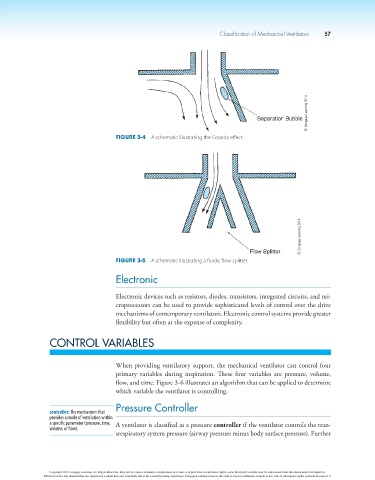
                                             Figure 3-4  A schematic illustrating the Coanda effect.


                                                                                                          © Cengage Learning 2014


                                             Figure 3-5  A schematic illustrating a fluidic flow splitter.

                                             Electronic


                                             Electronic devices such as resistors, diodes, transistors, integrated circuits, and mi-
                                             croprocessors can be used to provide sophisticated levels of control over the drive
                                             mechanisms of contemporary ventilators. Electronic control systems provide greater
                                             flexibility but often at the expense of complexity.


                        CONTROL VARIABLES


                                             When providing ventilatory support, the mechanical ventilator can control four
                                             primary  variables  during  inspiration.  These  four  variables  are  pressure,  volume,
                                             flow, and time. Figure 3-6 illustrates an algorithm that can be applied to determine
                                             which variable the ventilator is controlling.

                                             Pressure Controller
                        controller: The mechanism that
                        provides a mode of ventilation within
                        a specific parameter (pressure, time,   A ventilator is classified as a pressure controller if the ventilator controls the tran-
                        volume, or flow).
                                             srespiratory system pressure (airway pressure minus body surface pressure). Further


                        Copyright 2013 Cengage Learning. All Rights Reserved. May not be copied, scanned, or duplicated, in whole or in part. Due to electronic rights, some third party content may be suppressed from the eBook and/or eChapter(s).
                      Editorial review has deemed that any suppressed content does not materially affect the overall learning experience. Cengage Learning reserves the right to remove additional content at any time if subsequent rights restrictions require it.

