


Page 35 - Color Atlas Of Pathophysiology (S Silbernagl Et Al, Thieme 2000)
P. 35
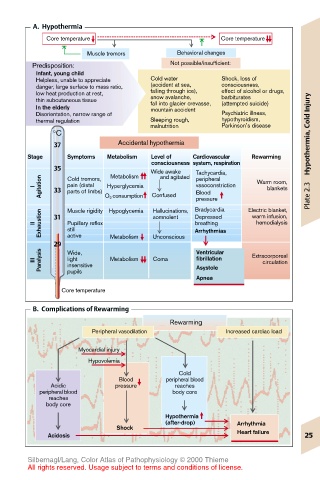
A.  Hypothermia
           Core temperature                        Core temperature
                     Muscle tremors      Behavioral changes
        Predisposition:                Not possible/insufficient:
         Infant, young child
         Helpless, unable to appreciate  Cold water  Shock, loss of
         danger, large surface to mass ratio,  (accident at sea,  consciousness,
         low heat production at rest,  falling through ice),  effect of alcohol or drugs,
         thin subcutaneous tissue  snow avalanche,  barbiturates
                                                   (attempted suicide)
                                   fall into glacier crevasse,
         In the elderly            mountain accident
         Disorientation, narrow range of           Psychiatric illness,
         thermal regulation        Sleeping rough,  hypothyroidism,
                                   malnutrition    Parkinson’s disease
             °C                                                        Hypothermia, Cold Injury
             37             Accidental hypothermia
       Stage    Symptoms  Metabolism  Level of  Cardiovascular  Rewarming
                                   consciousness system, respiration
             35           Metabolism  Wide awake  Tachycardia,
                                         and agitated
                pain (distal
                                             vasoconstriction
                         Hyperglycemia
                                                             blankets
         I  Agitation  33  Cold tremors,  O 2  consumption  Confused  peripheral  Warm room,  Plate 2.3
                parts of limbs)
                                             Blood
                                             pressure
          Exhaustion  31  Muscle rigidity  Hypoglycemia  Hallucinations,  Bradycardia  Electric blanket,
                                                          warm infusion,
                                   somnolent
                                             Depressed
                                                           hemodialysis
                                             breathing
                Pupillary reflex
         II     still                        Arrhythmias
             29  active   Metabolism  Unconscious  Ventricular
                light
         III  Paralysis  Wide,  Metabolism  Coma  fibrillation  Extracorporeal
                                                            circulation
                insensitive
                                             Asystole
                pupils
                                             Apnea
               Core temperature
        B.  Complications of Rewarming
                                       Rewarming
                      Peripheral vasodilation       Increased cardiac load
                   Myocardial injury
                     Hypovolemia
                                         Cold
                            Blood     peripheral blood
            Acidic         pressure     reaches
          peripheral blood              body core
            reaches
           body core
                                      Hypothermia
                                      (after-drop)    Arrhythmia
                           Shock
            Acidosis                                  Heart failure   25
       Silbernagl/Lang, Color Atlas of Pathophysiology © 2000 Thieme
       All rights reserved. Usage subject to terms and conditions of license.

