


Page 489 - ACCCN's Critical Care Nursing
P. 489
466  P R I N C I P L E S   A N D   P R A C T I C E   O F   C R I T I C A L   C A R E


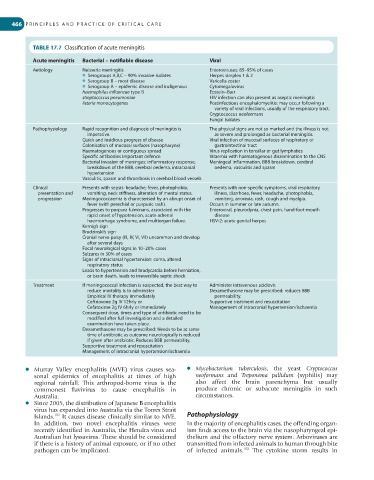
            TABLE 17.7  Classification of acute meningitis

            Acute meningitis  Bacterial – notifiable disease          Viral
            Aetiology       Neisseria meningitis                      Enteroviruses: 85–95% of cases
                            ●  Serogroups A,B,C – 90% invasive isolates  Herpes simplex 1 & 2
                            ●  Serogroup B – most disease             Varicella zoster
                            ●  Serogroup A – epidemic disease and indigenous  Cytomegalovirus
                            haemophilus influenzae type B             Epstein–Barr
                            streptococcus pneumoniae                  HIV infection can also present as aseptic meningitis
                            listeria monocytogenes                    Postinfectious encephalomyelitis: may occur following a
                                                                       variety of viral infections, usually of the respiratory tract.
                                                                      Cryptococcus neoformans
                                                                      Fungal isolates
            Pathophysiology  Rapid recognition and diagnosis of meningitis is   The physical signs are not so marked and the illness is not
                              imperative.                              as severe and prolonged as bacterial meningitis.
                            Quick and insidious progress of disease   Viral infection of mucosal surfaces of respiratory or
                            Colonisation of mucosal surfaces (nasopharynx)  gastrointestinal tract
                            Haematogenous or contiguous spread        Virus replication in tonsillar or gut lymphatics
                            Specific antibodies important defence     Viraemia with haematogenous dissemination to the CNS
                            Bacterial invasion of meninges: inflammatory response,   Meningeal inflammation, BBB breakdown, cerebral
                              breakdown of the BBB, cerebral oedema, intracranial   oedema, vasculitis and spasm
                              hypertension
                            Vasculitis, spasm and thrombosis in cerebral blood vessels
            Clinical        Presents with sepsis: headache, fever, photophobia,   Presents with non-specific symptoms, viral respiratory
             presentation and   vomiting, neck stiffness, alteration of mental status.  illness, diarrhoea, fever, headache, photophobia,
             progression    Meningococcaemia is characterised by an abrupt onset of   vomiting, anorexia, rash, cough and myalgia.
                              fever (with petechial or purpuric rash).  Occurs in summer or late autumn.
                            Progresses to purpura fulminans, associated with the   Enteroviral, pleurodynia, chest pain, hand-foot-mouth
                              rapid onset of hypotension, acute adrenal   disease
                              haemorrhage syndrome, and multiorgan failure.  HSV-2: acute genital herpes
                            Kernig’s sign
                            Brudzinski’s sign
                            Cranial nerve palsy (III, IV, VI, VII) uncommon and develop
                              after several days
                            Focal neurological signs in 10–20% cases
                            Seizures in 30% of cases
                            Signs of intracranial hypertension: coma, altered
                              respiratory status
                            Leads to hypertension and bradycardia before herniation,
                              or brain death, leads to irreversible septic shock
            Treatment       If meningococcal infection is suspected, the best way to   Administer intravenous aciclovir.
                              reduce mortality is to administer       Dexamethasone may be prescribed: reduces BBB
                              Empirical IV therapy immediately         permeability.
                              Ceftriaxone 2g IV 12hrly or             Supportive treatment and resuscitation
                              Cefatoxime 2g IV 6hrly or immediately   Management of intracranial hypertension/ischaemia
                            Consequent dose, times and type of antibiotic need to be
                              modified after full investigation and a detailed
                              examination have taken place.
                            Dexamethasone may be prescribed: Needs to be at same
                              time of antibiotic as outcome neurologically is reduced
                              if given after antibiotic. Reduces BBB permeability.
                            Supportive treatment and resuscitation
                            Management of intracranial hypertension/ischaemia


         ●  Murray  Valley  encephalitis  (MVE)  virus  causes  sea-  ●  Mycobacterium  tuberculosis,  the  yeast  Cryptococcus
            sonal  epidemics  of  encephalitis  at  times  of  high   neoformans  and  Treponema  pallidum  (syphilis)  may
            regional  rainfall.  This  arthropod-borne  virus  is  the   also  affect  the  brain  parenchyma  but  usually
            commonest  flavivirus  to  cause  encephalitis  in   produce  chronic  or  subacute  meningitis  in  such
            Australia.                                           circumstances.
         ●  Since 2005, the distribution of Japanese B ence phalitis
            virus has expanded into Australia via the Torres Strait
                   102
            Islands.  It causes disease clinically similar to MVE.   Pathophysiology
            In  addition,  two  novel  encephalitis  viruses  were   In the majority of encephalitis cases, the offending organ-
            recently identified in Australia, the Hendra virus and   ism finds access to the brain via the nasopharyngeal epi-
            Australian bat lyssavirus. These should be considered   thelium and the olfactory nerve system. Arboviruses are
            if there is a history of animal exposure, or if no other   transmitted from infected animals to human through bite
                                                                                 103
            pathogen can be implicated.                       of  infected  animals.   The  cytokine  storm  results  in

