


Page 756 - ACCCN's Critical Care Nursing
P. 756
Pregnancy and Postpartum Considerations 733


               FHR
               FHR


               UA
               UA
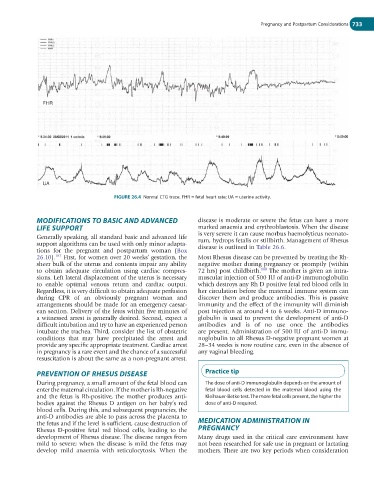
                                      FIGURE 26.4  Normal CTG trace. FHR = fetal heart rate; UA = uterine activity.


             MODIFICATIONS TO BASIC AND ADVANCED                  disease is moderate or severe the fetus can have a more
             LIFE SUPPORT                                         marked anaemia and erythroblastosis. When the disease
             Generally speaking, all standard basic and advanced life   is very severe it can cause morbus haemolyticus neonato-
                                                                  rum, hydrops fetalis or stillbirth. Management of Rhesus
             support algorithms can be used with only minor adapta-  disease is outlined in Table 26.6.
             tions  for  the  pregnant  and  postpartum  woman  (Box
             26.10). 187  First, for women over 20 weeks’ gestation, the   Most Rhesus disease can be prevented by treating the Rh-
             sheer bulk of the uterus and contents impair any ability   negative mother during pregnancy or promptly (within
             to  obtain  adequate  circulation  using  cardiac  compres-  72 hrs) post childbirth. 188  The mother is given an intra-
             sions. Left lateral displacement of the uterus is necessary   muscular injection of 500 IU of anti-D immunoglobulin
             to  enable  optimal  venous  return  and  cardiac  output.   which destroys any Rh D positive fetal red blood cells in
             Regardless, it is very difficult to obtain adequate perfusion   her circulation before the maternal immune system can
             during  CPR  of  an  obviously  pregnant  woman  and     discover  them  and  produce  antibodies.  This  is  passive
             arrangements should be made for an emergency caesar-  immunity and the effect of the immunity will diminish
             ean section. Delivery of the fetus within five minutes of   post injection at around 4 to 6 weeks. Anti-D immuno-
             a witnessed arrest is generally desired. Second, expect a   globulin  is  used  to  prevent  the  development  of  anti-D
             difficult intubation and try to have an experienced person   antibodies  and  is  of  no  use  once  the  antibodies
             intubate the trachea. Third, consider the list of obstetric   are present. Administration of 500 IU of anti-D immu-
             conditions  that  may  have  precipitated  the  arrest  and   noglobulin to all Rhesus D-negative pregnant women at
             provide any specific appropriate treatment. Cardiac arrest   28–34 weeks is now routine care, even in the absence of
             in pregnancy is a rare event and the chance of a successful   any vaginal bleeding.
             resuscitation is about the same as a non-pregnant arrest.

             PREVENTION OF RHESUS DISEASE                           Practice tip
             During pregnancy, a small amount of the fetal blood can   The dose of anti-D immunoglobulin depends on the amount of
             enter the maternal circulation. If the mother is Rh-negative   fetal  blood  cells  detected  in  the  maternal  blood  using  the
             and the fetus is Rh-positive, the mother produces anti-  Kleihauer-Betke test. The more fetal cells present, the higher the
             bodies against the Rhesus D antigen on her baby’s red   dose of anti-D required.
             blood cells. During this, and subsequent pregnancies, the
             anti-D antibodies are able to pass across the placenta to
             the fetus and if the level is sufficient, cause destruction of   MEDICATION ADMINISTRATION IN
             Rhesus  D-positive  fetal  red  blood  cells,  leading  to  the   PREGNANCY
             development of Rhesus disease. The disease ranges from   Many  drugs  used  in  the  critical  care  environment  have
             mild to severe; when the disease is mild the fetus may   not been researched for safe use in pregnant or lactating
             develop  mild  anaemia  with  reticulocytosis.  When  the   mothers. There are two key periods when consideration

