


Page 220 - Concise Pathology for Exam Preparation ( PDFDrive )
P. 220
8  Genetic and Paediatric Disorders  205


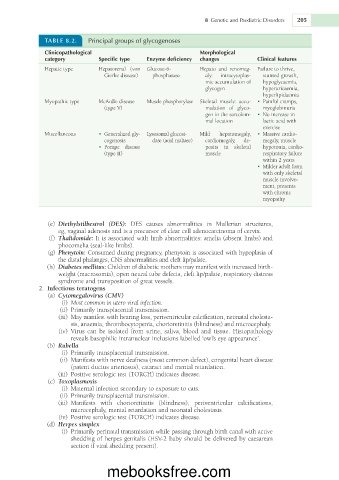
               TABLE 8.2.   Principal groups of glycogenoses

               Clinicopathological                             Morphological
               category        Specific type   Enzyme deficiency  changes       Clinical features
               Hepatic type    Hepatorenal  (von  Glucose-6-   Hepato  and  renomeg-  Failure to thrive,
                                 Gierke disease)  phosphatase   aly:   intracytoplas-  stunted growth,
                                                                mic accumulation of   hypoglycaemia,
                                                                glycogen          hyperuricaemia,
                                                                                  hyperlipidaemia
               Myopathic type  McArdle disease   Muscle phosphorylase  Skeletal  muscle:  accu-  •  Painful cramps,
                                 (type V)                       mulation  of  glyco-  myoglobinuria
                                                                gen in the sarcolem-  •  No increase in
                                                                mal location      lactic acid with
                                                                                  exercise
               Miscellaneous   •  Generalized gly-  Lysosomal glucosi-  Mild   hepatomegaly,  •  Massive cardio-
                                 cogenosis      dase (acid maltase)  cardiomegaly,   de-  megaly, muscle
                               •  Pompe  disease                posits  in  skeletal   hypotonia, cardio-
                                 (type II)                      muscle            respiratory failure
                                                                                  within 2 years
                                                                                •  Milder adult form
                                                                                  with only skeletal
                                                                                  muscle involve-
                                                                                  ment, presents
                                                                                  with chronic
                                                                                  myopathy


                 (e)  Diethylstilbestrol  (DES):  DES  causes  abnormalities  in  Mullerian  structures,
                   eg, vaginal adenosis and is a precursor of clear cell adenocarcinoma of cervix.
                 (f)  Thalidomide: It is associated with limb abnormalities: amelia (absent limbs) and
                   phocomelia (seal-like limbs).
                 (g)  Phenytoin: Consumed during pregnancy, phenytoin is associated with hypoplasia of
                   the distal phalanges, CNS abnormalities and cleft lip/palate.
                  (h)  Diabetes mellitus: Children of diabetic mothers may manifest with increased birth-
                   weight (macrosomia), open neural tube defects, cleft lip/palate, respiratory distress
                   syndrome and transposition of great vessels.
               2.  Infectious teratogens
                 (a)  Cytomegalovirus (CMV)
                     (i)  Most common in utero viral infection.
                    (ii)  Primarily transplacental transmission.
                    (iii)  May manifest with hearing loss, periventricular calcification, neonatal cholesta-
                       sis, anaemia, thrombocytopenia, chorioretinitis (blindness) and microcephaly.
                    (iv)  Virus  can  be  isolated  from  urine,  saliva,  blood  and  tissue.  Histopathology
                       reveals basophilic intranuclear inclusions labelled ‘owl’s eye appearance’.
                 (b)  Rubella
                     (i)  Primarily transplacental transmission.
                    (ii)  Manifests with nerve deafness (most common defect), congenital heart disease
                       (patent ductus arteriosus), cataract and mental retardation.
                     (iii)  Positive serologic test (TORCH) indicates disease.
                 (c)  Toxoplasmosis
                     (i)  Maternal infection secondary to exposure to cats.
                    (ii)  Primarily transplacental transmission.
                     (iii)  Manifests  with  chorioretinitis  (blindness),  periventricular  calcifications,
                       microcephaly, mental retardation and neonatal cholestasis.
                    (iv)  Positive serologic test (TORCH) indicates disease.
                  (d)  Herpes simplex
                     (i)  Primarily perinatal transmission while passing through birth canal with active
                       shedding of herpes genitalis (HSV-2 baby should be delivered by caesarean
                       section if viral shedding present).


                                  mebooksfree.com

