


Page 1154 - Hematology_ Basic Principles and Practice ( PDFDrive )
P. 1154
Chapter 64  Pathobiology of Acute Lymphoblastic Leukemia  1013


                                     MYB                          Aberrant Growth Factor Signaling
                                  CBP   RUNX1
                                            GATA3
                               TAL1                               BCR-ABL1 in B-Cell Acute Lymphoblastic
                                                                  Leukemia
                                                BRD4
                MYB binding motif            TAL1 coding sequence  The Ph chromosome, which arises from the t(9;22)(q34;q11), was
                                                                  originally identified in patients with CML; however, it is also found
                                                                  in about 2% of childhood cases and 20% of adult cases of ALL, which
                                                                                                         182
                                                                  are  almost  always  of  the  precursor  B-cell  subtype.   The  t(9;22)
                                          Mediator
                             Cohesin  RNA                         generates  a  BCR-ABL1  fusion  gene,  consisting  of  5′  (upstream)
                                   polymerase II                  sequences from BCR and 3′ (downstream) sequences of ABL1. The
                                                                  t(9;22) breakpoints on the distal tip of the long arm of chromosome
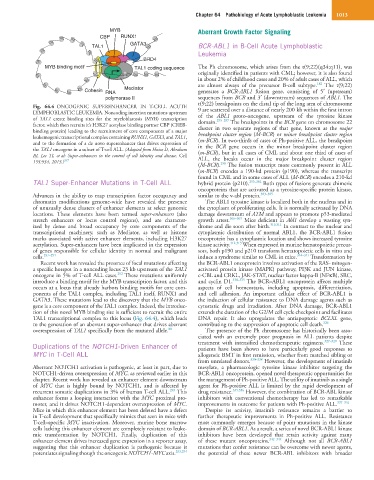
            Fig.  64.4  ONCOGENIC  SUPERENHANCER  IN  T-CELL  ACUTE   9 are scattered over a distance of nearly 200 kb within the first intron
            LYMPHOBLASTIC LEUKEMIA. Noncoding insertion mutations upstream   of  the  ABL1  proto-oncogene,  upstream  of  the  tyrosine  kinase
            of  TAL1  create  binding  sites  for  the  myeloblastosis  (MYB)  transcription   domain. 295–297  The breakpoints in the BCR gene on chromosome 22
            factor, which then recruits it’s H3K27 acetylase binding partner CBP (CREB-  cluster  in  two  separate  regions  of  that  gene,  known  as  the  major
            binding protein) leading to the recruitment of core components of a major   breakpoint cluster region (M-BCR) or minor breakpoint cluster region
            leukemogenic transcriptional complex containing RUNX1, GATA3, and TAL1,   (m-BCR). In two-thirds of cases of Ph-positive ALL, the breakpoint
            and to the formation of a de novo superenhancer that drives expression of   in  the  BCR  gene  occurs  in  the  minor  breakpoint  cluster  region
            the TAL1 oncogene in a subset of T-cell ALL. (Adapted from Hnisz D, Abraham   (m-BCR), but in all cases of CML and about one third of cases of
            BJ,  Lee TI,  et al:  Super-enhancers  in  the  control  of  cell  identity  and  disease.  Cell   ALL,  the  breaks  occur  in  the  major  breakpoint  cluster  region
            155:934, 2013.) 287                                          298
                                                                  (M-BCR).  The fusion transcript more commonly present in ALL
                                                                  (m-BCR) encodes a 190-kd protein (p190), whereas the transcript
                                                                  found in CML and in some cases of ALL (M-BCR) encodes a 210-kd
            TAL1 Super-Enhancer Mutations in T-Cell ALL           hybrid protein (p210). 299–302  Both types of fusions generate chimeric
                                                                  oncoproteins that are activated as a tyrosine-specific protein kinase,
            Advances in the ability to map transcription factor occupancy and   similar to the v-abl protein. 303–305
            chromatin  modifications  genome-wide  have  revealed  the  presence   The ABL1 tyrosine kinase is localized both in the nucleus and in
            of unusually dense clusters of enhancer elements at select genomic   the cytoplasm of proliferating cells. It is normally activated by DNA
            locations.  These  elements  have  been  termed  super-enhancers  (also   damage downstream of ATM and appears to promote p53-mediated
            stretch  enhancers  or  locus  control  regions),  and  are  character-  growth  arrest. 306–309   Mice  deficient  in  Abl1  develop  a  wasting  syn-
            ized  by  dense  and  broad  occupancy  by  core  components  of  the   drome and die soon after birth. 310,311  In contrast to the nuclear and
            transcriptional  machinery,  such  as  Mediator,  as  well  as  histone   cytoplasmic  distribution  of  normal  ABL1,  the  BCR-ABL1  fusion
            marks associated with active enhancer elements, including H3K27   oncoprotein has a cytoplasmic location and shows increased tyrosine
            acetylation. Super-enhancers have been implicated in the expression   kinase activity. 312,313  When expressed in murine hematopoietic precur-
            of genes responsible for cellular identity in normal and malignant     sors, both p190 and p210 transform hematopoietic cells in vitro and
            cells. 287–291                                        induce a syndrome similar to CML in mice. 314–317  Transformation by
              Recent work has revealed the presence of focal mutations affecting   the BCR-ABL1 oncoprotein involves activation of the RAS- mitogen-
            a specific hotspot in a noncoding locus 23 kb upstream of the TAL1   activated protein kinase (MAPK) pathway, PI3K and JUN kinase,
                                       292
            oncogene in 5% of T-cell ALL cases.  These mutations uniformly   c-CBL and CRKL, JAK-STAT, nuclear factor kappa-B (NFκB), SRC,
            introduce a binding motif for the MYB transcription factor, and this   and cyclin D1. 318–325  The BCR–ABL1 oncoprotein affects multiple
            occurs at a locus that already harbors binding motifs for core com-  aspects  of  cell  homeostasis,  including  apoptosis,  differentiation,
            ponents of the TAL1 complex, including TAL1 itself, RUNX1 and   and  cell  adhesion.  An  important  cellular  effect  of  BCR-ABL1  is
            GATA3. These mutations lead to the discovery that the MYB onco-  the induction of cellular resistance to DNA damage agents such as
            gene is a core component of the TAL1 complex. Indeed, the introduc-  cytostatic  drugs  and  irradiation.  After  DNA  damage,  BCR-ABL1
            tion of this novel MYB binding site is sufficient to recruit the entire   extends the duration of the G2/M cell cycle checkpoint and facilitates
            TAL1 transcriptional complex to this locus (Fig. 64.4), which leads   DNA  repair.  It  also  upregulates  the  antiapoptotic  BCLXL  gene,
            to the generation of an aberrant super-enhancer that drives aberrant   contributing to the suppression of apoptotic cell death. 326
            overexpression of TAL1 specifically from the mutated allele. 88  The presence of the Ph chromosome has historically been asso-
                                                                  ciated  with  an  extremely  poor  prognosis  in  ALL  patients  despite
                                                                                                           327–329
            Duplications of the NOTCH1-Driven Enhancer of         treatment  with  intensified  chemotherapeutic  regimens.   These
                                                                  patients  have  been  shown  to  have  particularly  good  responses  to
            MYC in T-Cell ALL                                     allogeneic BMT in first remission, whether from matched sibling or
                                                                  from unrelated donors. 330–334  However, the development of imatinib
            Aberrant NOTCH1 activation is pathogenic, at least in part, due to   mesylate,  a  pharmacologic  tyrosine  kinase  inhibitor  targeting  the
            NOTCH1-driven overexpression of MYC, as reviewed earlier in this   BCR-ABL1 oncoprotein, opened novel therapeutic opportunities for
            chapter. Recent work has revealed an enhancer element downstream   the management of Ph-positive ALL. The utility of imatinib as a single
            of  MYC  that  is  highly  bound  by  NOTCH1,  and  is  affected  by   agent  for  Ph-positive  ALL  is  limited  by  the  rapid  development  of
                                                         293
            recurrent somatic duplications in 3% of human T-cell ALL.  This   drug resistance. 335,336  However, the combination of BCR-ABL kinase
            enhancer forms a looping interaction with the MYC proximal pro-  inhibitors  with  conventional  chemotherapy  has  led  to  remarkable
            moter, and it drives NOTCH1-dependent overexpression of MYC.   improvements in outcome for patients with Ph-positive ALL. 337–341
            Mice in which this enhancer element has been deleted have a defect   Despite  its  activity,  imatinib  resistance  remains  a  barrier  to
            in T-cell development that specifically mimics that seen in mice with   further  therapeutic  improvements  in  Ph-positive  ALL.  Resistance
            T-cell–specific  MYC  inactivation.  Moreover,  murine  bone  marrow   most commonly emerges because of point mutations in the kinase
            cells lacking this enhancer element are completely resistant to leuke-  domain of BCR-ABL1. As a result, a series of novel BCR-ABL1 kinase
            mic  transformation  by  NOTCH1.  Finally,  duplication  of  this   inhibitors  have  been  developed  that  retain  activity  against  many
            enhancer element drives increased gene expression in a reporter assay,   of  these  mutant  oncoproteins. 342–344   Although  not  all  BCR-ABL1
            suggesting  that  this  enhancer  duplication  is  pathogenic  because  it   mutations that confer resistance can be overcome with newer agents,
            potentiates signaling though the oncogenic NOTCH1-MYC axis. 293,294  the  potential  of  these  newer  BCR-ABL  inhibitors  with  broader

