


Page 1153 - Hematology_ Basic Principles and Practice ( PDFDrive )
P. 1153
1012   Part VII  Hematologic Malignancies


                                                                 The oncogenic activity of MLL fusions also requires their physical
                                                              interaction with Menin, the tumor suppressor protein encoded by
            DOT1L Complex  AF10  DOT1L  ENL                   N-terminal  domain  of  MLL  that  is  conserved  in  all  MLL  fusion
                                                              the multiple endocrine neoplasia 1 (MEN1) gene. Menin binds an
                  AF17
                                                                     275,276
                                                                         Moreover, abrogating the interaction of Menin with
                                                              proteins.
                              AF9
                                                              MLL, either by deleting Menin or by mutating the Menin-binding
                                                              domain of MLL, impairs both transcriptional and oncogenic func-
                                                                               275,277
                                                              tions of MLL fusions.
                                                                                   These findings spurred the development
                                                              of small-molecule inhibitors of the MLL–Menin interaction, and one
                            ENL/AF9  AF4/AF5q31               such  inhibitor  has  demonstrated  promising  activity  in  preclinical
                                                                                       278
                                                              models, both in vitro and in vivo.
                                         ELL1-3                  The presence of MLL rearrangements is associated with dismal
            SEC                     P – T   E  F    b  EAF    outcomes  despite  aggressive  chemotherapy  in  most  cases  of
                                                              B-precursor  ALL. 16,279–281   Although  bone  marrow  transplantation
                                                              (BMT) in first remission does not appear to improve outcomes for
                                                              all infants with MLL-rearranged ALL, 281,282  a recent comprehensive
                                                              study revealed significantly improved outcomes with BMT in infants
                                     AF4/AF5q31
            BRD4 Complex            P – T   E F    b  EAF     Recent data demonstrating the therapeutic utility of small-molecule
                                                                                                               283
                                                              with MLL-rearranged ALL who have particularly high-risk features.
                                         ELL1-3
                                                              inhibitors of DOT1L and of the MLL–Menin interaction have gener-
                                                              ated considerable enthusiasm for the application of these novel thera-
                                                              peutic strategies for patients with MLL-rearranged leukemias.
                                        BRD4     PAFc
                                                              PRC2 Mutations in T-Cell ALL
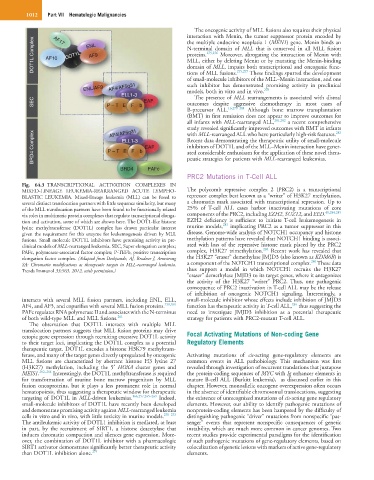
        Fig.  64.3  TRANSCRIPTIONAL  ACTIVATION  COMPLEXES  IN
        MIXED-LINEAGE  LEUKEMIA-REARRANGED  ACUTE  LYMPHO-    The  polycomb  repressive  complex  2  (PRC2)  is  a  transcriptional
        BLASTIC  LEUKEMIA.  Mixed-lineage  leukemia  (MLL)  can  be  fused  to   repressor complex best known as a “writer” of H3K27 methylation,
        several distinct translocation partners with little sequence similarity, but many   a chromatin mark associated with transcriptional repression. Up to
        of the MLL translocation partners have been found to be functionally related   25%  of  T-cell  ALL  cases  harbor  inactivating  mutations  of  core
                                                                                                           40,284,285
        via roles in multimeric protein complexes that regulate transcriptional elonga-  components of the PRC2, including EZH2, SUZ12, and EED.
        tion and activation, some of which are shown here. The DOT1-like histone   EZH2  deficiency  is  sufficient  to  initiate  T-cell  leukemogenesis  in
                                                                          285
        lysine  methyltransferase  (DOT1L)  complex  has  drawn  particular  interest   murine models,  implicating PRC2 as a tumor suppressor in this
        given the requirement for this enzyme for leukemogenesis driven by MLL   disease. Genome-wide analysis of NOTCH1 occupancy and histone
        fusions. Small molecule DOT1L inhibitors have promising activity in pre-  methylation patterns have revealed that NOTCH1 binding is associ-
        clinical models of MLL-rearranged leukemia. SEC, Super elongation complex;   ated with loss of the repressive histone mark placed by the PRC2
                                                                                       284
        PAFc, polymerase-associated factor complex; P-TEFb, positive transcription   complex,  H3K27  trimethylation.   Recent  work  has  revealed  that
        elongation factor complex. (Adapted from Deshpande, AJ, Bradner J, Armstrong   the H3K27 “eraser” demethylase JMJD3 (also known as KDM6B) is
                                                                                                       286
        SA:  Chromatin  modifications  as  therapeutic  targets  in  MLL-rearranged  leukemia.   a component of the NOTCH1 transcriptional complex.  These data
        Trends Immunol 33:563, 2012, with permission.)        thus  support  a  model  in  which  NOTCH1  recruits  the  H3K27
                                                              “eraser” demethylase JMJD3 to its target genes, where it antagonizes
                                                              the  activity  of  the  H3K27  “writer”  PRC2.  Thus,  one  pathogenic
                                                              consequence of PRC2 inactivation in T-cell ALL may be the release
                                                              of  inhibition  of  oncogenic  NOTCH1  signaling.  Interestingly,  a
        interacts  with  several  MLL  fusion  partners,  including  ENL,  ELL,   small-molecule inhibitor whose effects include inhibition of JMJD3
                                                                                                286
        AF4, and AF5, and copurifies with several MLL fusion proteins. 259,260    function has therapeutic activity in T-cell ALL,  thus suggesting the
        PAFc regulates RNA polymerase II and associates with the N-terminus   need  to  investigate  JMJD3  inhibition  as  a  potential  therapeutic
        of both wild-type MLL and MLL fusions. 261            strategy for patients with PRC2-mutant T-cell ALL.
           The  observation  that  DOT1L  interacts  with  multiple  MLL
        translocation partners suggests that MLL fusion proteins may drive
        ectopic gene expression through recruiting excessive DOT1L activity   Focal Activating Mutations of Non-coding Gene
        to their target loci, implicating the DOT1L complex as a potential   Regulatory Elements
        therapeutic target. DOT1L encodes a histone H3K79 methyltrans-
        ferase, and many of the target genes directly upregulated by oncogenic   Activating  mutations  of  cis-acting  gene-regulatory  elements  are
        MLL  fusions  are  characterized  by  aberrant  histone  H3  lysine  27   common  events  in  ALL  pathobiology.  This  mechanism  was  first
        (H3K27)  methylation,  including  the  5′  HOXA  cluster  genes  and   revealed through investigation of recurrent translations that juxtapose
        MEIS1. 262–264  Interestingly, the DOT1L methyltransferase is required   the protein-coding sequences of MYC with Ig enhancer elements in
        for  transformation  of  murine  bone  marrow  progenitors  by  MLL   mature B-cell ALL (Burkitt leukemia),  as discussed earlier in this
        fusion  oncoproteins,  but  it  plays  a  less  prominent  role  in  normal   chapter. However, monoallelic oncogene overexpression often occurs
        hematopoiesis, thus suggesting a therapeutic window for therapeutic   in the absence of identifiable chromosomal translocations, suggesting
        targeting of DOT1L in MLL-driven leukemias. 166,257,265–269  Indeed,   the existence of unrecognized mutations of cis-acting gene regulatory
        small-molecule inhibitors of DOT1L have recently been developed   elements. However, our ability to identify pathogenic mutations of
        and demonstrate promising activity against MLL-rearranged leukemia   nonprotein-coding elements has been hampered by the difficulty of
        cells in vitro and in vivo, with little toxicity in murine models. 270–273    distinguishing pathogenic “driver” mutations from nonspecific “pas-
        The antileukemic activity of DOTL1 inhibition is mediated, at least   senger”  events  that  represent  nonspecific  consequences  of  genetic
        in  part,  by  the  recruitment  of  SIRT1,  a  histone  deacetylase  that   instability, which are much more common in cancer genomes. Two
        induces chromatin compaction and silences gene expression. More-  recent studies provide experimental paradigms for the identification
        over,  the  combination  of  DOT1L  inhibitor  with  a  pharmacologic   of such pathogenic mutations of gene-regulatory elements, based on
        SIRT1 activator demonstrates significantly better therapeutic activity   colocalization of genetic lesions with markers of active gene-regulatory
        than DOT1L inhibition alone. 274                      elements.

