


Page 1648 - Hematology_ Basic Principles and Practice ( PDFDrive )
P. 1648
Chapter 90  Psychosocial Aspects of Hematologic Disorders  1469


                                                                                                    NCCN Guidelines Index
                                                                                                  Distress Management TOC
                                                                                                             Discussion
              SCREENING TOOLS FOR MEASURING DISTRESS            Second, please indicate if any of the following has been a
                                                                problem for you in the past week including today. Be sure to
                                                                check YES or NO for each.
                                                                YES  NO Practical Problems   YES  NO Physical Problems
              Instructions: First please circle the number (0-10) that best   Child care         Appearance
              describes how much distress you have been experiencing in   Housing                Bathing/dressing
                                                                       Insurance/financial       Breathing
                                                                       Transportation            Changes in urination
                                                                       Work/school               Constipation
                                                                       Treatment decisions       Diarrhea
                                        10
                    Extreme distress    10                                                       Eating
                                         9                             Family Problems           Fatigue
                                         9
                                                                       Dealing with children     Feeling Swollen
                                         8 8                           Dealing with partner      Fevers
                                         7 7                           Ability to have children  Getting around
                                                                       Family health issues      Indigestion
                                         6 6                                                     Memory/concentration
                                                                       Emotional Problems
                                         5 5                           Depression                Mouth sores
                                                                                                 Nausea
                                         4 4                           Fears                     Nose dry/congested
                                                                       Nervousness
                                         3 3                           Sadness                   Pain
                                                                                                 Sexual
                                         2 2                           Worry                     Skin dry/itchy
                                                                       Loss of interest in
                                         1 1                           usual activities          Sleep
                                                                                                 Tingling in hands/feet
                         No distress     0 0
                                                                       Spiritual/religious
                                                                       concerns
                                                                Other Problems: _________________________________________
                                                                ________________________________________________________

                                                          ®
            Version 2.2012, 03/12/12 © National Comprehensive Cancer Network, Inc. 2012, All rights reserved. The NCCN Guidelines  and this illustration may not be reproduced in any form without the express written permission of NCCN®.  DIS-A
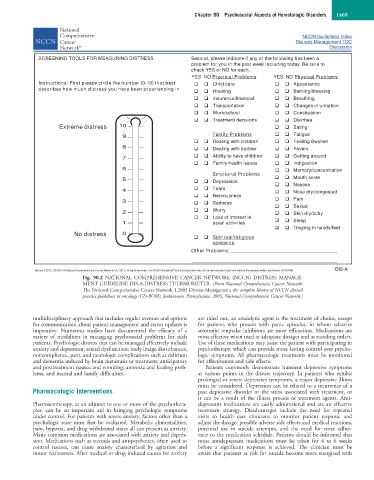
                            Fig.  90.2  NATIONAL  COMPREHENSIVE  CANCER  NETWORK  (NCCN)  DISTRESS  MANAGE-
                            MENT GUIDELINE DIS-A-DISTRESS THERMOMETER. (From National Comprehensive Cancer Network:
                            The National Comprehensive Cancer Network 1.2005 Distress Management, the complete library of NCCN clinical
                            practice guidelines in oncology (CD-ROM), Jenkintown, Pennsylvania, 2005, National Comprehensive Cancer Network.)


            multidisciplinary approach that includes regular avenues and options   are ruled out, an anxiolytic agent is the treatment of choice, except
            for communication about patient management and status updates is   for  patients  who  present  with  panic  episodes,  in  whom  selective
            imperative.  Numerous  studies  have  documented  the  efficacy  of  a   serotonin reuptake inhibitors are most efficacious. Medications are
            variety  of  modalities  in  managing  psychosocial  problems  for  such   most effective when used at adequate dosages and as standing orders.
            patients. Psychologic distress that can be managed effectively include   Use of these medications may assist the patient with participating in
            anxiety and depression; sexual dysfunction; body image disturbances;   psychotherapy, which can provide more lasting control over psycho-
            noncompliance, pain, and neurologic complications such as delirium   logic symptoms. All pharmacologic treatments must be monitored
            and dementia induced by brain metastasis or treatment; anticipatory   for effectiveness and side effects.
            and posttreatment nausea and vomiting; anorexia and feeding prob-  Patients  commonly  demonstrate  transient  depressive  symptoms
            lems; and marital and family difficulties.            at  various  points  in  the  disease  trajectory.  In  patients  who  exhibit
                                                                  prolonged or severe depressive symptoms, a major depressive illness
                                                                  must be considered. Depression can be related to a recurrence of a
            Pharmacologic Interventions                           past  depressive  disorder  or  the  stress  associated  with  treatment, or
                                                                  it  can  be  a  result  of  the  illness  process  or  treatment  agents.  Anti-
            Pharmacotherapy, as an adjunct to one or more of the psychothera-  depressant medications are easily administered and are an effective
            pies,  can  be  an  important  aid  in  bringing  psychologic  symptoms   treatment  strategy.  Disadvantages  include  the  need  for  repeated
            under control. For patients with severe anxiety, factors other than a   visits  to  health  care  clinicians  to  monitor  patient  response  and
            psychologic state must first be evaluated. Metabolic abnormalities,   adjust the dosage, possible adverse side effects and medical reactions,
            pain, hypoxia, and drug withdrawal states all can present as anxiety.   potential  use  in  suicide  attempts,  and  the  need  for  strict  adher-
            Many common medications are associated with anxiety and depres-  ence to the medication schedule. Patients should be informed that
            sion. Medications such as steroids and antipsychotics, often used to   most  antidepressant  medications  must  be  taken  for  4  to  6  weeks
            control  nausea,  can  cause  anxiety  characterized  by  agitation  and   before  a  significant  response  is  achieved.  The  clinician  must  be
            motor restlessness. After medical or drug-induced causes for anxiety   aware that patients at risk for suicide become more energized with

