


Page 197 - Hematology_ Basic Principles and Practice ( PDFDrive )
P. 197
Chapter 14  Interactions Between Hematopoietic Stem and Progenitor Cells and the Bone Marrow  149


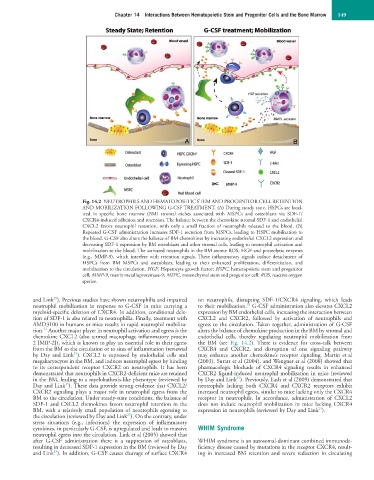
                            Fig. 14.2  NEUTROPHILS AND HEMATOPOIETIC STEM AND PROGENITOR CELL RETENTION
                            AND MOBILIZATION FOLLOWING G-CSF TREATMENT. (A) During steady state, HSPCs are local-
                            ized  in  specific  bone  marrow  (BM)  stromal  niches  associated  with  MSPCs  and  osteoblasts  via  SDF-1/
                            CXCR4-induced adhesion and retention. The balance between the chemokine stromal SDF-1 and endothelial
                            CXCL2  favors  neutrophil  retention,  with  only  a  small  fraction  of  neutrophils  released  to  the  blood.  (B)
                            Repeated G-CSF administration increases SDF-1 secretion from MSPCs, leading to HSPC mobilization to
                            the blood. G-CSF also alters the balance of BM chemokines by increasing endothelial CXCL2 expression and
                            decreasing SDF-1 expression by BM osteoblasts and other stromal cells, leading to neutrophil activation and
                            mobilization to the blood. The activated neutrophils in the BM secrete ROS, HGF and proteolytic enzymes
                            (e.g.,  MMP-9),  which  interfere  with  retention  signals. These  inflammatory  signals  induce  detachment  of
                            HSPCs  from  BM  MSPCs  and  osteoblasts,  leading  to  their  enhanced  proliferation,  differentiation,  and
                            mobilization to the circulation. HGF, Hepatocyte growth factor; HSPC, hematopoietic stem and progenitor
                            cell; MMP-9, matrix metalloproteinase-9; MSPC, mesenchymal stem and progenitor cell; ROS, reactive oxygen
                            species.

                   25
            and Link ). Previous studies have shown neutrophilia and impaired   on  neutrophils,  disrupting  SDF-1/CXCR4  signaling,  which  leads
                                                                                  28
            neutrophil  mobilization  in  response  to  G-CSF  in  mice  carrying  a   to their mobilization.  G-CSF administration also elevates CXCL2
            myeloid-specific deletion of CXCR4. In addition, conditional dele-  expression by BM endothelial cells, increasing the interaction between
            tion of SDF-1 is also related to neutrophilia. Finally, treatment with   CXCL2  and  CXCR2,  followed  by  activation  of  neutrophils  and
            AMD3100 in humans or mice results in rapid neutrophil mobiliza-  egress to the circulation. Taken together, administration of G-CSF
               11
            tion.  Another major player in neutrophil activation and egress is the   alters the balance of chemokine production in the BM by stromal and
            chemokine CXCL2 (also termed macrophage inflammatory protein   endothelial  cells,  thereby  regulating  neutrophil  mobilization  from
            2 [MIP-2]), which is known to play an essential role in their egress   the  BM  (see  Fig.  14.2).  There  is  evidence  for  cross-talk  between
            from the BM to the circulation or to sites of inflammation (reviewed   CXCR4  and  CXCR2,  and  disruption  of  one  signaling  pathway
                         25
            by  Day  and  Link ).  CXCL2  is  expressed  by  endothelial  cells  and   may  enhance  another  chemokine’s  receptor  signaling.  Martin  et al
            megakaryocytes in the BM, and induces neutrophil egress by binding   (2003), Suratt et al (2004), and Wengner et al (2008) showed that
            to  its  correspondent  receptor  CXCR2  on  neutrophils.  It  has  been   pharmacologic  blockade  of  CXCR4  signaling  results  in  enhanced
            demonstrated that neutrophils in CXCR2-deficient mice are retained   CXCR2 ligand-induced neutrophil mobilization in mice (reviewed
                                                                              25
            in the BM, leading to a myelokathexis-like phenotype (reviewed by   by Day and Link ). Previously, Eash et al (2009) demonstrated that
                      25
            Day and Link ). These data provide strong evidence that CXCL2/  neutrophils  lacking  both  CXCR4  and  CXCR2  receptors  exhibit
            CXCR2 signaling plays a major role in neutrophil egress from the   increased neutrophil egress, similar to mice lacking only the CXCR4
            BM to the circulation. Under steady-state conditions, the balance of   receptor  in  neutrophils.  In  accordance,  administration  of  CXCL2
            SDF-1 and CXCL2 chemokines favors neutrophil retention in the   does  not  induce  neutrophil  mobilization  in  mice  lacking  CXCR4
                                                                                                         25
            BM, with a relatively small population of neutrophils egressing to   expression in neutrophils (reviewed by Day and Link ).
                                           25
            the circulation (reviewed by Day and Link ). On the contrary, under
            stress  situations  (e.g.,  infections)  the  expression  of  inflammatory
            cytokines, in particularly G-CSF, is upregulated and leads to massive   WHIM Syndrome
            neutrophil egress into the circulation. Link et al (2005) showed that
            after  G-CSF  administration  there  is  a  suppression  of  osteoblasts,   WHIM syndrome is an autosomal-dominant combined immunode-
            resulting in decreased SDF-1 expression in the BM (reviewed by Day   ficiency disease caused by mutations in the receptor CXCR4, result-
                   25
            and Link ). In addition, G-CSF causes cleavage of surface CXCR4   ing  in  increased  BM  retention  and  severe  reduction  in  circulating

