


Page 2200 - Hematology_ Basic Principles and Practice ( PDFDrive )
P. 2200
Chapter 131  Diseases of Platelet Number  1947


                     A                                           B


                     C                                                      D
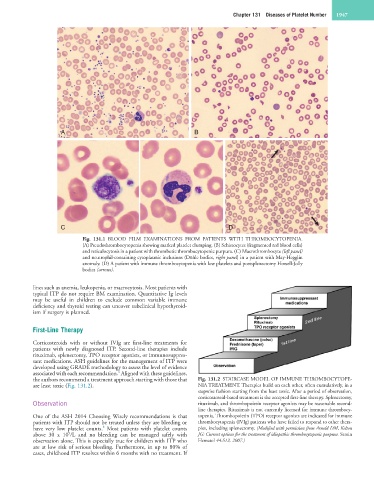
                            Fig.  131.1  BLOOD  FILM  EXAMINATIONS  FROM  PATIENTS  WITH  THROMBOCYTOPENIA.
                            (A) Pseudothrombocytopenia showing marked platelet clumping. (B) Schistocytes (fragmented red blood cells)
                            and reticulocytosis in a patient with thrombotic thrombocytopenic purpura. (C) Macrothrombocyte (left panel)
                            and neutrophil-containing cytoplasmic inclusions (Döhle bodies, right panel) in a patient with May-Hegglin
                            anomaly. (D) A patient with immune thrombocytopenia with low platelets and postsplenectomy Howell-Jolly
                            bodies (arrows).


            lines such as anemia, leukopenia, or macrocytosis. Most patients with
            typical ITP do not require BM examination. Quantitative Ig levels
            may  be  useful  in  children  to  exclude  common  variable  immune
            deficiency and thyroid testing can uncover subclinical hypothyroid-
            ism if surgery is planned.

            First-Line Therapy

            Corticosteroids  with  or  without  IVIg  are  first-line  treatments  for
            patients  with  newly  diagnosed  ITP.  Second-line  therapies  include
            rituximab, splenectomy, TPO receptor agonists, or immunosuppres-
            sant medications. ASH guidelines for the management of ITP were
            developed using GRADE methodology to assess the level of evidence
                                        4
            associated with each recommendation.  Aligned with these guidelines,
            the authors recommend a treatment approach starting with those that   Fig. 131.2  STAIRCASE MODEL OF IMMUNE THROMBOCYTOPE-
            are least toxic (Fig. 131.2).                         NIA TREATMENT. Therapies build on each other, often cumulatively, in a
                                                                  stepwise fashion starting from the least toxic. After a period of observation,
                                                                  corticosteroid-based treatment is the accepted first-line therapy. Splenectomy,
            Observation                                           rituximab, and thrombopoietin receptor agonists may be reasonable second-
                                                                  line therapies. Rituximab is not currently licensed for immune thrombocy-
            One of the ASH 2014 Choosing Wisely recommendations is that   topenia. Thrombopoietin (TPO) receptor agonists are indicated for immune
            patients with ITP should not be treated unless they are bleeding or   thrombocytopenia (IVIg) patients who have failed to respond to other thera-
                                   8
            have  very  low  platelet  counts.   Most  patients  with  platelet  counts   pies, including splenectomy. (Modified with permission from Arnold DM, Kelton
                       9
            above  30  x  10 /L  and  no  bleeding  can  be  managed  safely  with   JG: Current options for the treatment of idiopathic thrombocytopenic purpura. Semin
            observation alone. This is especially true for children with ITP who   Hematol 44:S12, 2007.)
            are at low risk of serious bleeding. Furthermore, in up to 80% of
            cases, childhood ITP resolves within 6 months with no treatment. If

