


Page 2281 - Hematology_ Basic Principles and Practice ( PDFDrive )
P. 2281
2028   Part XII  Hemostasis and Thrombosis


                                                              Patient With Factor VIII Deficiency and an Inhibitor). Typically, the
                                                              HTC and its physicians serve as a community resource to help guide
        Patient              Normal                 Imidazole  the  care  of  complex  inhibitor  patients  at  other  institutions  when
        plasma               plasma                  buffer   timely transport is not feasible because of active bleeding and hemo-
                                                    (pH 7.3)  dynamic instability.
                                                                 In general, there are two main aspects that should be considered:
                                                              first that bleeds may be more frequent and are more difficult to treat
                             50/50 mix                        and, second, that any available treatment is not as efficacious as FVIII
                             Incubate                         in hemophilia with no inhibitors.
                             2 hr @ 37˚ C
                            FVIII assay                       Minor Bleeding Episodes

                                                              In established low-titer alloantibody FVIII inhibitor patients (consis-
                                                              tently less than 5 BU after repeated challenges) or in patients with
                                                              low-titer  transient  inhibitors,  larger  doses  of  FVIII  concentrate
                             Buffered                FVIII    replacement can be given to overcome the neutralizing properties of
        Patient               normal                deficient
        plasma                plasma                plasma    the inhibitor. Such treatment may provide therapeutic levels of FVIII
                                                              activity. The following equation approximates the dose necessary to
                              pH 7.4                          overcome the neutralization effects of a low-titer FVIII inhibitor:

                             50/50 mix                           FVIII Replacement Loading Dose
                                                                   = 2 ( Body Weight in kg 80 100 − Hematocrit)  100])  BU
                                                                                        (
                                                                                          0
                                                                                       )
                                                                                    [
                                                                                     (
                             Incubate
                             2 hr @ 37˚ C
                                                              FVIII activity levels should be determined after the infusion to ensure
                            FVIII assay                       that  adequate  therapeutic  levels  are  achieved  and  sustained.  For
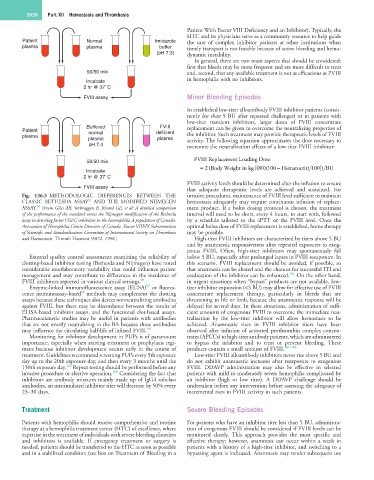
        Fig.  136.3  METHODOLOGIC  DIFFERENCES  BETWEEN  THE   invasive procedures, maintenance of FVIII level sufficient to maintain
                              94
        CLASSIC  BETHESDA  ASSAY   AND  THE  MODIFIED  NIJMEGEN   hemostasis adequately may require continuous infusion of replace-
             96
        ASSAY.  (From Giles AR, Verbruggen B, Rivard GE, et al: A detailed comparison   ment product. If a bolus dosing protocol is chosen, the treatment
        of the performance of the standard versus the Nijmegen modification of the Bethesda   interval will need to be short, every 4 hours, to start with, followed
        assay in detecting factor VIII:C inhibitors in the haemophilia A population of Canada.   by  a  schedule  tailored  to  the  aPTT  or  the  FVIII  level.  Once  the
        Association of Hemophilia Centre Directors of Canada. Factor VIII/IX Subcommittee   optimal bolus dose of FVIII replacement is established, home therapy
        of Scientific and Standardization Committee of International Society on Thrombosis   may be possible.
        and Haemostasis, Thromb Haemost 9:872, 1998.)            High-titer FVIII inhibitors are characterized by titers above 5 BU
                                                              and by anamnestic responsiveness after repeated exposures to exog-
                                                              enous  FVIII.  Often,  high-titer  inhibitors  may  spontaneously  fall
           External quality control assessments examining the reliability of   below 5 BU, especially after prolonged lapses in FVIII reexposure. In
        clotting-based inhibitor testing (Bethesda and Nijmegen) have noted   this scenario, FVIII replacement should be avoided, if possible, so
        considerable interlaboratory variability that could influence patient   that anamnesis can be abated and the chances for successful ITI and
                                                                                                101
        management and may contribute to differences in the incidence of   eradication of the inhibitor can be enhanced.  On the other hand,
        FVIII inhibitors reported in various clinical settings. 96  in urgent situations when “bypass” products are not available, low-
                                                 97
           Enzyme-linked immunofluorescence assay (ELISA)  or fluores-  titer inhibitor expression (<5 BU) may allow for effective use of FVIII
                            98
        cence immunoassay-based  methods may complement the clotting   concentrate  replacement  therapy,  particularly  in  bleeds  that  are
        assays because these techniques also detect nonneutralizing antibodies   threatening to life or limb, because the anamnestic response will be
        against FVIII, but there may be discordance between the results of   delayed for several days. In these situations, administration of suffi-
        ELISA-based inhibitor assays, and the functional clot-based assays.   cient amounts of exogenous FVIII to overcome the immediate neu-
        Pharmacokinetic studies may be useful in patients with antibodies   tralization  by  the  low-titer  inhibitor  will  allow  hemostasis  to  be
        that are not overtly neutralizing in the BA because these antibodies   achieved.  Anamnestic  rises  in  FVIII  inhibitor  titers  have  been
        may influence the circulating half-life of infused FVIII. 99  observed after infusion of activated prothrombin complex concen-
           Monitoring for inhibitor development in PUPs is of paramount   trates (APCCs) to high-titer antibody patients, which are administered
        importance, especially when starting treatment or prophylaxis regi-  to  bypass  the  inhibitor  and  to  treat  or  prevent  bleeding.  These
        mens  because  inhibitor  development  occurs  early  in  the  course  of   products contain a small amount of FVIII. 101–104
        treatment. Guidelines recommend screening PUPs every 5th exposure   Low-titer FVIII alloantibody inhibitors never rise above 5 BU and
        day up to the 20th exposure day, and then every 3 months until the   do  not  exhibit  anamnestic  increases  after  reexposure  to  exogenous
                       100
        150th exposure day.  Repeat testing should be performed before any   FVIII.  DDAVP  administration  may  also  be  effective  in  selected
                                      100
        invasive procedure or elective operation.  Considering the fact that   patients with mild to moderately severe hemophilia complicated by
        inhibitors are antibody mixtures mainly made up of IgG4 subclass   an  inhibitor  (high  or  low  titer).  A  DDAVP  challenge  should  be
        antibodies, an unstimulated inhibitor titer will decrease by 50% every   undertaken before any intervention before assessing the adequacy of
        25–30 days.                                           incremental rises in FVIII activity in such patients.
        Treatment                                             Severe Bleeding Episodes
        Patients with hemophilia should receive comprehensive and routine   For patients who have an inhibitor titer less than 5 BU, administra-
        therapy at a hemophilia treatment center (HTC) of excellence, where   tion of exogenous FVIII should be considered if FVIII levels can be
        expertise in the treatment of individuals with severe bleeding disorders   monitored  closely.  This  approach  provides  the  most  specific  and
        and  inhibitors  is  available.  If  emergency  treatment  or  surgery  is   effective  therapy;  however,  anamnesis  can  occur  within  a  week  in
        needed, patients should be transferred to the HTC as soon as possible   patients with a history of a high-titer inhibitor, and switching to a
        and in a stabilized condition (see box on Treatment of Bleeding in a   bypassing agent is indicated. Anamnesis may render subsequent use

