


Page 2354 - Hematology_ Basic Principles and Practice ( PDFDrive )
P. 2354
2096   Part XII  Hemostasis and Thrombosis


             300                                              fetal  demise,  intrauterine  growth  restriction,  and  oligohydramnios
                                                 Mean +2 SD
             280                                              than aPL antibody–negative pregnant women.
                                                                 Women  with  obstetric  APS  generally  present  with  a  history  of
             260                                              recurrent (i.e., three or more) miscarriages. In approximately half of
                                                              the patients, the pregnancy losses occur in the first trimester; other
             240
          Annexin A5  anticoagulant ratio (%)  220  211 ± 35  206 ± 37  218 ± 36  patients present with later losses, most in the second trimester, but
                                               n = 16
                                                              some even later, including stillbirth. The specific pregnancy compli-
                                                 Mean –2 SD
             200
                                                              cations  that  define  obstetric  APS  include:  the  absence  of  another
                                                              explanation for the complications, three or more recurrent spontane-
                         n = 70
                                    n = 50
                                               A vs. D: P <.0001
             180
                                               B vs. D: P <.0001
                                                              ous first trimester miscarriages, or one midtrimester loss, stillbirth,
             160
                                               A vs. B: P = NS
             140
                                                              uterine  growth  restriction,  or  oligohydramnios.  Pregnant  women
                                               A vs. C: P = NS
                                                              with APS are also more prone to develop DVT during pregnancy or
                                               B vs. C: P = NS
             120                               C vs. D: P <.01  episode  of preeclampsia,  preterm  labor,  placental  abruption,  intra-
                      A          B          C          D      the puerperium. Rarely, pregnant patients can develop CAPS.
             100                                                 As with the thrombotic manifestations, a prior clinical history of
                   Obstetric  Thrombotic  Isolated   Normal   previous pregnancy loss, complications, or thrombosis is a better pre-
                    APS         APS        aPL       healthy  dictor for future pregnancy loss than the degree of laboratory abnor-
                                         antibodies  controls  mality. Furthermore, recent studies have shown that positivity on more
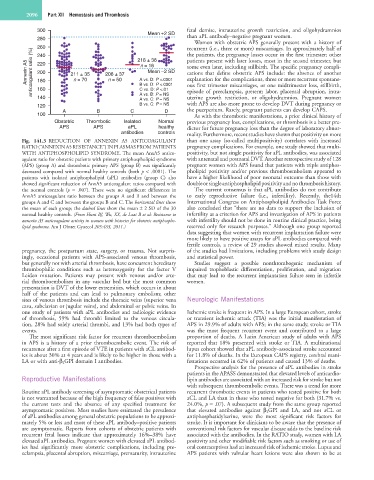
        Fig.  141.3  REDUCTION  OF  ANNEXIN  A5  ANTICOAGULANT   than  one  assay  (so-called  multipositivity)  correlates  with  increased
        RATIO (“ANNEXIN A5 RESISTANCE”) IN PLASMAS FROM PATIENTS   pregnancy complications. For example, one study showed that multi-
        WITH ANTIPHOSPHOLIPID SYNDROME. The mean AnxA5 antico-  positivity, but not single positivity for aPL antibodies, was associated
        agulant ratio for obstetric patients with primary antiphospholipid syndrome   with antenatal and postnatal DVT. Another retrospective study of 128
        (APS) (group A) and thrombotic primary APS (group B) was significantly   pregnant women with APS found that patients with triple antiphos-
        decreased  compared  with  normal  healthy  controls  (both  p  <  .0001). The   pholipid  positivity  and/or  previous  thromboembolism  appeared  to
        patients  with  isolated  antiphospholipid  (aPL)  antibodies  (group  C)  also   have a higher likelihood of poor neonatal outcome than those with
        showed significant reduction of AnxA5 anticoagulant ratios compared with   double or single antiphospholipid positivity and no thrombosis history.
        the  normal  controls  (p  =  .007).  There  were  no  significant  differences  in   The current consensus is that aPL antibodies do not contribute
        AnxA5  anticoagulant  ratio  between  the  groups  A  and  B  and  between  the   to  early  reproductive  failure  (i.e.,  infertility).  Recently,  the14th
        groups A and C and between the groups B and C. The horizontal lines show   International Congress on Antiphospholipid Antibodies Task Force
        the mean of each group; the dashed lines show the mean ± 2 SD of the 30   also concluded that “there are no data to support the inclusion of
        normal healthy controls. (From Hunt BJ, Wu, XX, de Laat B et al: Resistance to   infertility as a criterion for APS and investigation of APS in patients
        annexin A5 anticoagulant activity in women with histories for obstetric antiphospho-  with infertility should not be done in routine clinical practice, being
        lipid syndrome. Am J Obstet Gynecol 205:485, 2011.)   reserved only for research purposes.” Although one group reported
                                                              data suggesting that women with recurrent implantation failure were
                                                              more likely to have positive assays for aPL antibodies compared with
                                                              fertile controls, a review of 29 studies showed mixed results. Many
        pregnancy,  the  postpartum  state,  surgery,  or  trauma.  Not  surpris-  of the studies had limitations, including problems with study design
        ingly,  occasional  patients  with  APS-associated  venous  thrombosis,   and statistical power.
        but generally not with arterial thrombosis, have concurrent hereditary   Studies  suggest  a  possible  nonthrombogenic  mechanism  of
        thrombophilic  conditions  such  as  heterozygosity  for  the  factor  V   impaired  trophoblastic  differentiation,  proliferation,  and  migration
        Leiden  mutation.  Patients  may  present  with  venous  and/or  arte-  that may lead to the recurrent implantation failure seen in infertile
        rial thromboembolism in any vascular bed but the most common   women.
        presentation is DVT of the lower extremities, which occurs in about
        half  of  the  patients  and  can  lead  to  pulmonary  embolism;  other
        sites of venous thrombosis include the thoracic veins (superior vena   Neurologic	Manifestations
        cava, subclavian or jugular veins), and abdominal or pelvic veins. In
        one study of patients with aPL antibodies and radiologic evidence   Ischemic stroke is frequent in APS. In a large European cohort, stroke
        of  thrombosis,  59%  had  thrombi  limited  to  the  venous  circula-  or transient ischemic attack (TIA) was the initial manifestation of
        tion, 28% had solely arterial thrombi, and 13% had both types of     APS in 29.9% of adults with APS; in the same study, stroke or TIA
        events.                                               was  the  most  frequent  recurrent  event  and  contributed  to  a  large
           The most significant risk factor for recurrent thromboembolism   proportion of deaths. A Latin American study of adults with APS
        in  APS  is  a  history  of  a  prior  thromboembolic  event. The  risk  of   reported  that  18%  presented  with  stroke  or TIA.  A  multinational
        recurrence after a first episode of VTE in patients with aCL antibod-  lupus cohort showed that aPL antibody–associated stroke accounted
        ies is about 30% at 4 years and is likely to be higher in those with a   for 11.8% of deaths. In the European CAPS registry, cerebral mani-
        LA or with anti-β 2 GPI domain I antibodies.          festations occurred in 62% of patients and caused 13% of deaths.
                                                                 Prospective analysis for the presence of aPL antibodies in stroke
                                                              patients in the APASS demonstrated that elevated levels of anticardio-
        Reproductive	Manifestations                           lipin antibodies are associated with an increased risk for stroke but not
                                                              with subsequent thromboembolic events. There was a trend for more
        Routine aPL antibody screening of asymptomatic obstetrical patients   recurrent thrombotic events in patients who tested positive for both
        is not warranted because of the high frequency of false positives with   aCL and LA than in those who tested negative for both (31.7% vs.
        the  current  tests  and  the  absence  of  any  specified  treatment  for   24.0%, p = .07). A subsequent study from the same group reported
        asymptomatic positives. Most studies have estimated the prevalence   that  elevated  antibodies  against  β 2GPI  and  LA,  and  not  aCL  or
        of aPL antibodies among general obstetric populations to be approxi-  antiphosphatidylserine,  were  the  most  significant  risk  factors  for
        mately 5% or less and most of these aPL antibody–positive patients   stroke. It is important for clinicians to be aware that the presence of
        are asymptomatic. Reports from cohorts of obstetric patients with   conventional risk factors for vascular disease adds to the baseline risk
        recurrent  fetal  losses  indicate  that  approximately  16%–38%  have   associated with the antibodies. In the RATIO study, women with LA
        elevated aPL antibodies. Pregnant women with elevated aPL antibod-  positivity and other modifiable risk factors such as smoking or use of
        ies  had  significantly  more  obstetric  complications,  including  pre-  oral contraceptives had an increased risk of ischemic stroke. Lupus and
        eclampsia, placental abruption, miscarriage, prematurity, intrauterine   APS  patients  with  valvular  heart  lesions  were  also  shown  to  be  at

