


Page 2349 - Hematology_ Basic Principles and Practice ( PDFDrive )
P. 2349
Chapter 141  The Antiphospholipid Syndrome  2091


             TABLE   Proposed Pathogenic Mechanisms of Antiphospholipid Syndrome
              141.3
             	I.	 aPL-mediated	promotion	of	tissue	factor	expression
               	A.	 Direct	injury	and	subsequent	anti-β 2 GPI	binding	on	endothelial	cells
               	B.	 Signaling	via	annexin	A2/TLR4/apoER2	inducing	proadhesive	prothrombotic	phenotype
               	C.	 Induction	of	adhesion	molecules	and	tissue	factor	on	endothelial	cells	and	cytokine	release
             	II.	 Activation	of	platelets	and	monocytes	by	aPL	antibodies
               	A.	 Activation	of	platelets:	via	apoER2′,	GPIbα,	and/or	β 2 GPI-platelet	factor	4	interaction
               	B.	 Interference	of	β 2 GPI	in	regulating	vWF-mediated	platelet	adhesion
               	C.	 Activation	of	monocytes:	results	in	increased	tissue	factor,	VEGF,	cytokine	expression
               	D.	 Activation	of	monocytes	causes	mitochondrial	dysfunction	and	oxidative	stress
             	III.	Inhibition	of	endogenous	anticoagulant	and	fibrinolytic	mechanisms
               	A.	 Disruption	of	the	annexin	A5	anticoagulant	shield
               	B.	 Interference	with	fibrinolysis	via	annexin	A2,	β 2 GPI	cofactor	activity,	autoactivation	of	XIIa,	direct	inhibition	of	plasmin	and	increase	of	PAI-1
               	C.	 Inhibition	of	the	protein	C	pathway:	decreased	activation	of	protein	C,	barrier	of	APC	proteolysis	of	factor	Va	and	VIIIa,	prevention	of	protein	C
                  and	EPCR	binding
               	D.	 Interference	with	tissue	factor	pathway	inhibitor
             	IV.	aPL-mediated	activation	of	complement
               	A.	 Antibodies	against	β 2 GPI–HLA-DR7	complexes	on	cell	surfaces	trigger	complement-mediated	cytotoxicity
             	V.	 Direct	activation	of	trophoblasts	and	endometrial	cells	by	aPL	antibodies
               	A.	 Abnormal	trophoblast	proliferation,	migration	and	invasiveness,	increased	trophoblast	apoptosis,	and	reduced	secretion	of	HCG	and	adhesion
                  molecules
               	B.	 Disruption	in	the	differentiation	of	decidual	endometrial	cells
               	C.	 Disruption	of	maternal	spiral	artery	transformation	and	maturation
             	VI.	Other	mechanisms
               	A.	 mTORC	pathway–mediated	vasculopathy
               	B.	 Release	in	procoagulant	microparticles	by	endothelial	cells	and	platelets
             APC, activated protein C; aPL, antiphospholipid; apoER2; apolipoprotein E receptor 2; EPCR, endothelial cell protein C receptor; β 2 GPI, β 2 -glycoprotein I; HCG, human
             chorionic gonadotropin; HLA, human leukocyte antigen; mTORC, mammalian target of rapamycin complex; PAI-1, plasminogen activator inhibitor 1; TLR, Toll-like
             receptor; VEGF, vascular endothelial growth factor; vWF, von Willebrand factor


                             Annexin A5
                                 shield                                                    Exposed anionic
                                                                                           phospholipids


                         Antibody–antigen
                              complexes


                                                              500 nm
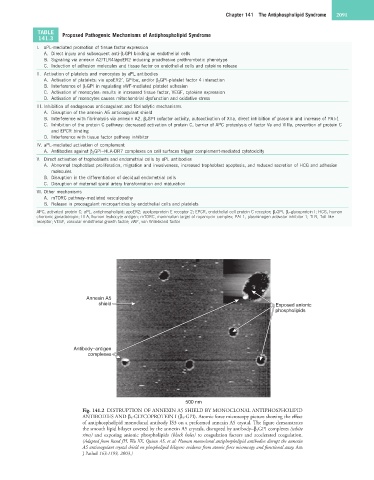
                            Fig. 141.2  DISTRUPTION OF ANNEXIN A5 SHIELD BY MONOCLONAL ANTIPHOSPHOLIPID
                            ANTIBODIES AND β 2 -GLYCOPROTEIN I (β 2 -GPI). Atomic force microscopy picture showing the effect
                            of antiphospholipid monoclonal antibody IS3 on a preformed annexin A5 crystal. The figure demonstrates
                            the smooth lipid bilayer covered by the annexin A5 crystals, disrupted by antibody–β 2 GPI complexes (white
                            rims)  and  exposing  anionic  phospholipids  (black  holes)  to  coagulation  factors  and  accelerated  coagulation.
                            (Adapted from Rand JH, Wu XX, Quinn AS, et al: Human monoclonal antiphospholipid antibodies disrupt the annexin
                            A5 anticoagulant crystal shield on phospholipid bilayers: evidence from atomic force microscopy and functional assay. Am
                            J Pathol 163:1193, 2003.)

