


Page 2415 - Hematology_ Basic Principles and Practice ( PDFDrive )
P. 2415
Chapter 147  Atrial Fibrillation  2155


                            I                                    V1


                            II                                   V2


                            II                                   V3


                            aVR                                 V4


                            aVL                                 V5


                            aVF                                 V6


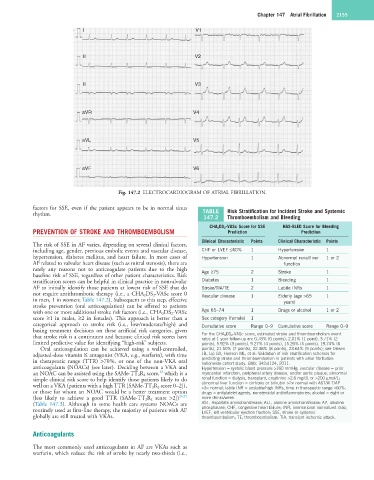
                                        Fig. 147.2  ELECTROCARDIOGRAM OF ATRIAL FIBRILLATION.

            factors for SSE, even if the patient appears to be in normal sinus     TABLE   Risk Stratification for Incident Stroke and Systemic
            rhythm.
                                                                    147.2  Thromboembolism and Bleeding
                                                                      CHA 2 DS 2 -VASc Score for SSE   HAS-BLED Score for Bleeding
            PREVENTION OF STROKE AND THROMBOEMBOLISM                        Prediction              Prediction
                                                                   Clinical Characteristic  Points  Clinical Characteristic  Points
            The risk of SSE in AF varies, depending on several clinical factors,
            including age, gender, previous embolic events and vascular disease,   CHF or LVEF ≤40%  1  Hypertension  1
            hypertension, diabetes mellitus, and heart failure. In most cases of   Hypertension  1  Abnormal renal/liver   1 or 2
            AF related to valvular heart disease (such as mitral stenosis), there are         function
            rarely  any  reasons  not  to  anticoagulate  patients  due  to  the  high   Age ≥75  2  Stroke  1
            baseline risk of SSE, regardless of other patient characteristics. Risk
            stratification scores can be helpful in clinical practice in nonvalvular   Diabetes  1  Bleeding  1
            AF to initially identify those patients at lowest risk of SSE that do   Stroke/TIA/TE  2  Labile INRs  1
            not require antithrombotic therapy (i.e., a CHA 2 DS 2 -VASc score 0   Vascular disease  1  Elderly (age >65   1
            in men, 1 in women; Table 147.2). Subsequent to this step, effective              years)
            stroke  prevention  (oral  anticoagulation)  can  be  offered  to  patients
            with one or more additional stroke risk factors (i.e., CHA 2 DS 2 -VASc   Age 65–74  1  Drugs or alcohol  1 or 2
            score  ≥1  in  males,  ≥2  in  females). This  approach  is  better  than  a   Sex category (female)  1
            categorical  approach  to  stroke  risk  (i.e.,  low/moderate/high)  and   Cumulative score  Range 0–9  Cumulative score  Range 0–9
            basing  treatment  decisions  on  these  artificial  risk  categories,  given
            that stroke risk is a continuum and because clinical risk scores have   For the CHA 2 DS 2 -VASc score, estimated stroke and thromboembolism event
                                                                   rates at 1 year follow-up are 0.78% (0 points), 2.01% (1 point), 3.71% (2
            limited predictive value for identifying “high-risk” subjects.  points), 5.92% (3 points), 9.27% (4 points), 15.26% (5 points), 19.74% (6
              Oral  anticoagulation  can  be  achieved  using  a  well-controlled,   points), 21.50% (7 points), 22.38% (8 points), 23.64% (9 points); see Olesen
            adjusted-dose vitamin K antagonist (VKA, e.g., warfarin), with time   JB, Lip GY, Hansen ML, et al: Validation of risk stratification schemes for
            in  therapeutic  range  (TTR)  >70%,  or  one  of  the  non-VKA  oral   predicting stroke and thromboembolism in patients with atrial fibrillation:
                                                                   nationwide cohort study. BMJ. 342:d124, 2011.
            anticoagulants (NOACs) (see later). Deciding between a VKA and   Hypertension = systolic blood pressure >160 mmHg; vascular disease = prior
                                                     23
            an NOAC can be assisted using the SAMe-TT 2 R 2  score,  which is a   myocardial infarction, peripheral artery disease, and/or aortic plaque; abnormal
            simple clinical risk score to help identify those patients likely to do   renal function = dialysis, transplant, creatinine >2.6 mg/dL or >200 µmol/L;
            well on a VKA (patients with a high TTR [SAMe-TT 2 R 2  score 0–2]),   abnormal liver function = cirrhosis or bilirubin >2× normal with AST/ALT/AP
                                                                   >3× normal; labile INR = unstable/high INRs, time in therapeutic range <60%;
            or those for whom an NOAC would be a better treatment option   drugs = antiplatelet agents, nonsteroidal antiinflammatories; alcohol = eight or
            (less  likely  to  achieve  a  good  TTR  (SAMe-TT 2 R 2   score  >2]) 24,25    more drinks/week.
            (Table  147.3).  Although  in  some  health  care  systems  NOACs  are   AST, Aspartate aminotransferase; ALT, alanine aminotransferase; AP, alkaline
            routinely used as first-line therapy, the majority of patients with AF   phosphatase; CHF, congestive heart failure; INR, international normalized ratio;
                                                                   LVEF, left ventricular ejection fraction; SSE, stroke or systemic
            globally are still treated with VKAs.                  thromboembolism; TE, thromboembolism; TIA, transient ischemic attack.
            Anticoagulants
            The most commonly used anticoagulants in AF are VKAs such as
            warfarin, which reduce the risk of stroke by nearly two-thirds (i.e.,

