


Page 2516 - Hematology_ Basic Principles and Practice ( PDFDrive )
P. 2516
Chapter 153  Hematologic Manifestations of Liver Disease  2239


                          A                         B                          C
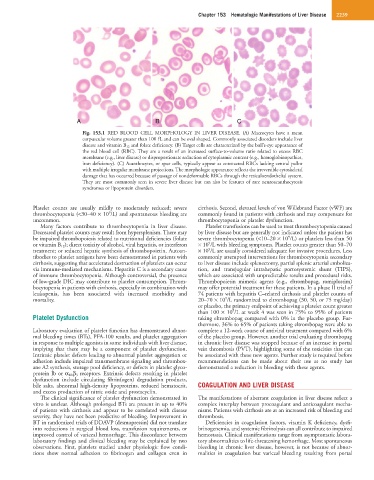
                            Fig.  153.1  RED  BLOOD  CELL  MORPHOLOGY  IN  LIVER  DISEASE.  (A)  Macrocytes  have  a  mean
                            corpuscular volume greater than 100 fL and can be oval shaped. Commonly associated disorders include liver
                            disease and vitamin B 12  and folate deficiency. (B) Target cells are characterized by the bull’s-eye appearance of
                            the red blood cell (RBC). They are a result of an increased surface-to-volume ratio related to excess RBC
                            membrane (e.g., liver disease) or disproportionate reduction of cytoplasmic content (e.g., hemoglobinopathies,
                            iron deficiency). (C) Acanthocytes, or spur cells, typically appear as contracted RBCs lacking central pallor
                            with multiple irregular membrane projections. The morphologic appearance reflects the irreversible cytoskeletal
                            damage that has occurred because of passage of nondeformable RBCs through the reticuloendothelial system.
                            They are most commonly seen in severe liver disease but can also be features of rare neuroacanthocytosis
                            syndromes or lipoprotein disorders.


            Platelet  counts  are  usually  mildly  to  moderately  reduced;  severe   cirrhosis. Second, elevated levels of von Willebrand Factor (vWF) are
                                     9
            thrombocytopenia (<30–40 × 10 /L) and spontaneous bleeding are   commonly found in patients with cirrhosis and may compensate for
            uncommon.                                             thrombocytopenia or platelet dysfunction.
              Many  factors  contribute  to  thrombocytopenia  in  liver  disease.   Platelet transfusions can be used to treat thrombocytopenia caused
            Decreased platelet counts may result from hypersplenism. There may   by liver disease but are generally not indicated unless the patient has
                                                                                               9
            be impaired thrombopoiesis related to nutritional deficiencies (folate   severe thrombocytopenia (<10–20 × 10 /L) or platelets less than 50
                                                                     9
            or vitamin B 12 ); direct toxicity of alcohol, viral hepatitis, or interferon   × 10 /L with bleeding symptoms. Platelet counts greater than 50–70
                                                                     9
            treatment; or reduced hepatic synthesis of thrombopoietin. Autoan-  × 10 /L are usually considered adequate for invasive procedures. Less
            tibodies to platelet antigens have been demonstrated in patients with   commonly attempted interventions for thrombocytopenia secondary
            cirrhosis, suggesting that accelerated destruction of platelets can occur   to liver disease include splenectomy, partial splenic arterial emboliza-
            via immune-mediated mechanisms. Hepatitis C is a secondary cause   tion,  and  transjugular  intrahepatic  portosystemic  shunt  (TIPS),
            of immune thrombocytopenia. Although controversial, the presence   which are associated with unpredictable results and procedural risks.
            of low-grade DIC may contribute to platelet consumption. Throm-  Thrombopoietin  mimetic  agents  (e.g.,  eltrombopag,  romiplostim)
            bocytopenia in patients with cirrhosis, especially in combination with   may offer potential treatment for these patients. In a phase II trial of
            leukopenia,  has  been  associated  with  increased  morbidity  and   74 patients with hepatitis C–related cirrhosis and platelet counts of
                                                                           9
            mortality.                                            20–70 × 10 /L randomized to eltrombopag (30, 50, or 75 mg/day)
                                                                  or placebo, the primary endpoint of achieving a platelet count greater
                                                                             9
                                                                  than 100 × 10 /L at week 4 was seen in 75% to 95% of patients
            Platelet Dysfunction                                  taking eltrombopag compared with 0% in the placebo group. Fur-
                                                                  thermore, 36% to 65% of patients taking eltrombopag were able to
            Laboratory evaluation of platelet function has demonstrated abnor-  complete a 12-week course of antiviral treatment compared with 6%
            mal bleeding times (BTs), PFA-100 results, and platelet aggregation   of the placebo group. However, another trial evaluating eltrombopag
            in response to multiple agonists in some individuals with liver disease,   in chronic liver disease was stopped because of an increase in portal
            implying  that  there  may  be  a  component  of  platelet  dysfunction.   vein thrombosis (PVT), highlighting some of the toxicities that can
            Intrinsic platelet defects leading to abnormal platelet aggregation or   be associated with these new agents. Further study is required before
            adhesion include impaired transmembrane signaling and thrombox-  recommendations  can  be  made  about  their  use  as  no  study  has
            ane A2 synthesis, storage pool deficiency, or defects in platelet glyco-  demonstrated a reduction in bleeding with these agents.
            protein Ib or α IIb β 3  receptors. Extrinsic defects resulting in platelet
            dysfunction  include  circulating  fibrin(ogen)  degradation  products,
            bile  salts,  abnormal  high-density  lipoproteins,  reduced  hematocrit,   COAGULATION AND LIVER DISEASE
            and excess production of nitric oxide and prostacyclin.
              The clinical significance of platelet dysfunction demonstrated in   The manifestations of aberrant coagulation in liver disease reflect a
            vitro is unclear. Although prolonged BTs are present in up to 40%   complex interplay between procoagulant and anticoagulant mecha-
            of patients with cirrhosis and appear to be correlated with disease   nisms. Patients with cirrhosis are at an increased risk of bleeding and
            severity, they have not been predictive of bleeding. Improvement in   thrombosis.
            BT in randomized trials of DDAVP (desmopressin) did not translate   Deficiencies  in  coagulation  factors,  vitamin  K  deficiency,  dysfi-
            into reductions in surgical blood loss, transfusion requirements, or   brinogenemia, and systemic fibrinolysis can all contribute to impaired
            improved control of variceal hemorrhage. This discordance between   hemostasis. Clinical manifestations range from asymptomatic labora-
            laboratory findings and clinical bleeding may be explained by two   tory abnormalities to life-threatening hemorrhage. Most spontaneous
            observations. First, platelets studied under physiologic flow condi-  bleeding in chronic liver disease, however, is not because of abnor-
            tions  show  normal  adhesion  to  fibrinogen  and  collagen  even  in   malities  in  coagulation  but  variceal  bleeding  resulting  from  portal

