


Page 2616 - Hematology_ Basic Principles and Practice ( PDFDrive )
P. 2616
Chapter 161  Hematology in Aging  2329


             TABLE   Anemia Definitions                            TABLE   Hematopoietic Changes Associated With Advancing
              161.1                                                 161.2  Age
             Group                    Hemoglobin (g/dL)            Diminished bone marrow cellularity
                                                                             +
             Men, 60 Years or Older                                Reduced CD34  cell mobilization to G-CSF administration in healthy
             White                        13.2                       donors
                                                                   Decreased stem cell telomeres
             Black                        12.7                     Reduced hematopoietic cell proliferative capacity
             Women, 50 Years or Older                              Increased numbers of hematopoietic stem cells
             White                        12.2                     Reduction in lymphocyte function
             Black                        11.5                     Reduced response to vaccination
                                                                   Development of unexplained anemia
             Adapted from Beutler E, Waalen J: The definition of anemia: what is the lower
             limit of normal of the blood hemoglobin concentration? Blood 107:1747, 2006.  G-CSF, Granulocyte colony-stimulating factor.


                         Prevalence of Anemia by Category          Evaluating Anemia in Older Adults
                                                                   Anemia in older adults is a common finding and frequently results in
                                5.7%                               a request for hematology consultation.
                            4.6%                                    To define anemia, we apply the Beutler and Waalen criteria in Table
                          3.4%                                     161.1  but  also  evaluate  hemoglobin  trajectories  over  time  based  on
                                                                   remote laboratory values when available. Based on the fact that the
                                                                   average hemoglobin level declines in older adults about 1 g/dL over 15
                        7.5%                                                 19
                                                                   years or more,  we consider a decline of 1 g/dL in less than 5 years
                                           44%                     or 2 g/dL over 10 years significant, and this also supports the need to
                                                                   pursue a complete evaluation.
                       9.8%                                         To  elicit  symptoms,  both  the  patient  and  family  members  and
                                                                   caregivers are asked about functional changes (walking, naps, activity
                                                                   level) and the duration (weeks, months or years). Because the etiology
                                                                   of anemia can be multifactorial, we routinely perform the same panel
                               25%                                 on most patients: complete blood count, white blood cell differential,
                                                                   red  blood  cell  indices,  reticulocyte  count,  smear  review,  serum  fer-
                                                                   ritin,  serum  iron,  total  iron-binding  capacity,  serum  creatinine  (and
                                                                   estimated  renal  function),  vitamin  B 12,  and  thyrotropin  levels.  Mean
                                                                   corpuscular volume is helpful but imperfect. We also have found high
                                                                   C-reactive  protein  (i.e.,  >10 mg/L)  consistent  with  an  inflammatory
                              UAE              CKD
                                                                   process  and  high  serum  erythropoietin  (above  the  reference  range)
                              IDA              Thal                suspicious for iron deficiency, hematologic malignancy, or hyperpro-
                              ACI              Oth                 ductive anemias. Folate levels are rarely useful in countries practicing
                              Heme Malig                           universal  dietary  supplementation.  The  remainder  of  the  laboratory
                                                                   tests will be performed as indicated.
                                                                    A ferritin level of less than 50 ng/mL prompts a complete evaluation
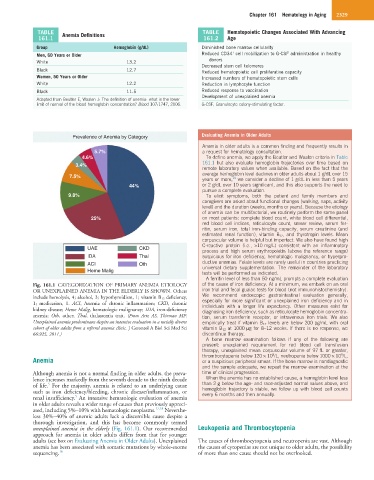
            Fig. 161.1  CATEGORIZATION OF PRIMARY ANEMIA ETIOLOGY   of the cause of iron deficiency. At a minimum, we embark on an oral
            OR UNEXPLAINED ANEMIA IN THE ELDERLY IS SHOWN. Others   iron trial and fecal guaiac tests for blood (not immunohistochemistry).
            include hemolysis, 4; alcohol, 3; hypothyroidism, 1; vitamin B 12  deficiency,   We  recommend  endoscopic  gastrointestinal  evaluation  generally,
            1;  medication,  1.  ACI,  Anemia  of  chronic  inflammation;  CKD,  chronic   especially for more significant or unexplained iron deficiency and in
                                                                   individuals  with  a  longer  life  expectancy.  Other  measures  exist  for
            kidney disease; Heme Malig, hematologic malignancy; IDA, iron-deficiency   diagnosing iron deficiency, such as reticulocyte hemoglobin concentra-
            anemia;  Oth,  other;  Thal,  thalassemia  trait.  (From  Artz  AS,  Thirman  MF:   tion,  serum  transferrin  receptor,  or  intravenous  iron  trials.  We  also
            Unexplained anemia predominates despite an intensive evaluation in a racially diverse   empirically  treat  if  vitamin  B 12   levels  are  below  200 pg/mL  with  oral
            cohort of older adults from a referral anemia clinic. J Gerontol A Biol Sci Med Sci   vitamin B 12  at 1000 µg for 8–12 weeks. If there is no response, we
            66:925, 2011.)                                         discontinue therapy.
                                                                    A  bone  marrow  examination  follows  if  any  of  the  following  are
                                                                   present:  unexplained  requirement  for  red  blood  cell  transfusion
                                                                   therapy,  unexplained  mean  corpuscular  volume  of  97 fL  or  greater,
                                                                                          9
                                                                                                                 9
                                                                   thrombocytopenia below 120 × 10 /L, neutropenia below 1000 × 10 /L,
            Anemia                                                 or a suspicious peripheral smear. If the bone marrow is nondiagnostic
                                                                   and the sample adequate, we repeat the marrow examination at the
            Although anemia is not a normal finding in older adults, the preva-  time of clinical progression.
            lence increases markedly from the seventh decade to the ninth decade   When the anemia has no established cause, a hemoglobin level less
                 5
            of life.  For the majority, anemia is related to an underlying cause   than 2 g below the age- and race-adjusted normal values above, and
            such  as  iron  deficiency/bleeding,  chronic  disease/inflammation,  or   hemoglobin  trajectory  is  stable,  we  follow  up  with  blood  cell  counts
                                                                   every 6 months and then annually.
                          5
            renal insufficiency.  An intensive hematologic evaluation of anemia
            in older adults reveals a wider range of causes than previously appreci-
            ated, including 5%–10% with hematologic neoplasms. 17,18  Neverthe-
            less 30%–40% of anemic adults lack a discernible cause despite a
            thorough  investigation,  and  this  has  become  commonly  termed
            unexplained  anemia  in  the  elderly  (Fig.  161.1).  Our  recommended   Leukopenia and Thrombocytopenia
            approach for anemia in older adults differs from that for younger
            adults (see box on Evaluating Anemia in Older Adults). Unexplained   The causes of thrombocytopenia and neutropenia are vast. Although
            anemia has been associated with somatic mutations by whole-exome   the causes of cytopenias are not unique to older adults, the possibility
            sequencing. 16                                        of more than one cause should not be overlooked.

