


Page 408 - Hematology_ Basic Principles and Practice ( PDFDrive )
P. 408
330    Part IV  Disorders of Hematopoietic Cell Development


         A                          B                         C


         D                          E                         F                        G
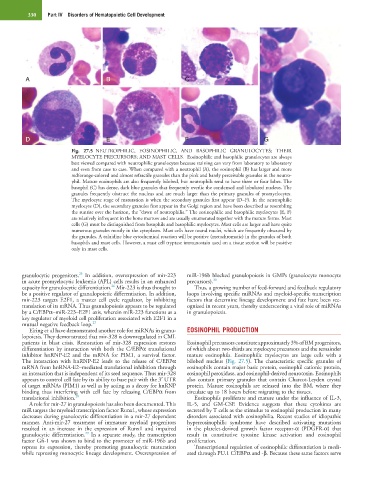
                        Fig.  27.5  NEUTROPHILIC,  EOSINOPHILIC,  AND  BASOPHILIC  GRANULOCYTES;  THEIR
                        MYELOCYTE PRECURSORS; AND MAST CELLS.  Eosinophilic and basophilic granulocytes are always
                        best viewed compared with neutrophilic granulocytes because staining can vary from laboratory to laboratory
                        and even from case to case. When compared with a neutrophil (A), the eosinophil (B) has larger and more
                        red/orange-colored and almost refractile granules than the pink and barely perceivable granules in the neutro-
                        phil. Mature eosinophils are also frequently bilobed, but neutrophils tend to have three or four lobes. The
                        basophil (C) has dense, dark blue granules that frequently overlie the condensed and lobulated nucleus. The
                        granules frequently obstruct the nucleus and are much larger than the primary granules of promyelocytes.
                        The myelocyte stage of maturation is when the secondary granules first appear (D–F). In the neutrophilic
                        myelocyte (D), the secondary granules first appear in the Golgi region and have been described as resembling
                        the sunrise over the horizon, the “dawn of neutrophilia.” The eosinophilic and basophilic myelocytes (E, F)
                        are relatively infrequent in the bone marrow and are usually enumerated together with the mature forms. Mast
                        cells (G) must be distinguished from basophils and basophilic myelocytes. Mast cells are larger and have quite
                        numerous granules mostly in the cytoplasm. Mast cells have round nuclei, which are frequently obscured by
                        the granules. A toluidine blue cytochemical reaction will be positive (metachromatic) in the granules of both
                        basophils and mast cells. However, a mast cell tryptase immunostain used on a tissue section will be positive
                        only in mast cells.


                           25
        granulocytic  progenitors.   In  addition,  overexpression  of  mir-223   miR-196b blocked granulopoiesis in GMPs (granulocyte monocyte
        in acute promyelocytic leukemia (APL) cells results in an enhanced   precursors). 30
                                     26
        capacity for granulocytic differentiation.  Mir-223 is thus thought to   Thus, a growing number of feed-forward and feedback regulatory
        be a positive regulator of granulopoietic differentiation. In addition,   loops involving specific miRNAs and myeloid-specific transcription
        mir-223  targets  E2F1,  a  master  cell  cycle  regulator,  by  inhibiting   factors that determine lineage development and fate have been rec-
        translation of its mRNA. Thus granulopoiesis appears to be regulated   ognized in recent years, thereby underscoring a vital role of miRNAs
        by a C/EBPα–miR-223–E2F1 axis, wherein miR-223 functions as a   in granulopoiesis.
        key regulator of myeloid cell proliferation associated with E2F1 in a
        mutual negative feedback loop. 27
           Eiring et al have demonstrated another role for miRNAs in granu-  EOSINOPHIL PRODUCTION
        lopoiesis. They demonstrated that mir-328 is downregulated in CML
        patients  in  blast  crisis.  Restoration  of  mir-328  expression  restores   Eosinophil precursors constitute approximately 3% of BM progenitors,
        differentiation  by  interaction  with  both  the  C/EBPα  translational   of which about two-thirds are myelocyte precursors and the remainder
        inhibitor  hnRNP-E2  and  the  mRNA  for  PIM1,  a  survival  factor.   mature  eosinophils.  Eosinophilic  myelocytes  are  large  cells  with  a
        The  interaction  with  hnRNP-E2  leads  to  the  release  of  C/EBPα   bilobed  nucleus  (Fig.  27.5).  The  characteristic  specific  granules  of
        mRNA from hnRNA-E2–mediated translational inhibition through   eosinophils contain major basic protein, eosinophil cationic protein,
        an interaction that is independent of its seed sequence. Thus mir-328   eosinophil peroxidase, and eosinophil-derived neurotoxin. Eosinophils
        appears to control cell fate by its ability to base pair with the 3′ UTR   also  contain  primary  granules  that  contain  Charcot-Leyden  crystal
        of target mRNAs (PIM1) as well as by acting as a decoy for hnRNP   protein.  Mature  eosinophils  are  released  into  the  BM,  where  they
        binding  thus  interfering  with  cell  fate  by  releasing  C/EBPα  from   circulate up to 18 hours before migrating to the tissues.
        translational inhibition. 28                             Eosinophils proliferate and mature under the influence of IL-3,
           A role for mir-27 in granulopoiesis has also been documented. This   IL-5,  and  GM-CSF.  Evidence  suggests  that  these  cytokines  are
        miR targets the myeloid transcription factor Runx1, whose expression   secreted by T cells as the stimulus to eosinophil production in many
        decreases during granulocytic differentiation in a mir-27 dependent   disorders associated with eosinophilia. Recent studies of idiopathic
        manner.  Anti-mir-27  treatment  of  immature  myeloid  progenitors   hypereosinophilic  syndrome  have  described  activating  mutations
        resulted  in  an  increase  in  the  expression  of  Runx1  and  impaired   in  the  platelet-derived  growth  factor  receptor-α  (PDGFR-α)  that
                             29
        granulocytic differentiation.  In a separate study, the transcription   result  in  constitutive  tyrosine  kinase  activation  and  eosinophil
        factor Gfi-1 was shown to bind to the promoter of miR-196b and   proliferation.
        repress  its  expression,  thereby  promoting  granulocytic  maturation   Transcriptional regulation of eosinophilic differentiation is medi-
        while repressing monocytic lineage development. Overexpression of   ated through PU.1 C/EBPα and -β. Because these same factors serve

