


Page 449 - Hematology_ Basic Principles and Practice ( PDFDrive )
P. 449
370    Part IV  Disorders of Hematopoietic Cell Development


                                                                 Passive transplacental passage of IgG antiplatelet antibodies into
                                                              fetal circulation can cause rapid destruction of fetal platelets. This
                                                              occurs in two circumstances: a (1) maternal autoimmune disease
                                                              such  as  idiopathic  thrombocytopenic  purpura  or  systemic  lupus
                                                              erythematosus and (2) in neonatal alloimmune thrombocytopenia
                                                              by alloimmunization of the pregnant mother to fetal antigens inher-
                                                              ited from father but absent in the mother. In the former situation,
                                                              the mother has thrombocytopenia or a history of such; in the latter
                                                              situation, the mother has a normal platelet count and serum antibod-
                                                              ies to human platelet alloantigens.
                                                                 Thrombocytopenia with absent radii syndrome is distinguished
                                                              from CAMT because in TAR, the radii are absent. Peripheral blood
                                                              chromosomes analysis is not associated with increased breakage with
                                                              DEB or MMC clastogenic stress testing, which allows CAMT to be
                                                              distinguished from FA. Increased platelet destruction also occurs in
                                                              newborns with giant benign hemangiomas of skin, liver, or spleen,
                                                              the so-called Kasabach-Merritt syndrome.
                                                                 In an infant or young child with a CAMT clinical diagnosis but
                                                              without mutant MPL, other inherited forms of thrombocytopenia
                                                              should be addressed (see Table 29.5). These can generally be classified
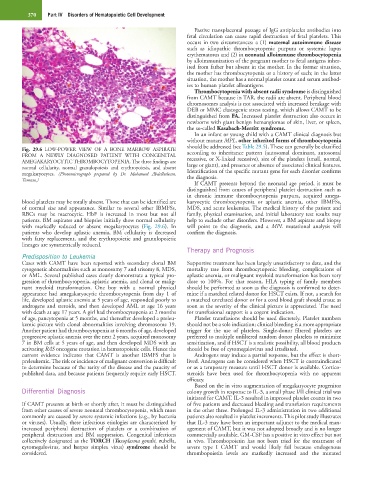
        Fig.  29.6  LOW-POWER  VIEW  OF  A  BONE  MARROW  ASPIRATE   according  to  inheritance  pattern  (autosomal  dominant,  autosomal
        FROM  A  NEWLY  DIAGNOSED  PATIENT  WITH  CONGENITAL   recessive, or X-linked recessive), size of the platelets (small, normal,
        AMEGAKARYOCYTIC THROMBOCYTOPENIA. The three findings are   large or giant), and presence or absence of associated clinical features.
        normal  cellularity,  normal  granulopoiesis  and  erythropoiesis,  and  absent   Identification of the specific mutant gene for each disorder confirms
        megakaryocytes.  (Photomicrograph  prepared  by  Dr.  Mohamed  Abdelhaleem,   the diagnosis.
        Toronto.)
                                                                 If CAMT presents beyond the neonatal age period, it must be
                                                              distinguished from causes of peripheral platelet destruction such as
                                                              in  chronic  immune  thrombocytopenia  purpura,  acquired  amega-
        blood platelets may be totally absent. Those that can be identified are   karyocytic  thrombocytopenia  or  aplastic  anemia,  other  IBMFSs,
        of  normal  size  and  appearance.  Similar  to  several  other  IBMFSs,   MDS, and acute leukemias. The medical history of the patient and
        RBCs  may  be  macrocytic.  HbF  is  increased  in  most  but  not  all   family, physical examination, and initial laboratory test results may
        patients. BM aspirates and biopsies initially show normal cellularity   help to exclude other disorders. However, a BM aspirate and biopsy
        with  markedly  reduced  or  absent  megakaryocytes  (Fig.  29.6).  In   will  point  to  the  diagnosis,  and  a  MPL  mutational  analysis  will
        patients  who  develop  aplastic  anemia,  BM  cellularity  is  decreased   confirm the diagnosis.
        with  fatty  replacement,  and  the  erythropoietic  and  granulopoietic
        lineages are symmetrically reduced.
                                                              Therapy and Prognosis
        Predisposition to Leukemia
        Cases with CAMT have been reported with secondary clonal BM   Supportive treatment has been largely unsatisfactory to date, and the
        cytogenetic abnormalities such as monosomy 7 and trisomy 8, MDS,   mortality  rate  from  thrombocytopenic  bleeding,  complications  of
        or AML. Several published cases clearly demonstrate a typical pro-  aplastic anemia, or malignant myeloid transformation has been very
        gression of thrombocytopenia, aplastic anemia, and clonal or malig-  close  to  100%.  For  that  reason,  HLA  typing  of  family  members
        nant  myeloid  transformation.  One  boy  with  a  normal  physical   should be performed as soon as the diagnosis is confirmed to deter-
        appearance had amegakaryocytic thrombocytopenia from day 1 of   mine if a matched related donor for HSCT exists. If not, a search for
        life, developed aplastic anemia at 5 years of age, responded poorly to   a matched unrelated donor or for a cord blood graft should ensue as
        androgens and steroids, and then developed AML at age 16 years   soon as the severity of the clinical picture is appreciated. The need
        with death at age 17 years. A girl had thrombocytopenia at 2 months   for transfusional support is a cogent indication.
        of age, pancytopenia at 5 months, and thereafter developed a preleu-  Platelet transfusions should be used discretely. Platelet numbers
        kemic picture with clonal abnormalities involving chromosome 19.   should not be a sole indication; clinical bleeding is a more appropriate
        Another patient had thrombocytopenia at 6 months of age, developed   trigger  for  the  use  of  platelets.  Single-donor  filtered  platelets  are
        progressive aplastic anemia over the next 2 years, acquired monosomy   preferred to multiple unfiltered random donor platelets to minimize
        7 in BM cells at 5 years of age, and then developed MDS with an   sensitization, and if HSCT is a realistic possibility, all blood products
        activating RAS oncogene mutation in hematopoietic cells. Hence the   should be free of cytomegalovirus and irradiated.
        current  evidence  indicates  that  CAMT  is  another  IBMFS  that  is   Androgens may induce a partial response, but the effect is short-
        preleukemic. The risk or incidence of malignant conversion is difficult   lived. Androgens can be considered when HSCT is contraindicated
        to determine because of the rarity of the disease and the paucity of   or as a temporary measure until HSCT donor is available. Cortico-
        published data, and because patients frequently require early HSCT.  steroids  have  been  used  for  thrombocytopenia  with  no  apparent
                                                              efficacy.
                                                                 Based on the in vitro augmentation of megakaryocyte progenitor
        Differential Diagnosis                                colony growth in response to IL-3, a small phase I/II clinical trial was
                                                              initiated for CAMT. IL-3 resulted in improved platelet counts in two
        If CAMT presents at birth or shortly after, it must be distinguished   of five patients and decreased bleeding and transfusion requirements
        from other causes of severe neonatal thrombocytopenia, which most   in the other three. Prolonged IL-3 administration in two additional
        commonly are caused by severe systemic infections (e.g., by bacteria   patients also resulted in platelet increments. This pilot study illustrates
        or viruses). Usually, these infectious etiologies are characterized by   that IL-3 may have been an important adjunct to the medical man-
        increased  peripheral  destruction  of  platelets  or  a  combination  of   agement of CAMT, but it was not adopted broadly and is no longer
        peripheral  destruction  and  BM  suppression.  Congenital  infections   commercially available. GM-CSF has a positive in vitro effect but not
        collectively designated as the TORCH (Toxoplasma gondii, rubella,   in  vivo. Thrombopoietin  has  not  been  tried  for  the  treatment  of
        cytomegalovirus,  and  herpes  simplex  virus)  syndrome  should  be   severe  type  I  CAMT  and  would  likely  fail  because  endogenous
        considered.                                           thrombopoietin  levels  are  markedly  increased  and  the  mutated

