


Page 496 - Hematology_ Basic Principles and Practice ( PDFDrive )
P. 496
416    Part IV  Disorders of Hematopoietic Cell Development


           Acetylcholinesterase from erythrocytes and alkaline phosphatase   these cell surface GPI-anchored proteins are manifold; they can serve
        from leukocytes were the first GPI-anchored proteins shown to be   as complement regulatory proteins, enzymes, blood group antigens,
        missing  in  PNH.  Since  then,  more  than  a  dozen  GPI-anchored   receptors, and adhesion molecules. Membrane inhibitor of reactive
        proteins with heterogeneous expression on hematopoietic cells have   lysis (CD59) and decay accelerating factor (CD55)—both comple-
        been found to be missing in PNH (Table 31.1). The functions of   ment  regulatory  proteins—are  the  most  widely  expressed  GPI-
                                                              anchored proteins and can be found on all hematopoietic lineages
                                                                                 −
                                                                           +
                                                              including  CD34 CD38 stem/progenitor  cells.  Certain  proteins,
         Monoclonal antibody                                  CD58 (LFA3) and CD16 (FcγRIII), may exist in both GPI-linked
                                                              and transmembrane forms.
             Protein
                                                              Phosphatidylinositol-Glycan Complementation
                                Proaerolysin                  Class A Gene
                                  FLAER
          Ethanolamine
                         p                                    Investigators in Osaka, Japan, first identified the gene that was defec-
                                  Glycan      Glucosamine     tive in PNH. The gene was isolated by expression cloning and named
                         p                                    PIGA. PIGA was then cloned into an expression vector and trans-
          Ethanolamine                                        fected into GPI-deficient cell lines derived from PNH patients; cell
                                                Inositol      surface  expression  of  all  the  missing  GPI-anchored  proteins  was
                                                              restored, confirming that PIGA mutations are responsible for causing
                                                  P           PNH. Since this seminal discovery, somatic mutations of the PIGA
                                        PIPLC                 gene have been found in virtually all PNH patients to date. Little to
                                                              no  GPI  anchor  is  made  when  the  PIGA  gene  is  mutated.  Conse-
                                                              quently, the translated protein (e.g., CD59, CD55, etc.) residing in
         Plasma                                               the cisterna of the endoplasmic reticulum cannot be attached to the
        membrane                                              GPI anchor and is degraded in situ.
                                                                 The  human  PIGA  gene  contains  six  exons,  five  introns,  and
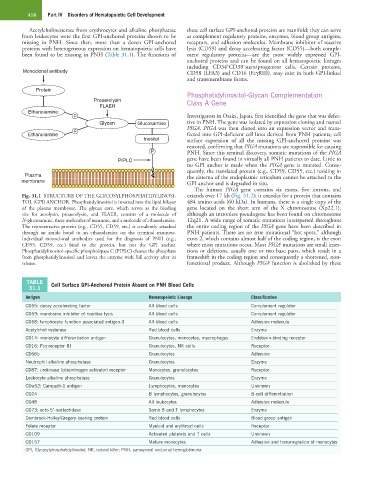
        Fig. 31.1  STRUCTURE OF THE GLYCOSYLPHOSPHATIDYLINOSI-  extends over 17 kb (Fig. 31.2); it encodes for a protein that contains
        TOL (GPI) ANCHOR. Phosphatidylinositol is inserted into the lipid bilayer   484 amino acids (60 kDa). In humans, there is a single copy of the
        of  the  plasma  membrane.  The  glycan  core,  which  serves  as  the  binding    gene  located  on  the  short  arm  of  the  X  chromosome  (Xp22.1),
        site  for  aerolysin,  proaerolysin,  and  FLAER,  consists  of  a  molecule  of   although an intronless pseudogene has been found on chromosome
        N-glucosamine, three molecules of mannose, and a molecule of ethanolamine.   12q21. A wide range of somatic mutations interspersed throughout
        The representative protein (e.g., CD55, CD59, etc.) is covalently attached   the entire coding region of the PIGA gene have been described in
        through  an  amide  bond  to  an  ethanolamine  on  the  terminal  mannose.   PNH patients. There are no true mutational “hot spots,” although
        Individual  monoclonal  antibodies  used  for  the  diagnosis  of  PNH  (e.g.,   exon 2, which contains almost half of the coding region, is the exon
        CD55,  CD59,  etc.)  bind  to  the  protein,  but  not  the  GPI  anchor.   where most mutations occur. Most PIGA mutations are small inser-
        Phosphatidylinositol-specific phospholipase C (PIPLC) cleaves the phosphate   tions or deletions, usually one or two base pairs, which result in a
        from phosphatidylinositol and leaves the enzyme with full activity after its   frameshift in the coding region and consequently a shortened, non-
        release.                                              functional product. Although PIGA function is abolished by these


          TABLE   Cell Surface GPI-Anchored Protein Absent on PNH Blood Cells
          31.1
         Antigen                                  Hematopoietic Lineage            Classification
         CD55: decay accelerating factor          All blood cells                  Complement regulator
         CD59: membrane inhibitor of reactive lysis  All blood cells               Complement regulator
         CD58: lymphocyte function associated antigen-3  All blood cells           Adhesion molecule
         Acetylcholinesterase                     Red blood cells                  Enzyme
         CD14: monocyte differentiation antigen   Granulocytes, monocytes, macrophages  Endotoxin-binding receptor
         CD16: Fcγ receptor III                   Granulocytes, NK cells           Receptor
         CD66b                                    Granulocytes                     Adhesion
         Neutrophil alkaline phosphatase          Granulocytes                     Enzyme
         CD87: urokinase (plasminogen activator) receptor  Monocytes, granulocytes  Receptor
         Leukocyte alkaline phosphatase           Granulocytes                     Enzyme
         CDw52: Campath-1 antigen                 Lymphocytes, monocytes           Unknown
         CD24                                     B lymphocytes, granulocytes      B-cell differentiation
         CD48                                     All leukocytes                   Adhesion molecule
         CD73: ecto-5′-nucleotidase               Some B and T lymphocytes         Enzyme
         Dombrock-Holley/Gregory-bearing protein  Red blood cells                  Blood group antigen
         Folate receptor                          Myeloid and erythroid cells      Receptor
         CD109                                    Activated platelets and T cells  Unknown
         CD157                                    Mature monocytes                 Adhesion and transmigration of monocytes
         GPI, Glycosylphosphatidylinositol; NK, natural killer; PNH, paroxysmal nocturnal hemoglobinuria.

