


Page 67 - Hematology_ Basic Principles and Practice ( PDFDrive )
P. 67
Chapter 4  Regulation of Gene Expression, Transcription, Splicing, and RNA Metabolism  39


                                                   HNF4α1       Factor IX gene
                                                         TATA box Exon  Intron
                                     Enhancer     Promoter                         Enhancer

                                                                  Transcription into factor IX mRNA


                                                                  Translation into factor IX protein


                              A

                                                                Factor IX gene


                                     Enhancer     Promoter                         Enhancer
                                                                  No transcription or translation

                              B                            Hemophilia B
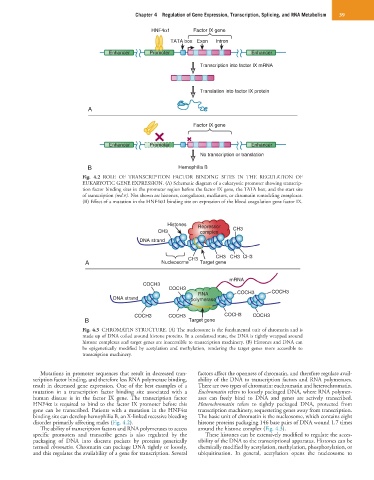
                            Fig.  4.2  ROLE  OF  TRANSCRIPTION  FACTOR  BINDING  SITES  IN  THE  REGULATION  OF
                            EUKARYOTIC GENE EXPRESSION. (A) Schematic diagram of a eukaryotic promoter showing transcrip-
                            tion factor binding sites in the promoter region before the factor IX gene, the TATA box, and the start site
                            of transcription (red ×). Not shown are histones, coregulators, mediators, or chromatin remodeling complexes.
                            (B) Effect of a mutation in the HNF4α1 binding site on expression of the blood coagulation gene factor IX.


                                                        Histones  Repressor
                                                     CH3          complex    CH3
                                               DNA strand


                                                               CH3      CH3 CH3 CH3
                             A                        Nucleosome  Target gene

                                                                            mRNA
                                                COCH3
                                                        COCH3
                                                                  RNA          COCH3      COCH3
                                      DNA strand               polymerase


                                             COCH3      COCH3             COCH3     COCH3
                             B                                 Target gene
                            Fig. 4.3  CHROMATIN STRUCTURE. (A) The nucleosome is the fundamental unit of chromatin and is
                            made up of DNA coiled around histone proteins. In a condensed state, the DNA is tightly wrapped around
                            histone complexes and target genes are inaccessible to transcription machinery. (B) Histones and DNA can
                            be  epigenetically  modified  by  acetylation  and  methylation,  rendering  the  target  genes  more  accessible  to
                            transcription machinery.


              Mutations in promoter sequences that result in decreased tran-  factors affect the openness of chromatin, and therefore regulate avail-
            scription factor binding, and therefore less RNA polymerase binding,   ability of the DNA to transcription factors and RNA polymerases.
            result in decreased gene expression. One of the best examples of a   There are two types of chromatin: euchromatin and heterochromatin.
            mutation  in  a  transcription  factor  binding  site  associated  with  a   Euchromatin refers to loosely packaged DNA, where RNA polymer-
            human  disease  is  in  the  factor  IX  gene.  The  transcription  factor   ases  can  freely  bind  to  DNA  and  genes  are  actively  transcribed.
            HNF4α is required to bind to the factor IX promoter before this   Heterochromatin  refers  to  tightly  packaged  DNA,  protected  from
            gene can be transcribed. Patients with a mutation in the HNF4α   transcription machinery, sequestering genes away from transcription.
            binding site can develop hemophilia B, an X-linked recessive bleeding   The basic unit of chromatin is the nucleosome, which contains eight
            disorder primarily affecting males (Fig. 4.2).        histone proteins packaging 146 base pairs of DNA wound 1.7 times
              The ability of transcription factors and RNA polymerases to access   around the histone complex (Fig. 4.3).
            specific  promoters  and  transcribe  genes  is  also  regulated  by  the   These histones can be extensively modified to regulate the acces-
            packaging  of  DNA  into  discrete  packets  by  proteins  generically   sibility of the DNA to the transcriptional apparatus. Histones can be
            termed chromatin. Chromatin can package DNA tightly or loosely,   chemically modified by acetylation, methylation, phosphorylation, or
            and this regulates the availability of a gene for transcription. Several   ubiquitination.  In  general,  acetylation  opens  the  nucleosome  to

