


Page 66 - Hematology_ Basic Principles and Practice ( PDFDrive )
P. 66
38    Part I  Molecular and Cellular Basis of Hematology


                                                     TATA box Exon  Intron
                                 Enhancer     Promoter                         Enhancer

                                                               Transcription


                                                               Splicing


                                                               Finished transcription product
                                                   cap              -AAAAAAAAA


                                                               Translation into protein product


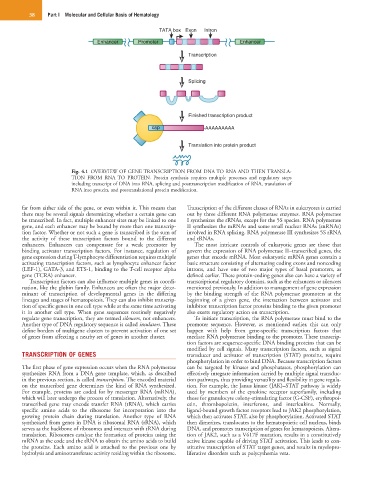
                        Fig. 4.1  OVERVIEW OF GENE TRANSCRIPTION FROM DNA TO RNA AND THEN TRANSLA-
                        TION  FROM  RNA  TO  PROTEIN.  Protein  synthesis  requires  multiple  processes  and  regulatory  steps
                        including transcript of DNA into RNA, splicing and posttranscription modification of RNA, translation of
                        RNA into protein, and posttranslational protein modification.


        far from either side of the gene, or even within it. This means that   Transcription of the different classes of RNAs in eukaryotes is carried
        there may be several signals determining whether a certain gene can   out by three different RNA polymerase enzymes. RNA polymerase
        be transcribed. In fact, multiple enhancer sites may be linked to one   I synthesizes the rRNAs, except for the 5S species. RNA polymerase
        gene, and each enhancer may be bound by more than one transcrip-  II synthesizes the mRNAs and some small nuclear RNAs (snRNAs)
        tion factor. Whether or not such a gene is transcribed is the sum of   involved in RNA splicing. RNA polymerase III synthesizes 5S rRNA
        the  activity  of  these  transcription  factors  bound  to  the  different   and tRNAs.
        enhancers.  Enhancers  can  compensate  for  a  weak  promoter  by   The  most  intricate  controls  of  eukaryotic  genes  are  those  that
        binding  activator  transcription  factors.  For  instance,  regulation  of   govern the expression of RNA polymerase II–transcribed genes, the
        gene expression during T-lymphocyte differentiation requires multiple   genes that encode mRNA. Most eukaryotic mRNA genes contain a
        activating transcription factors, such as lymphocyte enhancer factor   basic structure consisting of alternating coding exons and noncoding
        (LEF-1), GATA-3, and ETS-1, binding to the T-cell receptor alpha   introns,  and  have  one  of  two  major  types  of  basal  promoters,  as
        gene (TCRA) enhancer.                                 defined earlier. These protein-coding genes also can have a variety of
           Transcription factors can also influence multiple genes in coordi-  transcriptional regulatory domains, such as the enhancers or silencers
        nation, like the globin family. Enhancers are often the major deter-  mentioned previously. In addition to management of gene expression
        minant  of  transcription  of  developmental  genes  in  the  differing   by the binding strength of the RNA polymerase promoters at the
        lineages and stages of hematopoiesis. They can also inhibit transcrip-  beginning  of  a  given  gene,  the  interaction  between  activator  and
        tion of specific genes in one cell type while at the same time activating   inhibitor transcription factor proteins binding to the given promoter
        it  in  another  cell  type.  When  gene  sequences  routinely  negatively   also exerts regulatory action on transcription.
        regulate gene transcription, they are termed silencers, not enhancers.   To initiate transcription, the RNA polymerase must bind to the
        Another type of DNA regulatory sequence is called insulators. These   promoter  sequence.  However,  as  mentioned  earlier,  this  can  only
        define borders of multigene clusters to prevent activation of one set   happen  with  help  from  gene-specific  transcription  factors  that
        of genes from affecting a nearby set of genes in another cluster.  mediate RNA polymerase binding to the promoter. These transcrip-
                                                              tion factors are sequence-specific DNA binding proteins that can be
                                                              modified by cell signals. Many transcription factors, such as signal
        TRANSCRIPTION OF GENES                                transducer  and  activator  of  transcription  (STAT)  proteins,  require
                                                              phosphorylation in order to bind DNA. Because transcription factors
        The first phase of gene expression occurs when the RNA polymerase   can be targeted by kinases and phosphatases, phosphorylation can
        synthesizes RNA from a DNA gene template, which, as described   effectively integrate information carried by multiple signal transduc-
        in the previous section, is called transcription. The encoded material   tion pathways, thus providing versatility and flexibility in gene regula-
        on the transcribed gene determines the kind of RNA synthesized.   tion. For example, the Janus kinase (JAK)–STAT pathway is widely
        For example, proteins are coded for by messenger RNA (mRNA),   used  by  members  of  the  cytokine  receptor  superfamily,  including
        which will later undergo the process of translation. Alternatively, the   those for granulocyte colony-stimulating factor (G-CSF), erythropoi-
        transcribed gene may encode transfer RNA (tRNA), which carries   etin,  thrombopoietin,  interferons,  and  interleukins.  Normally,
        specific  amino  acids  to  the  ribosome  for  incorporation  into  the   ligand-bound growth factor receptors lead to JAK2 phosphorylation,
        growing  protein  chain  during  translation.  Another  type  of  RNA   which then activates STAT, also by phosphorylation. Activated STAT
        synthesized from genes in DNA is ribosomal RNA (rRNA), which   then dimerizes, translocates to the hematopoietic cell nucleus, binds
        serves as the backbone of ribosomes and interacts with tRNA during   DNA, and promotes transcription of genes for hematopoiesis. Altera-
        translation. Ribosomes catalyze the formation of proteins using the   tion of JAK2, such as a V617F mutation, results in a constitutively
        mRNA as the code and the tRNA to obtain the amino acids to build   active kinase capable of driving STAT activation. This leads to con-
        the  proteins.  Each  amino  acid  is  attached  to  the  previous  one  by   stitutive transcription of STAT target genes, and results in myelopro-
        hydrolysis and aminotransferase activity residing within the ribosome.   liferative disorders such as polycythemia vera.

