


Page 778 - Hematology_ Basic Principles and Practice ( PDFDrive )
P. 778
664    Part V  Red Blood Cells


         A                                     B                                 C

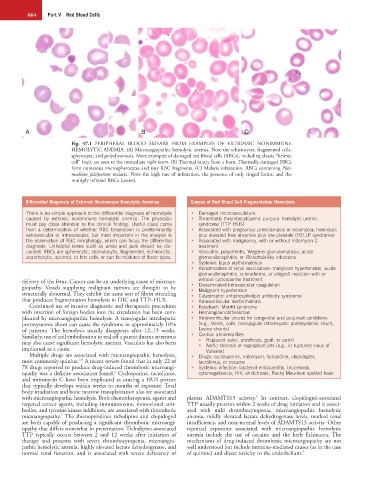
                        Fig.  47.1  PERIPHERAL  BLOOD  SMEARS  FROM  EXAMPLES  OF  EXTRINSIC  NONIMMUNE
                        HEMOLYTIC ANEMIA. (A) Microangiopathic hemolytic anemia. Note the schistocytes, fragmented cells,
                        spherocyte, and polychromasia. More examples of damaged red blood cells (RBCs), including classic “helmet
                        cell” (top), are seen to the immediate right insert. (B) Thermal injury from a burn. Thermally damaged RBCs
                        form numerous microspherocytes and tiny RBC fragments. (C) Malaria infestation. RBCs containing Plas-
                        modium falciparum malaria. Note the high rate of infestation, the presence of only ringed forms, and the
                        multiply infested RBCs (center).


         Differential Diagnosis of Extrinsic Nonimmune Hemolytic Anemias  Causes of Red Blood Cell Fragmentation Hemolysis

          There is no simple approach to the differential diagnosis of hemolysis   •  Damaged microvasculature
          caused  by  extrinsic  nonimmune  hemolytic  anemia.  The  physician   •  Thrombotic thrombocytopenic purpura–hemolytic uremic
          must  pay  close  attention  to  the  clinical  finding.  Useful  clues  come   syndrome (TTP–HUS)
          from  a  determination  of  whether  RBC  breakdown  is  predominantly   •  Associated with pregnancy: preeclampsia or eclampsia; hemolysis
          extravascular  or  intravascular,  but  most  important  in  the  analysis  is   plus elevated liver enzymes plus low platelets (HELLP syndrome)
          the observation of RBC morphology, which can focus the differential   •  Associated with malignancy, with or without mitomycin C
          diagnosis.  Unhelpful  terms  such  as  aniso  and  poik  should  be  dis-  treatment
          carded. RBCs are spherocytic, stomatocytic, fragmented, echinocytic,   •  Vasculitis: polyarteritis, Wegener granulomatosis, acute
          acanthocytic, spurred, or bite cells, or can be mixtures of these types.  glomerulonephritis, or Rickettsia-like infections
                                                                •  Systemic lupus erythematosus
                                                                •  Abnormalities of renal vasculature: malignant hypertension, acute
                                                                  glomerulonephritis, scleroderma, or allograft rejection with or
        delivery of the fetus. Cancer can be an underlying cause of microan-  without cyclosporine treatment
        giopathy.  Vessels  supplying  malignant  tumors  are  thought  to  be   •  Disseminated intravascular coagulation
                                                                •  Malignant hypertension
        structurally abnormal. They exhibit the same sort of fibrin stranding   •  Catastrophic antiphospholipid antibody syndrome
        that produces fragmentation hemolysis in DIC and TTP–HUS.  •  Atrioventricular malformations
           Continued use of invasive diagnostic and therapeutic procedures   •  Kasabach–Merritt syndrome
        with insertion of foreign bodies into the circulation has been com-  •  Hemangioendotheliomas
        plicated by microangiopathic hemolysis. A transjugular intrahepatic   •  Atrioventricular shunts for congenital and acquired conditions
        portosystemic shunt can cause the syndrome in approximately 10%   (e.g., stents, coils, transjugular intrahepatic portosystemic shunt,
        of  patients.  The  hemolysis  usually  disappears  after  12–15  weeks.   Levine shunts)
        Similarly, use of coil embolization to seal off a patent ductus arteriosus   •  Cardiac abnormalities
        may also cause significant hemolytic anemia. Vasculitis has also been   •  Replaced valve, prosthesis, graft, or patch
                                                                  •  Aortic stenosis or regurgitant jets (e.g., in ruptured sinus of
        implicated as a cause.                                      Valsalva)
           Multiple drugs are associated with microangiopathic hemolysis,   •  Drugs: cyclosporine, mitomycin, ticlopidine, clopidogrel,
                           3,4
        most commonly quinine.  A recent review found that in only 22 of   tacrolimus, or cocaine
        78 drugs reported to produce drug-induced thrombotic microangi-  •  Systemic infection: bacterial endocarditis, brucellosis,
                                      4
        opathy was a definite association found.  Cyclosporine, tacrolimus,   cytomegalovirus, HIV, ehrlichiosis, Rocky Mountain spotted fever.
        and mitomycin C have been implicated as causing a HUS picture
        that  typically  develops  within  weeks  to  months  of  exposure. Total
        body irradiation and bone marrow transplantation also are associated
                                                                                     6
        with microangiopathic hemolysis. Both chemotherapeutic agents and   plasma  ADAMTS13  activity.   In  contrast,  clopidogrel-associated
        targeted cancer agents, including immunotoxins, monoclonal anti-  TTP usually presents within 2 weeks of drug initiation and is associ-
        bodies, and tyrosine kinase inhibitors, are associated with thrombotic   ated  with  mild  thrombocytopenia,  microangiopathic  hemolytic
                     5
        microangiopathy.  The  thienopyridines  ticlodipine  and  clopidogrel   anemia, mildly elevated lactate dehydrogenase levels, marked renal
        are both capable of producing a significant thrombotic microangi-  insufficiency, and near-normal levels of ADAMTS13 activity. Other
        opathy that differs somewhat in presentation. Ticlodipine-associated   reported  exposures  associated  with  microangiopathic  hemolytic
        TTP  typically  occurs  between  2  and  12  weeks  after  initiation  of   anemia  include  the  use  of  cocaine  and  the  herb  Echinacea,  The
        therapy  and  presents  with  severe  thrombocytopenia,  microangio-  mechanisms  of  drug-induced  thrombotic  microangiopathy  are  not
        pathic hemolytic anemia, highly elevated lactate dehydrogenase, and   well understood but include immune-mediated causes (as in the case
        normal  renal  function,  and  is  associated  with  severe  deficiency  of   of quinine) and direct toxicity to the endothelium. 4

