


Page 99 - Hematology_ Basic Principles and Practice ( PDFDrive )
P. 99
70    Part I  Molecular and Cellular Basis of Hematology


                                 Membrane                     different  cell  cycle  and  antiapoptotic-related  genes  (see  Fig.  7.2).
                                  receptor                    Other  MAPKs  include  the  stress-activated  kinases  JNK  and  p38.
                                                              Constitutive MAPK in hematopoietic stem cells is known to induce
                                                              myeloproliferative disorders.
                                    Sos
                      PI3K                   Phospholipase C
                                                              The Transforming Growth Factor-β Pathway
                                    Ras
                                                  IP3         The TGFβ family of cytokines contains two subfamilies: the TGFβ/
           Signaling  PDK1          Raf                       Activin/Nodal and the bone morphogenetic protein (BMP)/growth
          Molecules                                           and  differentiation  factor  (GDF)/Müllerian-inhibiting  substance
                                                 Ca2+         (MIS)  subfamilies.  At  the  plasma  membrane  TGFβ  ligands  bind
                                   MEK1
                                                              with  high  affinity  to  the  ectodomain  of  type  II  receptors,  which
                       Akt                                    then  recruit  type  I  receptors.  This  forms  a  large  ligand–receptor
                                    ERK        Calcineurin    complex involving a ligand dimer and four receptor subunits. Upon
                                                              ligand binding, the type II receptor phosphorylates multiple serine
                                                              and  threonine  residues  in  the  cytoplasmic  GS-rich  region  of  the
        Transcription  FoxO         Elk1         NFAT         type I receptor, leading to its activation. The phosphorylated TGFβ
          Factors
                                                              type  I  receptor  binds  to  and  phosphorylates  Smad2  and  Smad3
                                 Transcription                transcription factors, which are critical mediators of TGFβ signaling
                              (Gene Expression)               and function. Upon phosphorylation, Smad proteins translocate to
                                                              the nucleus to activate gene expression through binding to specific
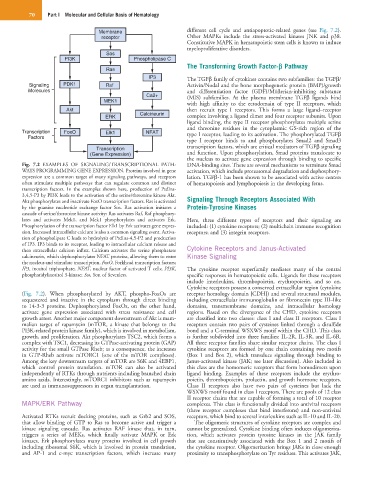
        Fig.  7.2  EXAMPLES  OF  SIGNALING/TRANSCRIPTIONAL  PATH-  DNA-binding sites. There are several mechanisms to terminate Smad
        WAYS PROGRAMMING GENE EXPRESSION. Proteins involved in gene   activation, which include proteasomal degradation and dephosphory-
        expression are a common target of many signaling pathways, and receptors   lation. TGFβ-1 has been shown to be associated with active centers
        often  stimulate multiple  pathways that  can  regulate  common  and distinct   of hematopoiesis and lymphopoiesis in the developing fetus.
        transcription  factors.  In  the  examples  shown  here,  production  of  PtdIns-
        3,4,5-P3 by PI3K leads to the activation of the serine/threonine kinase Akt.
        Akt phosphorylates and inactivate FoxO transcription factors. Ras is activated   Signaling Through Receptors Associated With
        by  the  guanine  nucleotide  exchange  factor  Sos.  Ras  activation  initiates  a   Protein-Tyrosine Kinases
        cascade of serine/threonine kinase activity: Ras activates Raf, Raf phosphory-
        lates  and  activates  Mek1,  and  Mek1  phosphorylates  and  activates  Erk.   Here,  three  different  types  of  receptors  and  their  signaling  are
        Phosphorylation of the transcription factor Elk1 by Erk activates gene expres-  included: (1) cytokine receptors; (2) multichain immune recognition
        sion. Increased intracellular calcium is also a common signaling event. Activa-  receptors; and (3) integrin receptors.
        tion of phospholipase C leads to hydrolysis of PtdIns-4,5-P2 and production
        of IP3. IP3 binds to its receptor, leading to intracellular calcium release and
        then extracellular calcium influx. Calcium activates the serine phosphatase   Cytokine Receptors and Janus-Activated
        calcineurin, which dephosphorylates NFAT proteins, allowing them to enter   Kinase Signaling
        the nucleus and stimulate transcription. FoxO, Forkhead transcription factors;
        IP3, inositol triphosphate; NFAT, nuclear factor of activated T cells; PI3K,   The  cytokine  receptor  superfamily  mediates  many  of  the  central
        phosphatidylinositol 3-kinase; Sos, Son of Sevenless.   specific responses in hematopoietic cells. Ligands for these receptors
                                                              include  interleukins,  thrombopoietin,  erythropoietin,  and  so  on.
                                                              Cytokine receptors possess a conserved extracellular region (cytokine
        (Fig.  7.2).  When  phosphorylated  by  AKT,  phospho-FoxOs  are   receptor homology domain [CDH]) and several structural modules,
        sequestered  and  inactive  in  the  cytoplasm  through  direct  binding   including extracellular immunoglobulin or fibronectin type III–like
        to  14-3-3  proteins.  Dephosphorylated  FoxOs,  on  the  other  hand,   domains,  transmembrane  domains,  and  intracellular  homology
        activate  gene  expression  associated  with  stress  resistance  and  cell   regions.  Based  on  the  divergence  of  the  CHD,  cytokine  receptors
        growth arrest. Another major component downstream of Akt is mam-  are classified into two classes: class I and class II receptors. Class I
        malian  target  of  rapamycin  (mTOR,  a  kinase  that  belongs  to  the   receptors contain two pairs of cysteines linked through a disulfide
        PI3K-related protein kinase family), which is involved in metabolism,   bond and a C-terminal WSXWS motif within the CHD. This class
        growth, and proliferation. Akt phosphorylates TSC2, which forms a   is further subdivided into three families: IL-2R, IL-3R, and IL-6R.
        complex with TSC1, decreasing its GTPase-activating protein (GAP)   All three receptor families share similar receptor chains. The class I
        activity for the small GTPase Rheb; as a consequence, the increases   cytokine receptors are formed by one chain containing two motifs
        in  GTP-Rheb  activate  mTORC1  (one  of  the  mTOR  complexes).   (Box 1 and Box 2), which transduce signaling through binding to
        Among the key downstream targets of mTOR are S6K and 4EBP1,   Janus-activated kinase (JAK; see later discussion). Also included in
        which  control  protein  translation.  mTOR  can  also  be  activated   this class are the homomeric receptors that form homodimers upon
        independently of RTKs through nutrients including branched chain   ligand  binding.  Examples  of  these  receptors  include  the  erythro-
        amino acids. Interestingly, mTORC1 inhibitors such as rapamycin   poietin, thrombopoietin, prolactin, and growth hormone receptors.
        are used as immunosuppressors in organ transplantation.  Class  II  receptors  also  have  two  pairs  of  cysteines  but  lack  the
                                                              WSXWS motif found in class I receptors. There are pools of 12 class
                                                              II receptor chains that are capable of forming a total of 10 receptor
        MAPK/ERK Pathway                                      complexes. This class is functionally divided into antiviral receptors
                                                              (three  receptor  complexes  that  bind  interferons)  and  non-antiviral
        Activated  RTKs  recruit  docking  proteins,  such  as  Grb2  and  SOS,   receptors, which bind to several interleukins such as IL-10 and IL-20.
        that allow binding of GTP to Ras to become active and trigger a   The oligomeric structures of cytokine receptors are complex and
        kinase  signaling  cascade.  Ras  activates  RAF  kinase  that,  in  turn,   cannot be generalized. Cytokine binding often induces oligomeriza-
        triggers  a  series  of  MEKs,  which  finally  activate  MAPK  or  Erk   tion,  which  activates  protein  tyrosine  kinases  in  the  JAK  family
        kinases. Erk phosphorylates many proteins involved in cell growth   that  are  constitutively  associated  with  the  Box  1  and  2  motifs  of
        including ribosomal S6K, which is involved in protein translation,   the cytokine receptor. Oligomerization brings JAKs in close enough
        and  AP-1  and  c-myc  transcription  factors,  which  increase  many   proximity to transphosphorylate on Tyr residues. This activates JAK,

