


Page 1115 - Williams Hematology ( PDFDrive )
P. 1115
1090           Part VIII:  Monocytes and Macrophages                                                                                                                                Chapter 69:  Disorders of Monocytes          1091


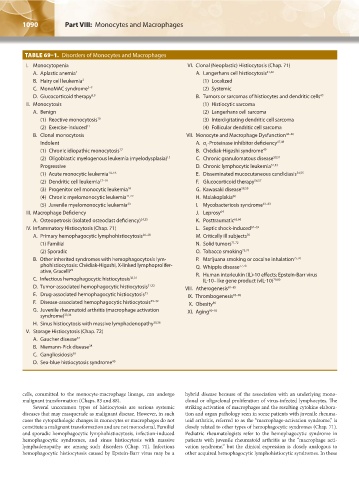
                TABLE 69–1.  Disorders of Monocytes and Macrophages
                 I.  Monocytopenia                                     VI.  Clonal (Neoplastic) Histiocytosis (Chap. 71)
                   A.  Aplastic anemia 1                                  A.  Langerhans cell histiocytosis 41,42
                   B.  Hairy cell leukemia 2                                (1)  Localized
                   C.  MonoMAC syndrome 3–7                                 (2)  Systemic
                   D.  Glucocorticoid therapy 8,9                         B.  Tumors or sarcomas of histiocytes and dendritic cells 43
                 II.  Monocytosis                                           (1)  Histiocytic sarcoma
                   A.  Benign                                               (2)  Langerhans cell sarcoma
                     (1)  Reactive monocytosis 10                           (3)  Interdigitating dendritic cell sarcoma
                     (2)  Exercise-induced 11                               (4)  Follicular dendritic cell sarcoma
                   B.  Clonal monocytosis                             VII.  Monocyte and Macrophage Dysfunction 44–46
                     Indolent                                             A.  α -Proteinase inhibitor deficiency 47,48
                                                                             1
                     (1)  Chronic idiopathic monocytosis 12               B.  Chédiak-Higashi syndrome 49
                     (2)  Oligoblastic myelogenous leukemia (myelodysplasia) 13  C.  Chronic granulomatous disease 50,51
                     Progressive                                          D.  Chronic lymphocytic leukemia 52,53
                     (1)  Acute monocytic leukemia 14–16                  E.  Disseminated mucocutaneous candidiasis 54,55
                     (2)  Dendritic cell leukemia 17–19                   F.  Glucocorticoid therapy 56,57
                     (3)  Progenitor cell monocytic leukemia 20           G.  Kawasaki disease 58,59
                     (4)  Chronic myelomonocytic leukemia 21,22           H.  Malakoplakia 60
                     (5)  Juvenile myelomonocytic leukemia 23             I.  Mycobacteriosis syndrome 61–63
                 III.  Macrophage Deficiency                              J.  Leprosy 64
                   A.  Osteopetrosis (isolated osteoclast deficiency) 24,25  K.  Posttraumatic 65,66
                 IV.  Inflammatory Histiocytosis (Chap. 71)               L.  Septic shock-induced 67–69
                   A.  Primary hemophagocytic lymphohistiocytosis 26–28   M. Critically ill subjects 70
                     (1) Familial                                         N.  Solid tumors 71,72
                     (2) Sporadic                                         O.  Tobacco smoking 73,74
                   B.  Other inherited syndromes with hemophagocytosis lym-  P.  Marijuana smoking or cocaine inhalation 75,76
                     phohistiocytosis: Chédiak-Higashi, X-linked lymphoprolifer-  Q.  Whipple disease 77,78
                     ative, Gracelli 29                                   R.  Human interleukin (IL)-10 effects; Epstein-Barr virus
                   C.  Infectious hemophagocytic histiocytosis 30,31        IL-10–like gene product (vIL-10) 79,80
                   D.  Tumor-associated hemophagocytic histiocytosis 31,32  VIII.  Atherogenesis 81–85
                   E.  Drug-associated hemophagocytic histiocytosis 33  IX.  Thrombogenesis 85–88
                   F.  Disease-associated hemophagocytic histiocytosis 29–32  X.  Obesity 89
                   G.  Juvenile rheumatoid arthritis (macrophage activation   XI.  Aging 90–92
                     syndrome) 33,34
                   H.  Sinus histiocytosis with massive lymphadenopathy 35,36
                 V.  Storage Histiocytosis (Chap. 72)
                   A.  Gaucher disease 37
                   B.  Niemann-Pick disease 38
                   C.  Gangliosidosis 39
                   D.  Sea-blue histiocytosis syndrome 40


               cells, committed to the monocyte-macrophage lineage, can undergo   hybrid disease because of the association with an underlying mono-
               malignant transformation (Chaps. 83 and 88).           clonal or oligoclonal proliferation of virus-infected lymphocytes. The
                   Several uncommon types of histiocytosis are serious systemic   striking activation of macrophages and the resulting cytokine elabora-
               diseases that may masquerade as malignant disease. However, in such   tion and organ pathology seen in some patients with juvenile rheuma-
               cases the cytopathologic changes in monocytes or macrophages do not   toid arthritis, referred to as the “macrophage-activation syndrome,” is
               constitute a malignant transformation and are not monoclonal. Familial   closely related to other types of hemophagocytic syndromes (Chap. 71).
               and sporadic hemophagocytic lymphohistiocytosis, infection-induced   Pediatric rheumatologists refer to the hemophagocytic syndrome in
               hemophagocytic syndromes, and sinus histiocytosis with massive   patients with juvenile rheumatoid arthritis as the “macrophage acti-
               lymphadenopathy are among such disorders (Chap. 71). Infectious   vation syndrome,” but the clinical expression is closely analogous to
               hemophagocytic histiocytosis caused by Epstein-Barr virus may be a   other acquired hemophagocytic lymphohistiocytic syndromes. In these


          Kaushansky_chapter 69_p1089-1094.indd   1090                                                                  9/18/15   9:47 AM

