


Page 1110 - Williams Hematology ( PDFDrive )
P. 1110
1084  Part VIII:  Monocytes and Macrophages  Chapter 68:  Production, Distribution, and Activation of Monocytes and Macrophages  1085


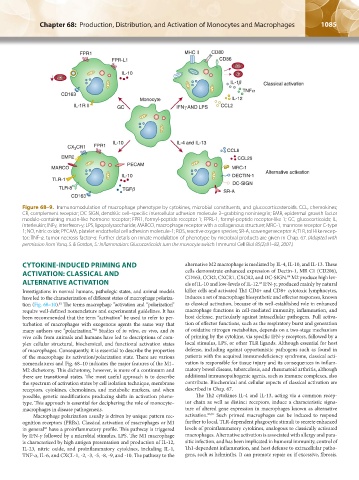
                  Figure 68–9.  Immunomodulation of macrophage phenotype by cytokines, microbial constituents, and glucocorticosteroids. CCL, chemokines;
                  CR, complement receptor; DC-SIGN, dendritic cell–specific intercellular adhesion molecule-3–grabbing nonintegrin; EMR, epidermal growth factor
                  module-containing mucin-like hormone receptor; FPR1, formyl-peptide receptor 1; FPRL-1, formyl-peptide receptor-like 1; GC, glucocorticoids; IL,
                  interleukin; INFγ, interferon-γ; LPS, lipopolysaccharide; MARCO, macrophage receptor with a collagenous structure; MRC-1, mannose receptor C-type
                  1; NO, nitric oxide; PECAM, platelet endothelial cell adhesion molecule-1; ROS, reactive oxygen species; SR-A, scavenger receptor A; TLR, toll-like recep-
                  tor; TNF-α, tumor necrosis factor-α. Further details on innate modulation of phenotype by microbial products are given in Chap. 67. (Adapted with
                  permission from Yona, S. & Gordon, S.: Inflammation: Glucocorticoids turn the monocyte switch. Immunol Cell Biol 85(2):81–82, 2007.)


                  CYTOKINE-INDUCED PRIMING AND                          alternative M2 macrophage is mediated by IL-4, IL-10, and IL-13. These
                  ACTIVATION: CLASSICAL AND                             cells demonstrate enhanced expression of Dectin-1, MR C1 (CD206),
                                                                        CD163, CCR2, CXCR1, CXCR2, and DC-SIGN.  M2 produce high lev-
                                                                                                           84
                  ALTERNATIVE ACTIVATION                                els of IL-10 and low-levels of IL-12.  IFN-γ, produced mainly by natural
                                                                                                 85
                  Investigations in normal humans, pathologic states, and animal models   killer cells and activated Th1 CD4+ and CD8+ cytotoxic lymphocytes,
                  have led to the characterization of different states of macrophage polariza-  induces a set of macrophage biosynthetic and effector responses, known
                  tion (Fig. 68–10).  The terms macrophage “activation and “polarization”   as classical activation, because of its well-established role in enhanced
                              81
                  require well-defined nomenclature and experimental guidelines. It has   macrophage functions in cell-mediated immunity, inflammation, and
                  been recommended that the term “activation” be used to refer to per-  host defense, particularly against intracellular pathogens. Full activa-
                  turbation of macrophages with exogenous agents the same way that   tion of effector functions, such as the respiratory burst and generation
                  many authors use “polarization.”  Studies of in vitro, ex vivo, and in   of oxidative nitrogen metabolites, depends on a two-stage mechanism
                                          82
                  vivo cells from animals and humans have led to descriptions of com-  of priming by the cytokine, via specific IFN-γ receptors, followed by a
                  plex cellular structural, biochemical, and functional activation states   local stimulus, LPS, or other TLR ligands. Although essential for host
                  of macrophages. Consequently, it is essential to describe the properties   defense,  including against  opportunistic  pathogens such as found in
                  of the macrophage its activation/polarization state. There are various   patients with the acquired immunodeficiency syndrome, classical acti-
                  nomenclatures and Fig. 68–10 indicates the major features of the M1–  vation is responsible for tissue injury and its consequences in inflam-
                  M2 dichotomy. This dichotomy, however, is more of a continuum and   matory bowel disease, tuberculosis, and rheumatoid arthritis, although
                  there are transitional states. The most useful approach is to describe   additional immunopathogenic agents, such as immune complexes, also
                  the spectrum of activation states by cell isolation technique, membrane   contribute. Biochemical and cellular aspects of classical activation are
                  receptors, cytokines, chemokines, and metabolic markers, and when   described in Chap. 67.
                  possible, genetic modifications producing shifts in activation pheno-  The Th2 cytokines IL-4 and IL-13, acting via a common recep-
                  type. This approach is essential for deciphering the role of monocyte–  tor chain as well as distinct receptors, induce a characteristic signa-
                  macrophages in disease pathogenesis.                  ture of altered gene expression in macrophages known as alternative
                     Macrophage polarization usually is driven by unique pattern rec-  activation. 86,87  Such primed macrophages can be induced to respond
                  ognition receptors (PRRs). Classical activation of macrophages or M1   further to local, TLR-dependent phagocytic stimuli to secrete enhanced
                  in general  have a proinflammatory profile. This pathway is triggered   levels of proinflammatory cytokines, analogous to classically activated
                         83
                  by IFN-γ followed by a microbial stimulus, LPS. The M1 macrophage   macrophages. Alternative activation is associated with allergy and para-
                  is characterized by high antigen presentation and production of IL-12,   sitic infection, and has been implicated in humoral immunity, control of
                  IL-23, nitric oxide, and proinflammatory cytokines, including IL-1,   Th1-dependent inflammation, and host defense to extracellular patho-
                  TNF-α, IL-6, and CXCL-1, -2, -3, -5, -8, -9, and -10. The pathway to the   gens, such as helminths. It can promote repair or, if excessive, fibrosis.


          Kaushansky_chapter 68_p1075-1088.indd   1085                                                                  9/17/15   3:42 PM

