


Page 1267 - Williams Hematology ( PDFDrive )
P. 1267
1242           Part IX:  Lymphocytes and Plasma Cells                                                                                Chapter 81:  Hematologic Manifestations of Acquired Immunodeficiency Syndrome               1243


               B and C. 46,47  Finally, the long-term effects of chronic immune activa-  improved all-cause survival, ART preserves renal function in those with
               tion and persistent inflammation is likely a factor in the development   HIV-associated nephropathy,  slows the progression of hepatic fibrosis
                                                                                           64
                                   45
               of coronary artery disease,  chronic liver disease, 47,48  and a hypercoag-  in those coinfected with hepatitis C, 65–68  decreases (but does not nor-
               ulable state 49–51  that is only partly corrected by the initiation of ART.   malize) markers of chronic inflammation  and may be associated with
                                                                                                    69
               These “aging effects” of HIV are likely to dominate the health issues for   reduced cardiovascular disease,  prevents the development of HIV-as-
                                                                                             70
               infected persons now that opportunistic infections are readily treated   sociated dementia, 71,72  and is highly effective in reducing mother-to-
               or avoided altogether through a combination of prophylaxis and ART.  child 73,74  and sexual transmission. 19,22,75  Adverse effects related to ART
                                                                      do occur but are less common with current regimens and can usually
                  THERAPY                                             be effectively managed with corrective treatments and by substitution
                                                                                                             76,77
                                                                                                                Similarly, the
                                                                      of the offending drug with an alternative medication.
               The story of ART from the first reports that zidovudine had activity   presence or development of drug resistance can usually be overcome by
               against HIV to the current formulary of drugs, including single-tablet,   the use of secondary or salvage ART regimens that are fully suppressive.
               fixed-dose, once-daily formulations, is one of the great achievements   At the current time, only rare patients who are fully adherent to ART
               in medicine. Early studies of zidovudine monotherapy demonstrated   fail to control HIV replication. Treatment of early and primary infection
               a delay to the development of AIDS and short-term mortality benefits   provides a unique opportunity to intervene and possibly alter the course
               but no long-term effect on survival; zidovudine also carried significant   of HIV infection. Several studies have demonstrated that treatment in
               toxicity. 52–57  Combination therapy with other nucleoside reverse tran-  early or primary HIV lowers the rate of disease progression if treatment
               scriptase inhibitors (nRTIs) proved slightly more effective than zidovu-  is subsequently interrupted 78–83  and may also limit the size of the latent
               dine alone, but not until combination nRTI was used with a third drug   HIV reservoir, 84–87  the impediment to curing patients. One interesting
               from another class, first nonnucleoside reverse transcriptase inhibitors   group of 14 patients initiated ART during primary infection and stayed
               (nnRTIs)  and then protease inhibitors, 59–62  were sustained viral sup-  on treatment for a median of 3 years and then controlled HIV repli-
                      58
                                                                                                              88
               pression and substantive, dramatic improvements in survival realized.    cation for a median of 7 years after ART interruption.  Finally, given
                                                                 63
               The recommended time to initiate ART has evolved in response to stud-  the high viral loads typical of primary HIV, these patients are thought
               ies demonstrating benefits of ART at high CD4 counts and improve-  to be highly infectious; therefore identifying them and initiating treat-
               ments in drug tolerability and  formulation.  Current Department of   ment should prevent transmission to their uninfected partners. One
               Health and Human Services (DHHS) guidelines suggest that all HIV-   consequence of initiating ART in the setting of a known or occult infec-
               infected persons be offered ART regardless of CD4 count, although the   tion is the development of an acute inflammatory reaction as a result
               strength of evidence supporting this recommendation varies by CD4   of reconstitution of the immune system in the presence of organisms
               count (Table 81–5 lists the criteria for initiating ART), while the World   or foreign antigens. 89–93  The immune reconstitution inflammatory syn-
               Health Organization sets a CD4 count threshold of 350 cells/μL for ini-  drome (IRIS) occurs in between 8 and 30 percent of patients who start
                                                                                                                        94
               tiating ART in more resource-limited countries. The rationale for these   ART, depending on the opportunistic infection and the timing of ART.
               expanded ART recommendations include the recognition that newer   Risk factors for the development of IRIS include a low baseline CD4
               therapies are more convenient, have fewer adverse effects and are asso-  count, more-severe disease and a short interval between treatment of
               ciated with lower rates of drug resistance. Furthermore, in addition to   the opportunistic infection and initiation of ART. The treatment of IRIS
                                                                      should include treatment of the underlying infection or condition, con-
                                                                      tinued ART, and antiinflammatory medication, such as corticosteroids,
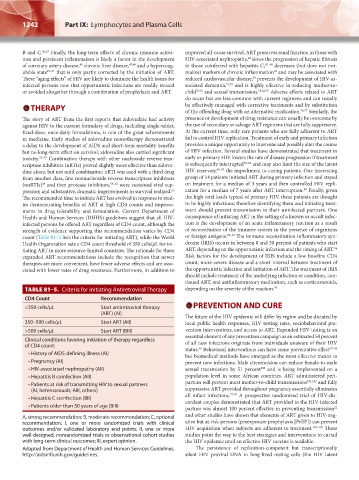
                TABLE 81–5.  Criteria for Initiating Antiretroviral Therapy  depending on the severity of the reaction. 95
                CD4 Count                 Recommendation
                <350 cells/μL             Start antiretroviral therapy   PREVENTION AND CURE
                                          (ART) (AI)
                                                                      The future of the HIV epidemic will differ by region and be dictated by
                350–500 cells/μL          Start ART (AII)             local public health responses, HIV testing rates, sociobehavioral pre-
                >500 cells/μL             Start ART (BIII)            vention interventions, and access to ART. Expanded HIV testing is an
                                                                      essential element of any prevention campaign as an estimated 50 percent
                Clinical conditions favoring initiation of therapy regardless    of all new infections originate from individuals unaware of their HIV
                of CD4 count:                                         status.  Behavioral interventions can have some preventative effect 97–99
                                                                           96
                 • History of AIDS-defining illness (AI)              but biomedical methods have emerged as the most effective means to
                 • Pregnancy (AI)                                     prevent new infections. Male circumcision can reduce female-to-male
                                                                                               100
                 • HIV-associated nephropathy (AII)                   sexual transmission by 51 percent  and is being implemented on a
                 • Hepatitis B coinfection (AII)                      population level in some African countries. ART administered peri-
                 • Patients at risk of transmitting HIV to sexual partners    partum will prevent most mother-to-child transmissions 101,102  and fully
                  (AI, heterosexuals; AIII, others)                   suppressive ART provided throughout pregnancy essentially eliminates
                 • Hepatitis C coinfection (BII)                      all infant infections. 73,74  A prospective randomized trial of HIV-dis-
                                                                      cordant couples demonstrated that ART provided to the HIV-infected
                 • Patients older than 50 years of age (BIII)
                                                                                                                        22
                                                                      partner was almost 100 percent effective in preventing transmission
               A, strong recommendation; B, moderate recommendation; C, optional   and other studies have shown that elements of ART given to HIV-neg-
               recommendation; I, one or more randomized trials with clinical     ative but at-risk persons (preexposure prophylaxis [PrEP]) can prevent
               outcomes and/or validated laboratory end points; II, one or more   HIV acquisition when subjects are adherent to treatment. 103–105  These
               well-designed, nonrandomized trials or observational cohort studies   studies point the way to the best strategies and interventions to curtail
               with long-term clinical outcomes; III, expert opinion.  the HIV epidemic until an effective HIV vaccine is available.
               Adapted from Department of Health and Human Services Guidelines.   The persistence of replication-competent but transcriptionally
               http://aidsinfo.nih.gov/guidelines.                    silent  HIV  proviral  DNA  in  long-lived  resting  cells  (the  HIV  latent


          Kaushansky_chapter 81_p1239-1260.indd   1242                                                                  9/21/15   11:18 AM

