


Page 1558 - Williams Hematology ( PDFDrive )
P. 1558
1532  Part XI:  Malignant Lymphoid Diseases                    Chapter 92:  Chronic Lymphocytic Leukemia             1533


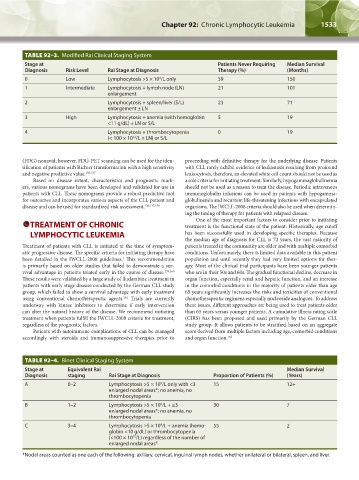
                   TABLE 92–3.  Modified Rai Clinical Staging System
                   Stage at                                                        Patients Never Requiring    Median Survival
                   Diagnosis    Risk Level    Rai Stage at Diagnosis               Therapy (%)             (Months)
                   0            Low           Lymphocytosis >5 × 10 /L only        59                      150
                                                                9
                   1            Intermediate  Lymphocytosis + lymph node (LN)      21                      101
                                              enlargement
                   2                          Lymphocytosis + spleen/liver (S/L)    23                     71
                                              enlargement ± LN
                   3            High          Lymphocytosis + anemia (with hemoglobin   5                  19
                                              <11 g/dL) ± LN or S/L
                   4                          Lymphocytosis + thrombocytopenia     0                       19
                                              (< 100 × 10 /L ± LN) or S/L
                                                       12


                  (FDG) nonavid; however, FDG-PET scanning can be used for the iden-  proceeding with definitive therapy for the underlying disease. Patients
                  tification of patients with Richter transformation with a high sensitivity   with CLL rarely exhibit evidence of leukostasis resulting from profound
                  and negative predictive value. 156,157                leukocytosis, therefore, an elevated white cell count should not be used as
                     Based on disease extent, characteristics and prognostic mark-  a sole criteria for initiating treatment. Similarly, hypogammaglobulinemia
                  ers, various nomograms have been developed and validated for use in   should not be used as a reason to treat the disease. Periodic intravenous
                  patients with CLL. These nomograms provide a robust predictive tool   immunoglobulin  infusions  can  be  used  in  patients  with  hypogamma-
                  for outcomes and incorporates various aspects of the CLL patient and   globulinemia and recurrent life-threatening infections with encapsulated
                  disease and can be used for standardized risk assessment. 136,137,158  organisms. The IWCLL-2008 criteria should also be used when determin-
                                                                        ing the timing of therapy for patients with relapsed disease.
                                                                            One of the most important factors to consider prior to initiating
                      TREATMENT OF CHRONIC                              treatment is the functional state of the patient. Historically, age cutoff
                    LYMPHOCYTIC LEUKEMIA                                has  been  successfully  used  in  developing  specific  therapies.  Because
                                                                        the median age of diagnosis for CLL is 72 years, the vast majority of
                  Treatment of patients with CLL is initiated at the time of symptom-  patients treated in the community are older and with multiple comorbid
                  atic progressive disease. The specific criteria for initiating therapy have   conditions. Unfortunately, there is limited data available in this patient
                  been detailed in the IWCLL-2008 guidelines.  This recommendation   population and until recently they had very limited options for ther-
                                                   1
                  is primarily based on older studies that failed to demonstrate a sur-  apy. Most of the clinical trial participants have been younger patients
                  vival advantage in patients treated early in the course of disease. 159,160    who are in their 50s and 60s. The gradual functional decline, decrease in
                  These results were validated by a large study of fludarabine treatment in   organ function, especially renal and hepatic function, and an increase
                  patients with early stage disease conducted by the German CLL study   in the comorbid conditions in the majority of patients older than age
                  group, which failed to show a survival advantage with early treatment   65 years significantly increases the risks and toxicities of conventional
                  using conventional chemotherapeutic agents.  Trials are currently   chemotherapeutic regimens especially nucleoside analogues. To address
                                                    161
                  underway  with  kinase  inhibitors  to  determine  if  early  intervention   these issues, different approaches are being used to treat patients older
                  can alter the natural history of the disease. We recommend initiating   than 65 years versus younger patients. A cumulative illness rating scale
                  treatment when patients fulfill the IWCLL-2008 criteria for treatment,   (CIRS) has been proposed and used primarily by the German CLL
                  regardless of the prognostic factors.                 study group. It allows patients to be stratified based on an aggregate
                     Patients with autoimmune complications of CLL can be managed   score derived from multiple factors including age, comorbid conditions
                  accordingly with steroids and immunosuppressive therapies prior to   and organ function. 162


                   TABLE 92–4.  Binet Clinical Staging System
                   Stage at      Equivalent Rai                                                            Median Survival
                   Diagnosis     staging       Rai Stage at Diagnosis             Proportion of Patients (%)  (Years)
                   A             0–2           Lymphocytosis >5 × 10 /L only with <3   15                  12+
                                                                9
                                               enlarged nodal areas*; no anemia, no
                                               thrombocytopenia
                   B             1–2           Lymphocytosis >5 × 10 /L + ≥3      30                       7
                                                                9
                                               enlarged nodal areas*; no anemia, no
                                               thrombocytopenia
                   C             3–4           Lymphocytosis >5 × 10 /L + anemia (hemo-  55                2
                                                                9
                                               globin <10 g/dL) or thrombocytopenia
                                               (<100 × 10 /L) regardless of the number of
                                                       12
                                               enlarged nodal areas*
                  *Nodal areas counted as one each of the following: axillary, cervical, inguinal lymph nodes, whether unilateral or bilateral, spleen, and liver.


          Kaushansky_chapter 92_p1527-1552.indd   1533                                                                  9/18/15   10:47 AM

