


Page 1877 - Williams Hematology ( PDFDrive )
P. 1877
1852           Part XII:  Hemostasis and Thrombosis                                                                                                      Chapter 112:  Platelet Morphology, Biochemistry, and Function           1853


                                                      rRNA-depleted preparation
                                                                                                           12000
                             1N1
                             2N2                                                                  10847
                             3N3                                                                           10000
                             4N4                                                                  9597
                                                                                                  9246
                                                                                                                 Number of platelet mRNAs
                             Average                                                              8547
                                                                                                  7993     8000
                                                                                                           6000


                                                                                                           4000


                                                                                                           2000

                                                                                                           0
                       5             0            –5           –10           –15          –20           –25
                                                   RNA-seq normalized reads, log  ratios
                                                                         2
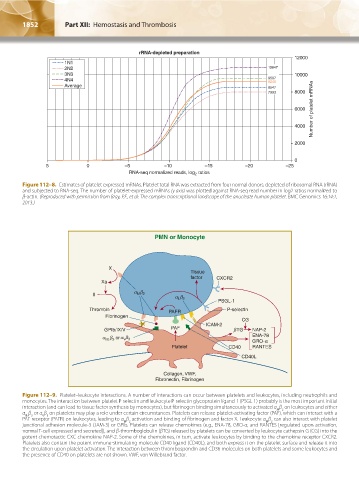
               Figure 112–8.  Estimates of platelet expressed mRNAs. Platelet total RNA was extracted from four normal donors, depleted of ribosomal RNA (rRNA)
               and subjected to RNA-seq. The number of platelet-expressed mRNAs (y axis) was plotted against RNA-seq read number in log2 ratios normalized to
               β-actin. (Reproduced with permission from Bray, P.F., et al: The complex transcriptional landscape of the anucleate human platelet. BMC Genomics 16;14:1,
               2013.)


                                                     a b
                                                      M 2
                                                                   a b
                                                                    L 2


                                                a b
                                                 v 3


               Figure 112–9.  Platelet–leukocyte interactions. A number of interactions can occur between platelets and leukocytes, including neutrophils and
               monocytes. The interaction between platelet P-selectin and leukocyte P-selectin glycoprotein ligand-1 (PSGL-1) probably is the most important initial
               interaction (and can lead to tissue factor synthesis by monocytes), but fibrinogen binding simultaneously to activated α β  on leukocytes and either
                                                                                                     M 2
               α β  or α β  on platelets may play a role under certain circumstances. Platelets can release platelet-activating factor (PAF), which can interact with a
                      V 3
                IIb 3
               PAF receptor (PAFR) on leukocytes, leading to α β  activation and binding of fibrinogen and factor X. Leukocyte α β  can also interact with platelet
                                                                                                 M 2
                                                 M 2
               junctional adhesion molecule-3 (JAM-3) or GPIb. Platelets can release chemokines (e.g., ENA-78, GRO-α, and RANTES [regulated upon activation,
               normal T-cell expressed and secreted]), and β-thromboglobulin (βTG) released by platelets can be converted by leukocyte cathepsin G (CG) into the
               potent chemotactic CXC chemokine NAP-2. Some of the chemokines, in turn, activate leukocytes by binding to the chemokine receptor CXCR2.
               Platelets also contain the potent immune-stimulating molecule CD40 ligand (CD40L), and both express it on the platelet surface and release it into
               the circulation upon platelet activation. The interaction between thrombospondin and CD36 molecules on both platelets and some leukocytes and
               the presence of CD40 on platelets are not shown. VWF, von Willebrand factor.


          Kaushansky_chapter 112_p1829-1914.indd   1852                                                                 17/09/15   3:27 pm

