


Page 2074 - Williams Hematology ( PDFDrive )
P. 2074
2048  Part XII:  Hemostasis and Thrombosis           Chapter 120:  Hereditary Qualitative Platelet Disorders         2049


                                            N                           in the remaining GPIbβ allele have included P96S and P29L. 236,237  In
                                                                        other studies of patients with the 22q11.2 deletion syndrome, modest
                                                                        reductions in platelet count and increases in platelet volume, as well as
                                                                        reduced platelet agglutination to ristocetin and decreased platelet GPIb/
                                                                        IX expression, have been variably reported, consistent with hemizygos-
                                                  Bernard-Soulier       ity for GPIbβ. 240–244
                      Leucine-                    syndrome mutations        A number of monoallelic, heterozygous mutations in the genes
                      rich                                              of the GPIb–IX complex have been described as causing macrothrom-
                      repeats                                           bocytopenia, some, but not all, of which have also been implicated in
                                                                        causing the biallelic form either because of homozygosity or compound
                                                   Platelet-type        heterozygosity.  These include a heterozygous mutation in the second
                                                                                   154
                                                   VWD
                                                                                           245
                                                   mutations            leucine-rich repeat (L57F)  in which the affected patients have mod-
                                                                        erate bleeding symptoms, moderate thrombocytopenia, and giant plate-
                                           Regulatory                   lets. Additional monoallelic mutations of GPIbα that appear to produce
                                           loop                         dominant effects are N41H  and Y54D. 247
                                                                                            246
                                                                            The “Bolzano” defect, which involves a mutation in the sixth
                                                                          leucine-rich repeat of GPIbα (A156V), results in a GPIbα molecule that
                                                                        has reduced ability to bind VWF, but can bind thrombin. It has been
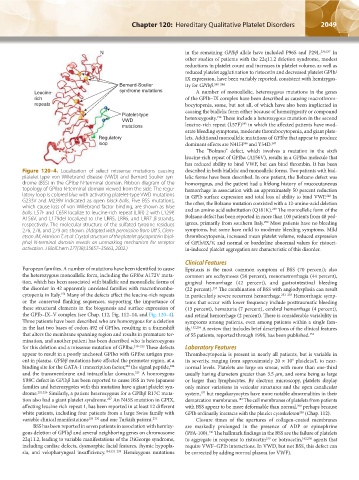
                  Figure 120–4.  Localization of select missense mutations causing   described in both biallelic and monoallelic forms. Two patients with bial-
                  platelet-type von Willebrand disease (VWD) and Bernard-Soulier syn-  lelic forms have been described. In one patient, the Bolzano defect was
                  drome (BSS) in the GPIbα N-terminal domain. Ribbon diagram of the   homozygous, and the patient had a lifelong history of mucocutaneous
                  topology of GPIbα N-terminal domain viewed from the side. The regu-  hemorrhage in association with an approximately 50 percent reduction
                  latory loop is colored blue with activating platelet-type VWD mutations   in GPIb surface expression and total loss of ability to bind VWF.  In
                                                                                                                        248
                  G233V and M239V indicated as open black balls. Five BSS mutations,   the other, the Bolzano mutation coexisted with a 12-amino-acid deletion
                  which cause loss of von Willebrand factor binding, are shown as blue   and an amino acid substitution (Q181K).  The monoallelic form of the
                                                                                                      249
                  balls. L57F and C65R localize to leucine-rich repeat (LRR) 2 with L129P,
                  A156V, and L179del localized to the LRR5, LRR6, and LRR7 β-strands,   Bolzano defect has been reported in more than 100 patients from 48 ped-
                                                                                                   250
                  respectively. The molecular structure of the sulfated tyrosine residues   igrees, primarily from southern Italy.  Most patients have no bleeding
                  276, 278, and 279 are shown. (Adapted with permission from Uff S, Clem-  symptoms, but some have mild to moderate bleeding symptoms. Mild
                  etson JM, Harrison T, et al: Crystal structure of the platelet glycoprotein Ib(al-  thrombocytopenia, increased mean platelet volume, reduced expression
                  pha) N-terminal domain reveals an unmasking mechanism for receptor   of GPIb/IX/V, and normal or borderline abnormal values for ristocet-
                  activation. J BiolChem 277(38):35657–35663, 2002.)    in-induced platelet aggregation are characteristic of this disorder.
                                                                        Clinical Features
                  European families. A number of mutations have been identified to cause   Epistaxis is the most common symptom of BSS (70 percent); also
                  the heterozygous monoallelic form, including the GPIbα A172V muta-  common are ecchymoses (58 percent), menometrorrhagia (44 percent),
                  tion, which has been associated with biallelic and monoallelic forms of   gingival hemorrhage (42 percent), and gastrointestinal bleeding
                  the disorder in 42 apparently unrelated families with macrothrombo-  (22 percent).  The combination of BSS with angiodysplasia can result
                                                                                  157
                  cytopenia in Italy.  Many of the defects affect the leucine-rich repeats   in particularly severe recurrent hemorrhage. 251–253  Hemorrhagic symp-
                               154
                  or the conserved flanking sequences, supporting the importance of   toms that occur with lower frequency include posttraumatic bleeding
                  these structural elements in the biogenesis and surface expression of   (13 percent), hematuria (7 percent), cerebral hemorrhage (4 percent),
                  the GPIb–IX–V complex (see Chap. 112, Fig. 112–14, and Fig. 120–4).   and retinal hemorrhage (2 percent). There is considerable variability in
                  Three patients have been described who are homozygous for a deletion   symptoms among patients, even among patients within a single fam-
                  in the last two bases of codon 492 of GPIbα, resulting in a frameshift   ily. 152,254  A review that includes brief descriptions of the clinical features
                  that alters the membrane spanning region and results in premature ter-  of 55 patients, reported through 1998, has been published. 152
                  mination, and another patient has been described who is heterozygous
                  for this deletion and a missense mutation of GPIbα. 219–222  These defects   Laboratory Features
                  appear to result in a poorly anchored GPIbα with GPIbα antigen pres-  Thrombocytopenia is present in nearly all patients, but is variable in
                  ent in plasma. GPIbβ mutations have affected the promoter region, at a   its severity, ranging from approximately 20 × 10  platelets/L to near-
                                                                                                            9
                  binding site for the GATA-1 transcription factor,  the signal peptide,    normal levels. Platelets are large on smear, with more than one-third
                                                    223
                                                                   224
                  and the transmembrane and intracellular domains.  A homozygous   usually having diameters greater than 3.5 μm, and some being as large
                                                        225
                  Y88C defect in GPIbβ has been reported to cause BSS in two Japanese   or larger than lymphocytes. By electron microscopy, platelets display
                  families and heterozygotes with this mutation have a giant platelet syn-  only minor variations in vesicular structures and the open canalicular
                  drome. 221,226  Similarly, a patient heterozygous for a GPIbβ R17C muta-  system,  but megakaryocytes have more notable abnormalities in their
                                                                              157
                  tion also had a giant platelet syndrome.  An N45S mutation in GPIX,   demarcation membranes.  The cell membranes of platelets from patients
                                              227
                                                                                          182
                  affecting leucine rich repeat 1, has been reported in at least 12 different   with BSS appear to be more deformable than normal,  perhaps because
                                                                                                              208
                  white patients, including four patients from a large Swiss family with   GPIb ordinarily interacts with the platelet cytoskeleton  (Chap. 112).
                                                                                                               255
                  variable clinical manifestations 228–230  and one Turkish patient. 231  Closure times of the apertures of collagen-coated membranes
                     BSS has been reported in seven patients in association with hemizy-  are  markedly  prolonged in  the  presence  of  ADP  or  epinephrine
                  gous deletion of GPIbβ and several neighboring genes on chromosome   (PFA-100).  The hallmark findings in the BSS are the failure of platelets
                                                                                136
                  22q11.2, leading to variable manifestations of the DiGeorge syndrome,   to aggregate in response to ristocetin  or botrocetin, 162,256  agents that
                                                                                                    159
                  including cardiac defects, dysmorphic facial features, thymic hypopla-  require VWF–GPIb interactions. In VWD, but not BSS, this defect can
                  sia, and velopharyngeal insufficiency. 154,232–239  Hemizygous mutations   be corrected by adding normal plasma (or VWF).

          Kaushansky_chapter 120_p2039-2072.indd   2049                                                                 9/21/15   2:20 PM

