


Page 2316 - Williams Hematology ( PDFDrive )
P. 2316
2290               Part XII:  Hemostasis and Thrombosis                                                                                                                               Chapter 134:   Atherothrombosis: Disease Initiation, Progression, and Treatment                                        2291


                                                                                                 Old thrombus


                                                                                                      Critically stenotic  vulnerable plaque


                                                                        G


                                                                            Extensive  calcification  Calcium  nodule


                                                                        F                             Vulnerable plaque with  calcified nodule
                                                                                                 Leaking vasa vasorum/  angiogenesis


                                                                        E                             Vulnerable plaque with  intraplaque hemorrhage
                                      ypes of Vulnerable Plaque

                                                                          Nonocclusive  mural thrombin/  fibrin  Intact cap


                                                                                                      Eroded  vulnerable plaque
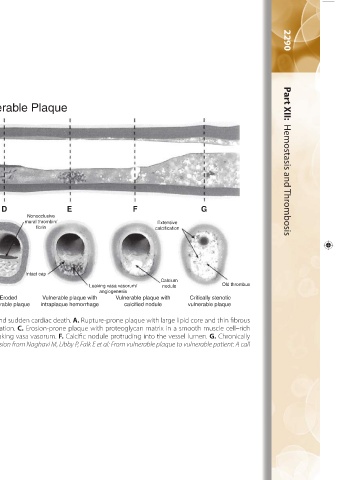
                                                                        D                                    Different types of vulnerable plaque as underlying cause of acute coronary events and sudden cardiac death. A. Rupture-prone plaque with large lipid core and thin fibrous


                                                                               Platelets        Proteoglycans   cap infiltrated by macrophages. B. Ruptured plaque with subocclusive thrombus and early organization. C. Erosion-prone plaque with proteoglycan matrix in a smooth muscle cell–rich  plaque. D. Eroded plaque with subocclusive thrombus. E. Intraplaque hemorrhage secondary to leaking vasa vasorum. F. Calcific nodule protruding into the vessel lumen. G. Chronically  stenotic plaque with severe calcification, old thrombus, and eccentric lumen. (Reproduced with permission from Naghavi M, Libby P, Falk E et al: From vulnerable plaque


                                                                                                      Erosion-prone  vulnerable plaque

                                                                        C
                                      Different  T                        Dysfunctional  endothelium  Smooth  muscle cells


                                                                        B                             Ruptured/healing  vulnerable plaque
                                                                                                Ruptured  cap

                                                                            Nonocclusive  clot  Collagen  Large lipid  cone  for new definitions and risk assessment strategies: Part I. Circulation 108(14):1664–1672, 2003.)


                                                                        A                             Rupture-prone  vulnerable plaque


                                                                                            Macrophage  Thin cap


                                                                                                             Figure 134–6.
                                                                                                      Normal


    Kaushansky_chapter 134_p2281-2302.indd   2290                                                                                                      17/09/15   3:49 pm

