


Page 2333 - Williams Hematology ( PDFDrive )
P. 2333
2306  Part XII:  Hemostasis and Thrombosis                      Chapter 135:  Fibrinolysis and Thrombolysis          2307


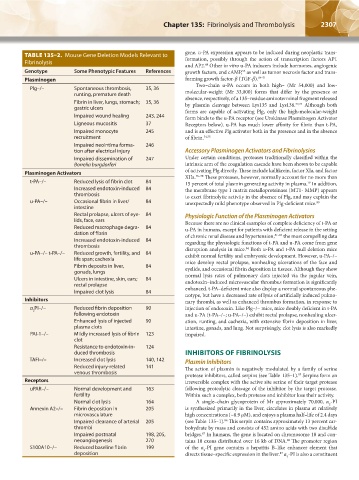
                   TABLE 135–2.  Mouse Gene Deletion Models Relevant to   gene. u-PA expression appears to be induced during neoplastic trans-
                   Fibrinolysis                                         formation,  possibly  through  the  action  of  transcription  factors  AP1
                                                                               68
                                                                        and AP2.  Other in vitro u-PA inducers include hormones, angiogenic
                   Genotype        Some Phenotypic Features  References  growth factors, and cAMP,  as well as tumor necrosis factor and trans-
                                                                                            55
                   Plasminogen                                          forming growth factor-β (TGF-β). 69–71
                                                                            Two–chain u-PA occurs in both high– (Mr 54,000) and low-
                     Plg–/–        Spontaneous thrombosis,   35, 36
                                   runting, premature death             molecular-weight (Mr 33,000) forms that differ by the presence or
                                   Fibrin in liver, lungs, stomach;  35, 36   absence, respectively, of a 135–residue aminoterminal fragment released
                                                                                                                 Although both
                                                                        by plasmin cleavage between Lys135 and Lys136.
                                                                                                             72,73
                                   gastric ulcers                       forms are capable of activating Plg, only the high-molecular-weight
                                   Impaired wound healing  243, 244     form binds to the u-PA receptor (see Urokinase Plasminogen Activator
                                   Ligneous mucositis      37           Receptors below). u-PA has much lower affinity for fibrin than t-PA,
                                   Impaired monocyte       245          and is an effective Plg activator both in the presence and in the absence
                                   recruitment                          of fibrin. 74,75
                                   Impaired neointima forma-  246
                                   tion after electrical injury         Accessory Plasminogen Activators and Fibrinolysins
                                   Impaired dissemination of   247      Under certain conditions, proteases traditionally classified within the
                                   Borrelia burgdorferi                 intrinsic arm of the coagulation cascade have been shown to be capable
                   Plasminogen Activators                               of activating Plg directly. These include kallikrein, factor XIa, and factor
                                                                                These proteases, however, normally account for no more than
                                                                        XIIa.
                                                                            76–78
                     t-PA–/–       Reduced lysis of fibrin clot  84     15 percent of total plasmin generating activity in plasma.  In addition,
                                                                                                                 79
                                   Increased endotoxin-induced  84      the membrane type 1 matrix metalloproteinase (MT1- MMP) appears
                                   thrombosis                           to exert fibrinolytic activity in the absence of Plg, and may explain the
                     u-PA–/–       Occasional fibrin in liver/  84      unexpectedly mild phenotype observed in Plg-deficient mice. 80
                                   intestine
                                   Rectal prolapse, ulcers of eye-  84  Physiologic Function of the Plasminogen Activators
                                   lids, face, ears                     Because there are no clinical examples of complete deficiency of t-PA or
                                   Reduced macrophage degra-  84        u-PA in humans, except for patients with deficient release in the setting
                                   dation of fibrin                     of chronic renal disease and hypertension, 81–83  the most compelling data
                                   Increased endotoxin-induced  84      regarding the physiologic functions of t-PA and u-PA come from gene
                                   thrombosis                           disruption analysis in mice.  Both u-PA and t-PA null deletion mice
                                                                                             84
                     u-PA–/– t-PA–/–  Reduced growth, fertility, and  84  exhibit normal fertility and embryonic development. However, u-PA–/–
                                   life span; cachexia                  mice develop rectal prolapse, nonhealing ulcerations of the face and
                                   Fibrin deposits in liver,   84       eyelids, and occasional fibrin deposition in tissues. Although they show
                                   gonads, lungs                        normal lysis rates of pulmonary clots injected via the jugular vein,
                                   Ulcers in intestine, skin, ears;   84  endotoxin–induced microvascular thrombus formation is significantly
                                   rectal prolapse
                                   Impaired clot lysis     84           enhanced. t-PA–deficient mice also display a normal spontaneous phe-
                                                                        notype, but have a decreased rate of lysis of artificially induced pulmo-
                   Inhibitors                                           nary thrombi, as well as enhanced thrombus formation, in response to
                     α PI–/–       Reduced fibrin deposition   90       injection of endotoxin. Like Plg–/– mice, mice doubly deficient in t-PA
                     2
                                   following endotoxin                  and u-PA (t-PA–/–; u-PA–/–) exhibit rectal prolapse, nonhealing ulcer-
                                   Enhanced lysis of injected   90      ation, runting, and cachexia, with extensive fibrin deposition in liver,
                                   plasma clots                         intestine, gonads, and lung. Not surprisingly, clot lysis is also markedly
                     PAI-1–/–      Mildly increased lysis of fibrin  123  impaired.
                                   clot
                                   Resistance to endotoxin-in-  124
                                   duced thrombosis                     INHIBITORS OF FIBRINOLYSIS
                     TAFI–/–       Increased clot lysis    140, 142     Plasmin Inhibitors
                                   Reduced injury-related   141         The action of plasmin is negatively modulated by a family of serine
                                   venous thrombosis                    protease inhibitors, called serpins (see Table  135–1).  Serpins form an
                                                                                                              85
                   Receptors                                            irreversible complex with the active site serine of their target protease
                     uPAR–/–       Normal development and   163         following proteolytic cleavage of the inhibitor by the target protease.
                                   fertility                            Within such a complex, both protease and inhibitor lose their activity.
                                   Normal clot lysis       164              A single–chain glycoprotein of Mr approximately 70,000,  α -PI
                                                                                                                         2
                     Annexin A2–/–  Fibrin deposition in   205          is synthesized primarily in the liver, circulates in plasma at relatively
                                   microvasculature                     high concentrations (~0.9 μM), and enjoys a plasma half–life of 2.4 days
                                                                                      86
                                   Impaired clearance of arterial  205  (see Table  135–1).  This serpin contains approximately 13 percent car-
                                   thrombi                              bohydrate by mass and consists of 452 amino acids with two disulfide
                                   Impaired postnatal      198, 205,    bridges.  In humans, the gene is located on chromosome 18 and con-
                                                                              87
                                   neoangiogenesis         270          tains 10 exons distributed over 16 kb of DNA.  The promoter region
                                                                                                           88
                     S100A10–/–    Reduced baseline fibrin   199        of the  α -PI gene contains a hepatitis B–like enhancer element that
                                                                               2
                                   deposition                           directs tissue–specific expression in the liver.  α -PI is also a constituent
                                                                                                        87
                                                                                                          2


          Kaushansky_chapter 135_p2303-2326.indd   2307                                                                 9/18/15   5:13 PM

