


Page 239 - Williams Hematology ( PDFDrive )
P. 239
214            Part IV:  Molecular and Cellular Hematology                                                                                                Chapter 16:  Cell-Cycle Regulation and Hematologic Disorders             215


                                               M

                                                    cdk1
                                          Cyclin B
                                                                p21  p15   p16  p18
                                                        P
                                    cdc25B   P
                                                 Cyclin B                Cyclin
                                                       cdk1            D1, D2, D3  cdk4, 6
                                   P                               P
                      G 2   Cyclin B        P                  p107       P       P                G 1
                                    Cyclin B
                          cdk1            cdk1  P  Rb               E2F p107  Rb      P   Cyclin E PCNA
                                                                                           cdk2
                          P                                               E2F
                             Cyclin A                                                 P
                      Cyclin A     cdk1      Rb                                    Rb
                                     P    E2F           Transcription                                           G 0
                         P                                factors
                                                         (e.g., E2F)
                           cdc25    Activation of p53 and                            p21  p21
                                    p73 by DNA damage

                                         p73
                                              p53           Cyclin A          Cyclin H
                                                        P
                                                            cdk2               cdk7
                               p21                                          P
                                                                        cdk2
                                                            Cyclin A
                                             MDM2     P                              Cyclin E
                                                                                      cdk2
                                              p14

                                                         cdc25


                                            S

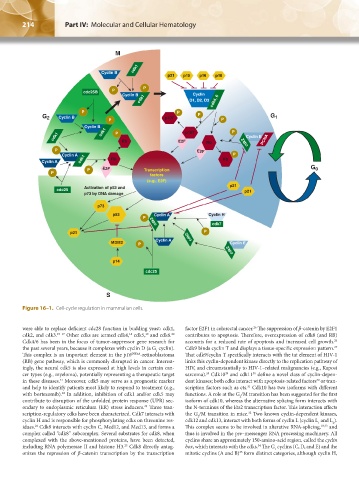
               Figure 16–1.  Cell-cycle regulation in mammalian cells.


               were able to replace deficient cdc28 function in budding yeast: cdk1,   factor E2F1 in colorectal cancer.  The suppression of β-catenin by E2F1
                                                                                             26
               cdk2, and cdk3. 15–17  Other cdks are termed cdk4,  cdk5,  and cdk6.    contributes to apoptosis. Therefore, overexpression of cdk8 (and RB)
                                                                 20
                                                         19
                                                   18
               Cdk4/6 has been in the focus of tumor-suppressor gene research for   accounts for a reduced rate of apoptosis and increased cell growth.
                                                                                                                        26
               the past several years, because it complexes with cyclin D (a G  cyclin).   Cdk9 binds cyclin T and displays a tissue-specific expression pattern.
                                                                                                                        27
                                                            1
               This complex is an important element in the p16 INK4A -retinoblastoma   That cdk9/cyclin T specifically interacts with the tat element of HIV-1
               (RB) gene pathway, which is commonly disrupted in cancer. Interest-  links this cyclin-dependent kinase directly to the replication pathway of
               ingly, the neural cdk5 is also expressed at high levels in certain can-  HIV, and circumstantially to HIV-1–related malignancies (e.g., Kaposi
               cer types (e.g., myeloma), potentially representing a therapeutic target   sarcoma).  Cdk10  and cdk11  define a novel class of cyclin-depen-
                                                                                   29
                                                                                             30
                                                                             28
               in these diseases.  Moreover, cdk5 may serve as a prognostic marker   dent kinases; both cdks interact with apoptosis-related factors  or tran-
                            21
                                                                                                                  30
               and help to identify patients most likely to respond to treatment (e.g.,   scription factors such as ets.  Cdk10 has two isoforms with different
                                                                                           31
               with bortezomib).  In addition, inhibition of cdk1 and/or cdk5 may   functions. A role at the G /M transition has been suggested for the first
                             22
                                                                                        2
               contribute to disruption of the unfolded protein response (UPR) sec-  isoform of cdk10, whereas the alternative splicing form interacts with
               ondary  to  endoplasmic  reticulum  (ER)  stress  inducers.   Three  tran-  the N-terminus of the Ets2 transcription factor. This interaction affects
                                                        23
               scription-regulatory cdks have been characterized. Cdk7 interacts with   the G /M transition in mice.  Two known cyclin-dependent kinases,
                                                                                           32
                                                                          2
               cyclin H and is responsible for phosphorylating cdks on threonine res-  cdk12 and cdk13, interact with both forms of cyclin L (cyclin L  and L ).
                                                                                                                       2
                                                                                                                   1
               idues.  Cdk8 interacts with cyclin C, Med12, and Med13, and forms a   This complex seems to be involved in alterative RNA-splicing, 10,33  and
                    24
               complex called “cdk8” subcomplex. Several substrates for cdk8, when   thus is involved in the pre–messenger RNA processing machinery. All
               complexed with the above-mentioned proteins, have been detected,   cyclins share an approximately 150-amino-acid region, called the cyclin
               including RNA polymerase II and histone H3.  Cdk8 directly antag-  box, which interacts with the cdks.  The G  cyclins (C, D, and E) and the
                                                  25
                                                                                              34
                                                                                                    1
               onizes the repression of  β-catenin transcription by the transcription   mitotic cyclins (A and B)  form distinct categories, although cyclin H,
                                                                                        35
          Kaushansky_chapter 16_p0213-0246.indd   214                                                                   9/18/15   11:56 PM

