


Page 344 - Williams Hematology ( PDFDrive )
P. 344
318  Part V:  Therapeutic Principles        Chapter 22:  Pharmacology and  Toxicity of  Antineoplastic Drugs          319


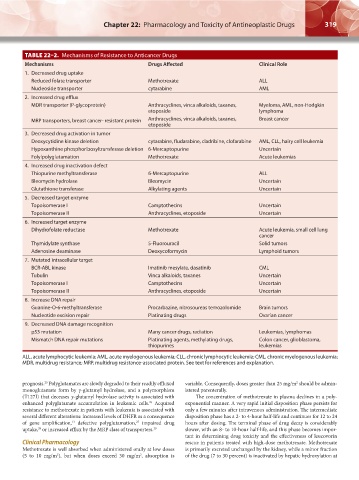
                   TABLE 22–2.  Mechanisms of Resistance to Anticancer Drugs
                   Mechanisms                               Drugs Affected                       Clinical Role
                   1.  Decreased drug uptake
                     Reduced folate transporter             Methotrexate                         ALL
                     Nucleoside transporter                 cytarabine                           AML
                   2.  Increased drug efflux
                     MDR transporter (P-glycoprotein)       Anthracyclines, vinca alkaloids, taxanes,   Myeloma, AML, non-Hodgkin
                                                            etoposide                            lymphoma
                     MRP transporters, breast cancer- resistant protein  Anthracyclines, vinca alkaloids, taxanes,   Breast cancer
                                                            etoposide
                   3.  Decreased drug activation in tumor
                     Deoxycytidine kinase deletion          cytarabine, fludarabine, cladribine, clofarabine  AML, CLL, hairy cell leukemia
                     Hypoxanthine phosphoribosyltransferase deletion 6-Mercaptopurine            Uncertain
                     Folylpolyglutamation                   Methotrexate                         Acute leukemias
                   4.  Increased drug inactivation defect
                     Thiopurine methyltransferase           6-Mercaptopurine                     ALL
                     Bleomycin hydrolase                    Bleomycin                            Uncertain
                     Glutathione transferase                Alkylating agents                    Uncertain
                   5.  Decreased target enzyme
                     Topoisomerase I                        Camptothecins                        Uncertain
                     Topoisomerase II                       Anthracyclines, etoposide            Uncertain
                   6.  Increased target enzyme
                     Dihydrofolate reductase                Methotrexate                         Acute leukemia, small cell lung
                                                                                                 cancer
                     Thymidylate synthase                   5-Fluorouracil                       Solid tumors
                     Adenosine deaminase                    Deoxycoformycin                      Lymphoid tumors
                   7.  Mutated intracellular target
                     BCR-ABL kinase                         Imatinib mesylate, dasatinib         CML
                     Tubulin                                Vinca alkaloids, taxanes             Uncertain
                     Topoisomerase I                        Camptothecins                        Uncertain
                     Topoisomerase II                       Anthracyclines, etoposide            Uncertain
                   8.  Increase DNA repair
                     Guanine-O-6-methyltransferase          Procarbazine, nitrosoureas temozolomide  Brain tumors
                     Nucleotide excision repair             Platinating drugs                    Ovarian cancer
                   9.  Decreased DNA damage recognition
                     p53 mutation                           Many cancer drugs, radiation         Leukemias, lymphomas
                     Mismatch DNA repair mutations          Platinating agents, methylating drugs,   Colon cancer, glioblastoma,
                                                            thiopurines                          leukemias
                  ALL, acute lymphocytic leukemia; AML, acute myelogenous leukemia; CLL, chronic lymphocytic leukemia; CML, chronic myelogenous leukemia;
                  MDR, multidrug resistance; MRP, multidrug resistance-associated protein. See text for references and explanation.


                         25
                                                                                                              2
                  prognosis.  Polyglutamates are slowly degraded to their readily effluxed   variable. Consequently, doses greater than 25 mg/m  should be admin-
                  monoglutamate form by  γ-glutamyl hydrolase, and a polymorphism   istered parenterally.
                  (T127I) that deceases γ-glutamyl hydrolase activity is associated with   The concentration of methotrexate in plasma declines in a poly-
                  enhanced polyglutamate accumulation in leukemic cells.  Acquired   exponential manner. A very rapid initial disposition phase persists for
                                                            26
                  resistance to methotrexate in patients with leukemia is associated with   only a few minutes after intravenous administration. The intermediate
                  several different alterations: increased levels of DHFR as a consequence   disposition phase has a 2- to 4-hour half-life and continues for 12 to 24
                                  13
                                                        27
                  of gene amplification,  defective polyglutamation,  impaired drug   hours after dosing. The terminal phase of drug decay is considerably
                       28
                  uptake,  or increased efflux by the MRP class of transporters. 29  slower, with an 8- to 10-hour half-life, and this phase becomes impor-
                                                                        tant in determining drug toxicity and the effectiveness of leucovorin
                  Clinical Pharmacology                                 rescue in patients treated with high-dose methotrexate. Methotrexate
                  Methotrexate is well absorbed when administered orally at low doses     is primarily excreted unchanged by the kidney, while a minor fraction
                  (5 to 10 mg/m ), but when doses exceed 30 mg/m , absorption is   of the drug (7 to 30 percent) is inactivated by hepatic hydroxylation at
                                                         2
                             2


          Kaushansky_chapter 22_p0313-0352.indd   319                                                                   9/18/15   10:24 PM

