


Page 355 - Williams Hematology ( PDFDrive )
P. 355
330            Part V:  Therapeutic Principles                                                                                                          Chapter 22:  Pharmacology and  Toxicity of  Antineoplastic Drugs           331


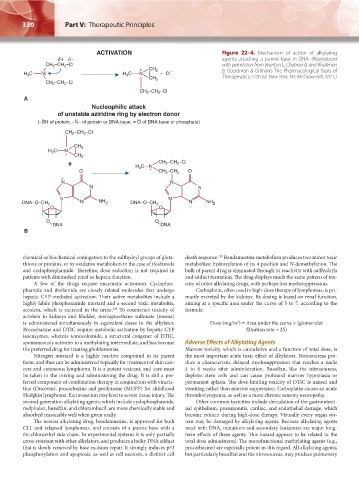
                                                                                  Figure 22–4.  Mechanism of action of alkylating
                                                                                  agents attacking a purine base in DNA. (Reproduced
                                                                                  with permission from Brunton L, Chabner B, and Knollman
                                                                                  B: Goodman & Gilman’s The Pharmacological Basis of
                                                                                  Therapeutics, 12th ed. New York, NY: McGraw-Hill; 2011.)


                    (–SH of protein, –N– of protein or DNA base, = O of DNA base or phosphate)


                chemical or biochemical conjugation to the sulfhydryl groups of gluta-  death response.  Bendamustine metabolism produces two minor toxic
                                                                                 130
                thione or proteins, or by oxidative metabolism in the case of ifosfamide   metabolites: hydroxylation of its 4 position and N-demethylation. The
                and cyclophosphamide. Therefore, dose reduction is not required in   bulk of parent drug is eliminated through its reactivity with sulfhydryls
                patients with diminished renal or hepatic function.   and adduct formation. The drug displays much the same pattern of tox-
                   A few of the drugs require enzymatic activation. Cyclophos-  icity of other alkylating drugs, with perhaps less myelosuppression.
                phamide and ifosfamide are closely related molecules that undergo   Carboplatin, often used in high-dose therapy of lymphomas, is pri-
                hepatic CYP-mediated activation. Their active metabolites include a   marily excreted by the kidneys. Its dosing is based on renal function,
                highly labile phosphoramide mustard and a second toxic metabolite,   aiming at a specific area under the curve of 5 to 7, according to the
                acrolein,  which is excreted in the urine.  To counteract toxicity  of   formula:
                                              129
                acrolein to kidneys and bladder, mercaptoethane sulfonate (mesna)
                is administered simultaneously in equivalent doses to the alkylator.   Dose (mg/m ) = Area under the curve × (glomerular
                                                                                       2
                Procarbazine and DTIC require metabolic activation by hepatic CYP          filtration rate + 25)
                isoenzymes,  whereas  temozolomide,  a  structural  congener  of  DTIC,
                spontaneously activates to a methylating intermediate, and has become   Adverse Effects of Alkylating Agents
                the preferred drug for treating glioblastomas.        Marrow toxicity, which is cumulative and a function of total dose, is
                   Nitrogen mustard is a highly reactive compound in its parent   the most important acute toxic effect of alkylators. Nitrosoureas pro-
                form, and thus can be administered topically for treatment of skin can-  duce a  characteristic  delayed myelosuppression that reaches  a nadir
                cers and cutaneous lymphoma. It is a potent vesicant, and care must   4 to 6 weeks after administration. Busulfan, like the nitrosoureas,
                be taken in the mixing and administering the drug. It is still a pre-  depletes stem cells and can cause profound marrow hypoplasia or
                ferred component of combination therapy in conjunction with vincris-  permanent aplasia. The dose-limiting toxicity of DTIC is nausea and
                tine (Oncovin), procarbazine and prednisone (MOPP) for childhood   vomiting rather than marrow suppression. Carboplatin causes an acute
                Hodgkin lymphoma. Extravasation may lead to severe tissue injury. The   thrombocytopenia, as well as a more chronic sensory neuropathy.
                second-generation alkylating agents, which include cyclophosphamide,   Other common toxicities include denudation of the gastrointesti-
                melphalan, busulfan, and chlorambucil, are more chemically stable and   nal epithelium, pneumonitis, cardiac, and endothelial damage, which
                absorbed reasonably well when given orally.           become evident during high-dose therapy. Virtually every organ sys-
                   The newest alkylating drug, bendamustine, is approved for both   tem may be damaged by alkylating agents. Because alkylating agents
                CLL and relapsed lymphomas, and consists of a purine base with a   react with DNA, mutations and secondary leukemias are major long-
                bis-chloroethyl side chain. In experimental systems it is only partially   term effects of these agents. This hazard appears to be related to the
                cross-resistant with other alkylators, and produces a bulky DNA adduct   total dose administered. The monofunctional methylating agents (e.g.,
                that is slowly removed by base excision repair. It strongly induces p53   procarbazine) are especially potent in this regard. All alkylating agents,
                phosphorylation and apoptosis, as well as cell necrosis, a distinct cell   but particularly busulfan and the nitrosoureas, may produce pulmonary


          Kaushansky_chapter 22_p0313-0352.indd   330                                                                   9/18/15   10:25 PM

