


Page 356 - Williams Hematology ( PDFDrive )
P. 356
330  Part V:  Therapeutic Principles        Chapter 22:  Pharmacology and  Toxicity of  Antineoplastic Drugs          331


                  fibrosis. The nitrosoureas also cause nephrotoxicity, particularly after   Table   22–4, which shows the fraction of the single-agent MTD that
                  total doses of 1200 mg/m  BCNU, whereas cyclophosphamide and   can be administered in combination with other drugs. As might be
                                      2
                  ifosfamide cause chronic bladder toxicity, hemorrhage, and, in rare   expected, this fraction is quite variable depending on the drug combi-
                  cases, bladder carcinomas. Urinary toxicity of the latter two agents is   nations, with the average fractional MTD used in combination ranging
                  prevented by coadministration of mesna, a sulfhydryl that detoxifies   from 0.5 to 1. Depending on the regimen, significant gastrointestinal,
                  acrolein at acid pH.                                  pulmonary, hepatic, and/or renal toxicities are encountered and become
                                                                        dose   limiting. For these reasons, high-dose regimens are safest in
                  High-Dose Alkylating Agent Therapy                    patients who are younger (<70 years) and who have had minimal prior
                  The development of hematopoietic cell transplantation has made  it   chemotherapy and radiation therapy.
                  possible  to  administer  doses  of  chemotherapy  that  would  otherwise
                  produce life-threatening aplasia. To be of benefit, however, high-     AGENTS OF DIVERSE MECHANISMS
                  dose therapy must employ agents that have a relatively steep dose–
                  response relationship. The drugs used must not have lethal extramed-  BLEOMYCIN
                  ullary toxicity at high doses. Among the classes of cytotoxics, alkylators
                  have a particularly favorable linear relationship between dose and cyto-  Bleomycin is a mixture of cytotoxic peptides produced by the fungus
                                                                                         143
                  toxicity in experimental tumor systems. Extramedullary organ toxicities   Streptomyces verticillis.  Because it has antitumor activity with minimal
                  are infrequent until doses are increased manyfold, making them ideal   marrow toxicity, it is commonly used as part of combination regimens
                  candidates for high-dose regimens. Depending on the agent and the   (such as ABVD) to treat Hodgkin lymphoma and with cisplatin and
                  toxicity profile, doses may only be escalated by as little as twofold as   vinblastine to treat germ cell tumors. Bleomycin acts by causing both
                  seen with cisplatin because of renal toxicity, or to as high as 18-fold   single- and double-strand breaks in DNA. These breaks form as a con-
                  in the case of thiotepa (Table 22–3). 131–137  However, when agents are   sequence of a bleomycin–Fe (II) complex that binds to DNA and under-
                  combined into a high-dose regimen, overlapping extramedullary   goes redox cycling with molecular oxygen. The drug’s reactive complex
                    toxicities of the agents must be considered so as to avoid serious organ   abstracts a proton from deoxyribose, leading to cleavage of the sugar at
                                                                                   144
                  compromise (Table 22–4). 138–142  Overlapping extramedullary toxicities   the 3′-carbon.  In experimental tumors, resistance to bleomycin has
                    (particularly the risk of pulmonary or hepatic dysfunction or second-  been attributed to increased tumor cell concentrations of an aminohy-
                                                                                                        145
                  ary leukemia) cannot be completely avoided, but rational drug selection   drolase that cleaves and inactivates the drug.  Some resistant cell lines
                  can minimize the dose reductions of the individual agents, compared to   exhibit enhanced capacity to repair strand breaks, and in others, resis-
                  their single-agent maximum tolerated dose (MTD), while at the same   tance results from decreased drug accumulation. Additional factors,
                  time ensuring safety of the combination regimen. This is illustrated in    such as increased free radical detoxification, may also influence toxicity.
                                                                        The tumor specificity of bleomycin, its severe cutaneous and pulmonary
                                                                        toxicity, and its lack of toxicity to marrow and the gastrointestinal tract
                                                                        may be a result of widely differing levels of metal ions and bleomycin
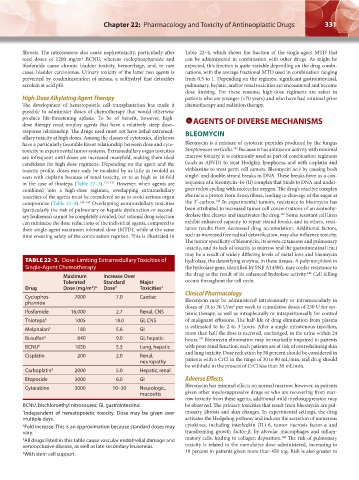
                   TABLE 22–3.  Dose-Limiting Extramedullary Toxicities of   hydrolase, the detoxifying enzyme, in these tissues. A polymorphism in
                   Single-Agent Chemotherapy                            the hydrolase gene, identified by SNP A1450G, may confer resistance to
                                                                                                                 146
                                Maximum      Increase Over              the drug as the result of its enhanced hydrolase activity.  Cell killing
                                Tolerated    Standard    Major          occurs throughout the cell cycle.
                   Drug         Dose (mg/m )*  Dose †    Toxicities ‡
                                         2
                   Cyclophos-      7000          7.0     Cardiac        Clinical Pharmacology
                                                                        Bleomycin may be administered intravenously or intramuscularly in
                   phamide
                                                                        doses of 10 to 20 U/m  per week to cumulative doses of 250 U for sys-
                                                                                        2
                   Ifosfamide     16,000         2.7     Renal, CNS     temic therapy, as well as intrapleurally or intraperitoneally for control
                   Thiotepa §      1005          18.0    GI, CNS        of malignant effusions. The half-life of drug elimination from plasma
                                                                        is estimated to be 2 to 3 hours. After a single intravenous injection,
                   Melphalan §      180          5.6     GI
                                                                        more than half the dose is excreted, unchanged, in the urine within 24
                   Busulfan §       640          9.0     GI, hepatic    hours.  Bleomycin elimination may be markedly impaired in patients
                                                                             147
                   BCNU §          1050          5.3     Lung, hepatic  with poor renal function; such patients are at risk of overwhelming skin
                                                                        and lung toxicity. Dose reduction by 50 percent should be considered in
                   Cisplatin        200          2.0     Renal,
                                                         neuropathy     patients with a CrCl in the range of 30 to 80 mL/min, and drug should
                                                                        be withheld in the present of CrCl less than 30 mL/min.
                   Carboplatin §   2000          5.0     Hepatic, renal
                   Etoposide       3000          6.0     GI             Adverse Effects
                                                                        Bleomycin has minimal effects on normal marrow; however, in patients
                   Cytarabine      3000         10–30    Neurologic,
                                                         mucositis      given other myelosuppressive drugs or who are recovering from mar-
                                                                        row toxicity from these agents, additional mild myelosuppression may
                  BCNU, bischloroethyl nitrosourea; GI, gastrointestinal.  be observed. The primary toxicities that result from bleomycin are pul-
                  * Independent  of  hematopoietic  toxicity.  Dose  may  be  given  over   monary fibrosis and skin changes. In experimental settings, the drug
                  multiple days.                                        activates the Hedgehog pathway and induces the secretion of numerous
                  † Fold increase. This is an approximation because standard doses may   cytokines, including interleukin (IL)-6, tumor necrosis factor-α and
                  vary.                                                 transforming growth factor-β, by alveolar macrophages and inflam-
                                                                                                         148
                  ‡ All drugs listed in this table cause vascular endothelial damage and   matory cells, leading to collagen deposition.  The risk of pulmonary
                  venoocclusive disease, as well as late secondary leukemias.  toxicity is related to the cumulative dose administered, increasing to
                  § With stem cell support.                             10 percent in patients given more than 450 mg. Risk is also greater in


          Kaushansky_chapter 22_p0313-0352.indd   331                                                                   9/18/15   10:25 PM

