


Page 365 - Williams Hematology ( PDFDrive )
P. 365
340            Part V:  Therapeutic Principles                                                                                                          Chapter 22:  Pharmacology and  Toxicity of  Antineoplastic Drugs           341


                                             CH 2
                                             N
                              CH 3
                        H
                   N    N
                                             N
                      N

                             HN
                                          CH SO H
                                               2
                                            2
                      N          O
                Imatinib


                HO
                         N                                   Cl
                                            H           O
                               N            N    S
                                                         N            H O
                                                                       2
                                  N     N      N         H
                                                           H C          CI          CI
                                                            3
                                     CH 3
                Dasatinib
                                                                         O          NH
                                                                            N                   O
                                             H 3 C
                                                    N
                                                                                    N           O            N
                                                   N                                                                N
                                                                      Bosutinib
                                                                2
                                          O                HCL, H O
                              H
                        N     N
                                             N          CF 3
                                             H                                               H
                           N                                                                 N
                             H C                                         N
                              2
                                                                               N               O                    N
                                                                                                                N
                                                                                    F      F                  N
                     N
                                                                                       F
                Nilotinib                                             Ponatinib
               A                                                     B
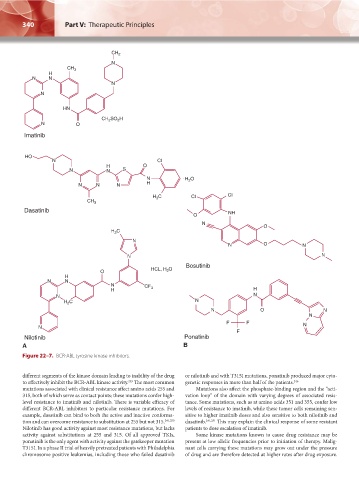
               Figure 22–7.  BCR-ABL tyrosine kinase inhibitors.


               different segments of the kinase domain leading to inability of the drug   or nilotinib and with T315I mutations, ponatinib produced major cyto-
               to effectively inhibit the BCR-ABL kinase activity.  The most common   genetic responses in more than half of the patients. 246
                                                   249
               mutations associated with clinical resistance affect amino acids 255 and   Mutations also affect the phosphate-binding region and the “acti-
               315, both of which serve as contact points; these mutations confer high-  vation loop” of the domain with varying degrees of associated resis-
               level resistance to imatinib and nilotinib. There is variable efficacy of   tance. Some mutations, such as at amino acids 351 and 355, confer low
               different BCR-ABL inhibitors to particular resistance mutations. For   levels of resistance to imatinib, while these tumor cells remaining sen-
               example, dasatinib can bind to both the active and inactive conforma-  sitive to higher imatinib doses and also sensitive to both nilotinib and
               tion and can overcome resistance to substitution at 255 but not 315. 241,250    dasatinib. 241,251  This may explain the clinical response of some resistant
               Nilotinib has good activity against most resistance mutations, but lacks   patients to dose escalation of imatinib.
               activity against substitutions at 255 and 315. Of all approved TKIs,   Some kinase mutations known to cause drug resistance may be
               ponatinib is the only agent with activity against the gatekeeper mutation   present at low allelic frequencies prior to initiation of therapy. Malig-
               T315I. In a phase II trial of heavily pretreated patients with Philadelphia   nant cells carrying these mutations may grow out under the pressure
               chromosome positive leukemias, including those who failed dasatinib   of drug and are therefore detected at higher rates after drug exposure.


          Kaushansky_chapter 22_p0313-0352.indd   340                                                                   9/18/15   10:26 PM

