


Page 455 - Williams Hematology ( PDFDrive )
P. 455
430            Part V:  Therapeutic Principles                                                                                               Chapter 28:  Therapeutic Apheresis: Indications, Efficacy, and Complications          431


                TABLE 28–2.  Indications for Apheresis in Hematology: Indication Category Assignments and Recommendation
                Grades (Continued)
                                                                                                          ‡
                                                                                                     Grade  of
                Clinical Disorder                          Apheresis Procedure*   Indication Category †  Recommendation
                Immune thrombocytopenia (refractory)       TPE                    IV                 2C
                                                           IA                     III                2C
                Myeloma cast nephropathy                   TPE                    II                 2B
                Posttransfusion purpura                    TPE                    III                2C
                Sickle cell disease                        RBC exchange
                  Acute stroke                                                    I                  1C
                  Acute chest syndrome                                            II                 1C
                  Multiorgan failure                                              III                2C
                  Preoperative management                                         III                2A
                  Priapism                                                        III                2C
                  Sequestration syndrome (spleen, liver, cholestasis)             III                2C
                  Stroke prophylaxis                                              II                 1C
                  Vasoocclusive pain                                              III                2C
                Thrombocytosis                             Thrombocytapheresis
                  Symptomatic                                                     II                 2C
                  Prophylaxis (or secondary)                                      III                2C
                Thrombotic microangiopathy                 TPE
                  Hemopoietic stem cell transplant-related                        III                2C
                  Drug associated                                                 I                  1B
                    Ticlopidine                                                   III                2B
                   Clopidogrel                                                    III                2C
                   Calcineurin inhibitors                                         IV                 2C
                   Gemcitabine                                                    IV                 2C
                   Quinine                                                        I                  1A
                  Thrombotic thrombocytopenic purpura
               *Apheresis procedures: ECP, extracorporeal photochemotherapy (photopheresis); IA, immunoadsorption apheresis; MCP, monocyte chemoat-
               tractant protein; Str., streptococcal. TPE, therapeutic plasma exchange. NOTE: Leukocytapheresis, erythrocytapheresis, thrombocytapheresis
               refer to removal of white cells, red cells or platelets respectively by apheresis. RBC (red blood cell) exchange refers to apheresis removal of red
               blood cells and simultaneous replacement of removed red cells with donor red blood cells.
               † Indication categories: see Table 28–1 for definitions.
               ‡ Grade of recommendation: 1 = strong recommendation (i.e., “we recommend”); 2 = weak recommendation (i.e., “we suggest”). A = recommenda-
               tion based on high-quality published evidence; B = based on moderate-quality published evidence; C = based on low-quality published evidence.
               Adapted with permission from Schwartz J, Winters JL, Padmanabhan A: et al: Guidelines on the use of therapeutic apheresis in clinical
               practice-evidence-based approach from the Writing Committee of the American Society for Apheresis: the sixth special issue. J Clin Apher 28(3):
               145–284, 2013.

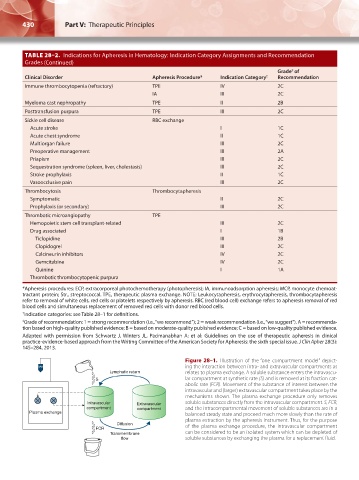
                                                                      Figure 28–1.  Illustration of the “one compartment model” depict-
                                                                      ing the interaction between intra- and extravascular compartments as
                                             Lymphatic return         relates to plasma exchange. A soluble substance enters the intravascu-
                                        S                             lar compartment at synthetic rate (S) and is removed at its fraction cat-
                                                                      abolic rate (FCR). Movement of the substance of interest between the
                                                                      intravascular and (larger) extravascular compartment takes place by the
                                                                      mechanisms shown. The plasma exchange procedure only removes
                                     Intravascular    Extravascular   soluble substances directly from the intravascular compartment. S, FCR,
                                     compartment      compartment     and the intracompartmental movement of soluble substances are in a
                  Plasma exchange                                     balanced steady state and proceed much more slowly than the rate of
                                                                      plasma extraction by the apheresis instrument. Thus, for the purpose
                                               Diffusion              of the plasma exchange procedure, the intravascular compartment
                                        FCR
                                             Transmembrane            can be considered to be an isolated system which can be depleted of
                                                 flow                 soluble substances by exchanging the plasma for a replacement fluid.


          Kaushansky_chapter 28_p0427-0436.indd   430                                                                   9/17/15   6:05 PM

