


Page 453 - Williams Hematology ( PDFDrive )
P. 453
428            Part V:  Therapeutic Principles                                                                                               Chapter 28:  Therapeutic Apheresis: Indications, Efficacy, and Complications          429


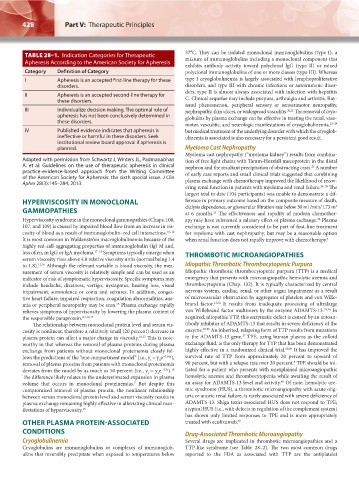
                TABLE 28–1.  Indication Categories for Therapeutic    37°C. They can be isolated monoclonal immunoglobulins (type I), a
                                                                      mixture of immunoglobulins including a monoclonal component that
                Apheresis According to the American Society for Apheresis
                                                                      exhibits antibody activity toward polyclonal IgG (type II) or mixed
                Category   Definition of Category                     polyclonal immunoglobulins of one or more classes (type III). Whereas
                I          Apheresis is an accepted first-line therapy for these   type I cryoglobulinemia is largely associated with lymphoproliferative
                           disorders.                                 disorders, and type III with chronic infections or autoimmune disor-
                                                                      ders, type II is almost always associated with infection with hepatitis
                II         Apheresis is an accepted second-line therapy for
                           these disorders.                           C. Clinical sequelae may include purpura, arthralgia and arthritis, Ray-
                                                                      naud  phenomenon,  peripheral  sensory  or  sensorimotor  neuropathy,
                III        Individualize decision making. The optimal role of   nephropathy, skin ulcers, or widespread vasculitis. 20,21  The removal of cryo-
                           apheresis has not been conclusively determined in   globulins by plasma exchange can be effective in treating the renal, vaso-
                           these disorders.
                                                                      motor, vasculitic, and neurologic manifestations of cryoglobulinemia, 22–24
                IV         Published evidence indicates that apheresis is   but medical treatment of the underlying disorder with which the cryoglob-
                           ineffective or harmful in these disorders. Seek   ulinemia is associated is also necessary for a persistent good result.
                           institutional review board approval if apheresis is
                           planned.                                   Myeloma Cast Nephropathy
                                                                      Myeloma cast nephropathy (“myeloma kidney”) results from combina-
               Adapted with permission from Schwartz J, Winters JL, Padmanabhan   tion of free light chains with Tamm-Horsfall mucoprotein in the distal
               A: et al: Guidelines on the use of therapeutic apheresis in clinical   nephron and the resultant precipitation of obstructing casts.  A number
                                                                                                                25
               practice-evidence-based approach from the  Writing Committee   of early case reports and small clinical trials suggested that combining
               of the American Society for Apheresis: the sixth special issue. J Clin
               Apher 28(3):145–284, 2013.                             plasma exchange with chemotherapy improved the likelihood of recov-
                                                                      ering renal function in patients with myeloma and renal failure. 26–30  The
                                                                      largest trial to date (104 participants) was unable to demonstrate a dif-
               HYPERVISCOSITY IN MONOCLONAL                           ference in primary outcome based on the composite measure of death,
                                                                                                                        2
               GAMMOPATHIES                                           dialysis dependence, or glomerular filtration rate below 30 mL/min/1.73 m
                                                                      at 6 months.  The effectiveness and rapidity of modern chemother-
                                                                               31
               Hyperviscosity syndrome in the monoclonal gammopathies (Chaps. 106,   apy may have subsumed a salutary effect of plasma exchange.  Plasma
                                                                                                                  32
               107, and 109) is caused by impaired blood flow from an increase in vis-  exchange is not currently considered to be part of first-line treatment
               cosity of blood as a result of immunoglobulin–red cell interactions. 10–12    for myeloma with cast nephropathy, but may be a reasonable option
               It is most common in Waldenström macroglobulinemia because of the   when renal function does not rapidly improve with chemotherapy. 4
               highly red-cell-aggregating properties of immunoglobulin (Ig) M and,
               less often, in IgG or IgA myeloma. 13–15  Symptoms typically emerge when   THROMBOTIC MICROANGIOPATHIES
               serum viscosity rises above 4.0 relative viscosity units (normal being 1.4
               to 1.8). 12,16  Although the relevant variable is blood viscosity, the mea-  Idiopathic Thrombotic Thrombocytopenic Purpura
               surement of serum viscosity is relatively simple and can be used as an   Idiopathic thrombotic thrombocytopenic purpura (TTP) is a medical
               indicator of risk of symptomatic hyperviscosity. Specific symptoms may   emergency that presents with microangiopathic hemolytic anemia and
               include  headache, dizziness,  vertigo,  nystagmus,  hearing  loss, visual   thrombocytopenia (Chap. 132). It is typically characterized by central
               impairment, somnolence or coma and  seizures. In addition, conges-  nervous system, cardiac, renal, or other organ impairment as a result
               tive heart failure, impaired respiration, coagulation abnormalities, ane-  of microvascular obstruction by aggregates of platelets and von Wille-
               mia or peripheral neuropathy may be seen.  Plasma exchange rapidly   brand factor. 33,34  It results from inadequate processing of ultralarge
                                               13
               relieves symptoms of hyperviscosity by lowering the plasma content of   von Willebrand factor multimers by the enzyme ADAMTS-13. 35,36  In
               the responsible paraprotein. 2,3,16,17                 acquired, idiopathic TTP, this enzymatic defect is caused by an autoan-
                   The relationship between monoclonal protein level and serum vis-  tibody inhibitor of ADAMTS-13 that results in severe deficiency of the
               cosity is nonlinear, therefore a relatively small (20 percent) decrease in   enzyme. 35,36  An inherited, relapsing form of TTP results from mutations
                                                                                         37
               plasma protein can affect a major change in viscosity. 10,17  This is note-  in the ADAMTS-13 gene.  TPE, using human plasma as the colloid
               worthy in that whereas the removal of plasma proteins during plasma   exchange fluid, is the only therapy for TTP that has been demonstrated
               exchange from patients without monoclonal proteinemia closely fol-  highly effective in a randomized clinical trial. 38,39  It has improved the
               lows the predictions of the “one compartment model” (i.e., y  = y e −0.94x ),   survival rate of TTP from approximately 20 percent to upward of
                                                          t
                                                             0
                                                                                                          8
               removal of plasma proteins from patients with monoclonal proteinemia   90 percent, but with a relapse rate over 30 percent.  TPE should be ini-
                                                                ).
               deviates from the model by as much as 50 percent (i.e., y  = y e −0.5x 18  tiated for a patient who presents with unexplained microangiopathic
                                                         t
                                                             0
               The difference likely relates to the underestimated expansion in plasma   hemolytic anemia and thrombocytopenia while awaiting the result of
                                                                                                      40
               volume that occurs in monoclonal proteinemias.  But despite this   an assay for ADAMTS-13 level and activity.  Of note, hemolytic ure-
                                                     7
               compromised removal of plasma protein, the nonlinear relationship   mic syndrome (HUS), a thrombotic microangiopathy with acute olig-
               between serum monoclonal protein level and serum viscosity results in   uric or anuric renal failure, is rarely associated with severe deficiency of
               plasma exchange remaining highly effective in alleviating clinical man-  ADAMTS-13. Shiga toxin-associated HUS does not respond to TPE;
               ifestations of hyperviscosity. 19                      atypical HUS (i.e., with defects in regulation of the complement system)
                                                                      has shown only limited responses to TPE and is more appropriately
               OTHER PLASMA PROTEIN-ASSOCIATED                        treated with eculizumab. 40
               CONDITIONS                                             Drug-Associated Thrombotic Microangiopathy
               Cryoglobulinemia                                       Several drugs are implicated in thrombotic microangiopathies and a
               Cryoglobulins  are  immunoglobulins  or  complexes  of  immunoglob-  TTP-like syndrome (see Table   28–2). The two most common drugs
               ulins that reversibly precipitate when exposed to temperatures below   reported to the FDA as associated with TTP are the antiplatelet


          Kaushansky_chapter 28_p0427-0436.indd   428                                                                   9/17/15   6:05 PM

