


Page 665 - Williams Hematology ( PDFDrive )
P. 665
640            Part VI:  The Erythrocyte                                                                                                                                      Chapter 43:  Iron Deficiency and Overload            641


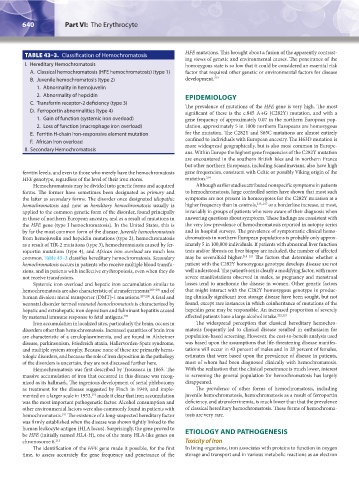
                TABLE 43–3.  Classification of Hemochromatosis        HFE mutations. This brought about a fusion of the apparently contrast-
                                                                      ing views of genetic and environmental causes. The penetrance of the
                I.   Hereditary Hemochromatosis                       homozygous state is so low that it could be considered an essential risk
                  A.  Classical hemochromatosis (HFE hemochromatosis) (type 1)  factor that required other genetic or environmental factors for disease
                  B.  Juvenile hemochromatosis (type 2)               development. 213
                    1.  Abnormality in hemojuvelin
                    2.  Abnormality of hepcidin                       EPIDEMIOLOGY
                  C.  Transferrin receptor-2 deficiency (type 3)      The prevalence of mutations of the HFE gene is very high. The most
                  D.  Ferroportin abnormalities (type 4)              significant of these is the c.845 A→G (C282Y) mutation, and with a
                    1.  Gain of function (systemic iron overload)     gene frequency of approximately 0.07 in the northern European pop-
                    2.  Loss of function (macrophage iron overload)   ulation, approximately 5 in 1000 northern Europeans are homozygous
                  E.  Ferritin H-chain iron-responsive element mutation  for the mutation. The C282Y and S65C mutations are almost entirely
                  F.  African iron overload                           confined to individuals with European ancestry. The H63D mutation is
                                                                      more widespread geographically, but is also most common in Europe-
                II. Secondary Hemochromatosis
                                                                      ans. Within Europe the highest gene frequencies of the C282Y mutation
                                                                      are encountered in the southern British Isles and in northern France
                                                                      but other northern Europeans, including Scandinavians, also have high
               ferritin levels, and even to those who merely have the hemochromatosis   gene frequencies, consistent with Celtic or possibly Viking origin of the
               HFE genotype, regardless of the level of their iron stores.  mutation. 214
                   Hemochromatosis may be divided into genetic forms and acquired   Although earlier studies attributed nonspecific symptoms in patients
               forms. The former have sometimes been designated as  primary and   to hemochromatosis, large controlled series have shown that most such
               the latter as secondary forms. The disorder once designated idiopathic   symptoms are not present in homozygotes for the C282Y mutation at a
               hemochromatosis  and  now  as  hereditary hemochromatosis  usually  is   higher frequency than in controls, 215–217  or a borderline increase, at most,
               applied to the common genetic form of the disorder, found principally   invariably in groups of patients who were aware of their diagnosis when
               in those of northern European ancestry, and as a result of mutations in   answering questions about symptoms. These findings are consistent with
               the HFE gene (type I hemochromatosis). In the United States, this is   the very low prevalence of hemochromatosis reported in autopsy series
               by far the most common form of the disease. Juvenile hemochromatosis   and in hospital surveys. The prevalence of symptomatic clinical hemo-
               from hemojuvelin and hepcidin mutations (type 2), hemochromatosis   chromatosis in northern European populations is probably only approx-
               as a result of TfR-2 mutations (type 3), hemochromatosis caused by fer-  imately 5 in 100,000 individuals. If patients with abnormal liver function
               roportin mutations (type 4), and African iron overload are much less   tests and/or fibrosis on liver biopsy are included, the number of affected
               common. Table 43–3 classifies hereditary hemochromatosis. Secondary   may be severalfold higher. 218–221  The factors that determine whether a
               hemochromatosis occurs in patients who receive multiple blood transfu-  patient with the C282Y homozygous genotype develops disease are not
               sions, and in patients with ineffective erythropoiesis, even when they do   well understood. The patient’s sex is clearly a modifying factor, with more
               not receive transfusions.                              severe manifestations observed in males, as pregnancy and menstrual
                   Systemic iron overload and hepatic iron accumulation similar to   losses tend to ameliorate the disease in women. Other genetic factors
               hemochromatosis are also characteristic of atransferrinemia 203–206  and of   that might interact with the C282Y homozygous genotype in produc-
               human divalent metal transporter (DMT)-1 mutations. 207,208  A fetal and   ing clinically significant iron storage disease have been sought, but not
               neonatal disorder termed neonatal hemochromatosis is characterized by   found, except rare instances in which coinheritance of mutations of the
               hepatic and extrahepatic iron deposition and fulminant hepatitis caused   hepcidin gene may be responsible. An increased proportion of severely
               by maternal immune response to fetal antigens. 209     affected patients have a large alcohol intake. 222,223
                   Iron accumulation in localized sites, particularly the brain, occurs in   The widespread perception that classical hereditary hemochro-
               disorders other than hemochromatosis. Increased quantities of brain iron   matosis frequently led to clinical disease resulted in enthusiasm for
               are characteristic of a ceruloplasminemia, and are found in Alzheimer   population-based screening. However, the cost-to-benefit analysis used
               disease, parkinsonism, Friedreich ataxia, Hallervorden-Spatz syndrome,   was based upon the assumptions that life-threatening disease manifes-
               and multiple system atrophy. Because none of these are primarily hema-  tations will occur in 43 percent of males and in 28 percent of females,
               tologic disorders, and because the role of iron deposition in the pathology   estimates that were based upon the prevalence of disease in patients,
               of the disorders is uncertain, they are not discussed further here.  most of whom had been diagnosed clinically with hemochromatosis.
                   Hemochromatosis was first described by Trousseau in 1865. The   With the realization that the clinical penetrance is much lower, interest
               massive accumulation of iron that occurred in this disease was recog-  in screening the general population for hemochromatosis has largely
               nized as its hallmark. The ingenious development of serial phlebotomy   disappeared.
               as treatment for the disease suggested by Finch in 1949, and imple-  The prevalence of other forms of hemochromatosis, including
               mented on a larger scale in 1952,  made it clear that iron accumulation   juvenile hemochromatosis, hemochromatosis as a result of ferroportin
                                       210
               was the most important pathogenetic factor. Alcohol consumption and   deficiency, and atransferrinemia, is much lower than that the prevalence
               other environmental factors were also commonly found in patients with   of classical hereditary hemochromatosis. These forms of hemochroma-
               hemochromatosis.  The existence of a long-suspected hereditary factor   tosis are very rare.
                             211
               was firmly established when the disease was shown tightly linked to the
               human leukocyte antigen (HLA locus). Surprisingly, the gene proved to
               be HFE (initially named HLA-H), one of the many HLA-like genes on   ETIOLOGY AND PATHOGENESIS
               chromosome 6. 212                                      Toxicity of Iron
                   The identification of the HFE gene made it possible, for the first   In living organisms, iron associates with proteins to function in oxygen
               time, to assess accurately the gene frequency and penetrance of the   storage and transport and in various metabolic reactions as an electron


          Kaushansky_chapter 43_p0627-0650.indd   640                                                                   9/17/15   6:27 PM

