


Page 751 - Williams Hematology ( PDFDrive )
P. 751
726 Part VI: The Erythrocyte Chapter 48: The Thalassemias: Disorders of Globin Synthesis 727
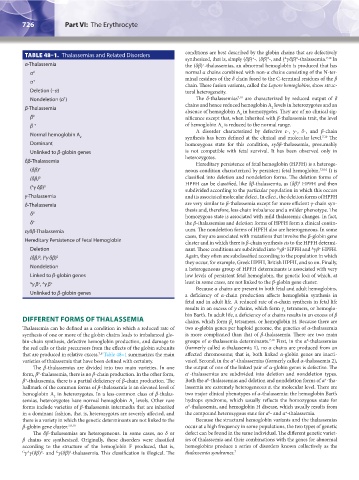
TABLE 48–1. Thalassemias and Related Disorders conditions are best described by the globin chains that are defectively
0
synthesized, that is, simply (δβ) -, (δβ) -, and ( γδβ) -thalassemia. In
A
7,10
+
0
α-Thalassemia the (δβ) -thalassemias, an abnormal hemoglobin is produced that has
+
α 0 normal α chains combined with non-α chains consisting of the N-ter-
minal residues of the δ chain fused to the C-terminal residues of the β
α +
chain. These fusion variants, called the Lepore hemoglobins, show struc-
Deletion (–α) tural heterogeneity.
7,10
T
Nondeletion (α ) The δ-thalassemias are characterized by reduced output of δ
chains and hence reduced hemoglobin A levels in heterozygotes and an
β-Thalassemia 2
absence of hemoglobin A in homozygotes. They are of no clinical sig-
2
β 0 nificance except that, when inherited with β-thalassemia trait, the level
β + of hemoglobin A is reduced to the normal range.
2
A disorder characterized by defective ε-, γ-, δ-, and β-chain
Normal hemoglobin A
7,10
2 synthesis has been defined at the clinical and molecular level. The
Dominant homozygous state for this condition, εγδβ-thalassemia, presumably
Unlinked to β-globin genes is not compatible with fetal survival. It has been observed only in
heterozygotes.
δβ-Thalassemia
Hereditary persistence of fetal hemoglobin (HPFH) is a heteroge-
(δβ) + neous condition characterized by persistent fetal hemoglobin. 7,9,10 It is
(δβ) 0 classified into deletion and nondeletion forms. The deletion forms of
HPFH can be classified, like δβ-thalassemia, as (δβ) HPFH and then
0
( γ δβ) 0
A
subdivided according to the particular population in which this occurs
γ-Thalassemia and its associated molecular defect. In effect, the deletion forms of HPFH
δ-Thalassemia are very similar to β-thalassemia except for more efficient γ-chain syn-
thesis and, therefore, less chain imbalance and a milder phenotype. The
δ 0
homozygous state is associated with mild thalassemic changes. In fact,
δ + the β-thalassemias and deletion forms of HPFH form a clinical contin-
εγδβ-Thalassemia uum. The nondeletion forms of HPFH also are heterogeneous. In some
cases, they are associated with mutations that involve the β-globin gene
Hereditary Persistence of Fetal Hemoglobin
cluster and in which there is β-chain synthesis cis to the HPFH determi-
Deletion nant. These conditions are subdivided into γβ HPFH and γβ HPFH.
G
+
A
+
(δβ) , ( γ δβ) 0 Again, they often are subclassified according to the population in which
A
0
they occur, for example, Greek HPFH, British HPFH, and so on. Finally,
Nondeletion a heterogeneous group of HPFH determinants is associated with very
Linked to β-globin genes low levels of persistent fetal hemoglobin, the genetic loci of which, at
G γ β , γ β + least in some cases, are not linked to the β-globin gene cluster.
+ A
Because α chains are present in both fetal and adult hemoglobins,
Unlinked to β-globin genes a deficiency of α-chain production affects hemoglobin synthesis in
fetal and in adult life. A reduced rate of α-chain synthesis in fetal life
results in an excess of γ chains, which form γ tetramers, or hemoglo-
4
bin Bart’s. In adult life, a deficiency of α chains results in an excess of β
DIFFERENT FORMS OF THALASSEMIA chains, which form β tetramers, or hemoglobin H. Because there are
4
Thalassemia can be defined as a condition in which a reduced rate of two α-globin genes per haploid genome, the genetics of α-thalassemia
synthesis of one or more of the globin chains leads to imbalanced glo- is more complicated than that of β-thalassemia. There are two main
bin-chain synthesis, defective hemoglobin production, and damage to groups of α-thalassemia determinants. First, in the α -thalassemias
7,10
0
the red cells or their precursors from the effects of the globin subunits (formerly called α-thalassemia 1), no α chains are produced from an
that are produced in relative excess. Table 48–1 summarizes the main affected chromosome; that is, both linked α-globin genes are inacti-
7,8
varieties of thalassemia that have been defined with certainty. vated. Second, in the α -thalassemias (formerly called α-thalassemia 2),
+
The β-thalassemias are divided into two main varieties. In one the output of one of the linked pair of α-globin genes is defective. The
form, β -thalassemia, there is no β-chain production. In the other form, α -thalassemias are subdivided into deletion and nondeletion types.
+
0
+
0
β -thalassemia, there is a partial deficiency of β-chain production. The Both the α -thalassemias and deletion and nondeletion forms of α -tha-
+
hallmark of the common forms of β-thalassemia is an elevated level of lassemia are extremely heterogeneous at the molecular level. There are
hemoglobin A in heterozygotes. In a less-common class of β-thalas- two major clinical phenotypes of α-thalassemia: the hemoglobin Bart’s
2
semias, heterozygotes have normal hemoglobin A levels. Other rare hydrops syndrome, which usually reflects the homozygous state for
2
forms include varieties of β-thalassemia intermedia that are inherited α -thalassemia, and hemoglobin H disease, which usually results from
0
+
0
in a dominant fashion, that is, heterozygotes are severely affected, and the compound heterozygous state for α - and α -thalassemia.
there is a variety in which the genetic determinants are not linked to the Because the structural hemoglobin variants and the thalassemias
β-globin gene cluster. 7,9,10 occur at a high frequency in some populations, the two types of genetic
The δβ-thalassemias are heterogeneous. In some cases, no δ or defect can be found in the same individual. The different genetic variet-
β chains are synthesized. Originally, these disorders were classified ies of thalassemia and their combinations with the genes for abnormal
according to the structure of the hemoglobin F produced, that is, hemoglobins produce a series of disorders known collectively as the
γ γ(δβ) - and γ(δβ) -thalassemia. This classification is illogical. The
G A 0 G 0 thalassemia syndromes. 7
Kaushansky_chapter 48_p0725-0758.indd 726 9/18/15 2:57 PM

