


Page 822 - Williams Hematology ( PDFDrive )
P. 822
796  Part VI:  The Erythrocyte           Chapter 50:  Methemoglobinemia and Other Dyshemoglobinemias                  797


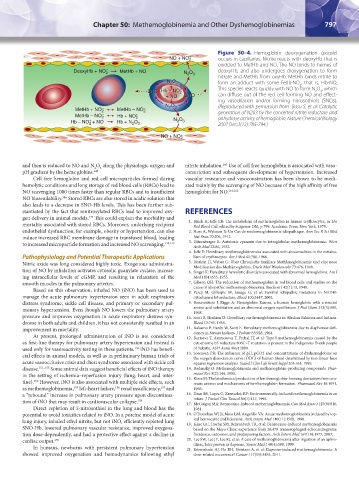
                                                                                   Figure 50–4.  Hemoglobin deoxygenation  (purple)
                                                                   NO + NO + 2     occurs in capillaries. Nitrite reacts with deoxyHb that is
                                                                                   oxidized to MetHb and NO. The NO binds to hemes of
                                   DeoxyHb + NO – 2  MetHb + NO         N O 3      deoxyHb, and also undergoes dioxygenation  to form
                                                                         2
                                                                  N 2 2  3 3       nitrate and MetHb from oxyHb. MetHb binds nitrite to
                                                                  N O O
                                                                                   form an adduct with some Fe(II)-NO , that is, Hb-NO.
                                                                                                               2
                                                            SNO Hb – NO  2   + +   This species reacts quickly with NO to form N O , which
                                                            SNO
                                                                                                                    2
                                                                                                                      3
                                                                Hgb – NO 2
                                                                        SNO
                                                                  + NO  SNO        can diffuse out of the red cell forming NO and effect-
                                                                  + NO
                                                                                   ing vasodilation and/or forming nitrosothiols (SNOs).
                                                                  N O O
                                                                  N                (Reproduced with permission from  Basu S, et al: Catalytic
                                   MetHb + NO 2 –  MetHb – NO 2 –  2 2  3 3        generation of N203 by the concerted nitrite reductase and
                                   MetHb – NO – 2  Hb + NO + 2                     anhydrase activity of hemoglobin, Nature Chemical Biology
                                        +
                                  Hb – NO + NO    Hb + N O 3        N O 3          2007 Dec;3(12):785-794.)
                                                                      2
                                        2
                                                       2
                                                                       +
                                                                NO + NO 2
                  and then is reduced to NO and N O  along the physiologic oxygen and   nitrite inhalation.  Use of cell free hemoglobin is associated with vaso-
                                                                                     160
                                            3
                                          2
                  pH gradient by the heme globins. 143                  constriction and subsequent development of hypertension. Increased
                     Cell free hemoglobin and red cell microparticles formed during   vascular resistance and vasoconstriction has been shown to be medi-
                  hemolytic conditions and long storage of red blood cells (RBCs) lead to   ated mainly by the scavenging of NO because of the high affinity of free
                  NO scavenging 1000 times faster than regular RBCs and to insufficient   hemoglobin for NO. 161,162
                  NO bioavailability.  Stored RBCs are also stored in acidic solution that
                               146
                  also leads to a decrease in SNO-Hb levels. This has been further sub-
                  stantiated by the fact that renitrosylated RBCs lead to improved oxy-  REFERENCES
                  gen delivery in animal models.  This could explain the morbidity and
                                        147
                  mortality associated with stored RBCs. Moreover, underlying recipient     1.  Hsieh H, Jaffe ER: The metabolism of methemoglobin in human erythrocytes, in The
                                                                           Red Blood Cell, edited by Surgenor DM, p 799. Academic Press, New York. 1975.
                  endothelial dysfunction, for example, obesity or hypertension, can also     2.  Sloss A, Wybauw R: Un Cas de methemoglobinemie idiopathique. Ann Soc R Sci Med
                  induce increased RBC membrane damage in transfused blood, leading   Nat Brux 70:206, 1912.
                  to increased microparticle formation and increased NO scavenging. 148,149    3.  Hitzenberger K: Autotoxic cyanosis due to intraglobular methemoglobinemia. Wien
                                                                           Arch Med 23:85, 1932.
                                                                          4.  Jaffe E: Hereditary methemoglobinemias associated with abnormalities in the metabo-
                  Pathophysiology and Potential Therapeutic Applications   lism of erythrocytes. Am J Med 41:786, 1966.
                  Nitric oxide was long considered highly toxic. Exogenous administra-    5.  Horlein H, Weber G: Über Chronische familiare Methämoglobinamie und eine neue
                                                                           Modification des Methämoglobins. Dtsch Med Wochenschr 73:476, 1948.
                  tion of NO by inhalation activates cytosolic guanylate cyclase, increas-    6.  Singer K: Hereditary hemolytic disorders associated with abnormal hemoglobins. Am J
                  ing intracellular levels of cGMP, and resulting in relaxation of the   Med 18(4):633, 1955.
                  smooth muscles in the pulmonary arteries.               7.  Gibson QH: The reduction of methaemoglobin in red blood cells and studies on the
                                                                           cause of idiopathic methaemoglobinaemia. Biochem J 42(1):13, 1948.
                     Based on this observation, inhaled NO (iNO) has been used to     8.  Percy M, Gillespie M, Savage G, et al: Familial idiopathic mutations in NADH-
                  manage the acute pulmonary hypertension seen in adult respiratory   cytochrome b5 reductase. Blood 100:3447, 2002.
                  distress syndrome, sickle cell disease, and primary or secondary pul-    9.  Bonaventura J, Riggs A: Hemoglobin Kansas, a human hemoglobin with a neutral
                  monary hypertension. Even though NO lowers the pulmonary artery   amino acid substitution and an abnormal oxygen equilibrium. J Biol Chem 243(5):980,
                                                                           1968.
                  pressure and improves oxygenation in acute respiratory distress syn-    10.  Scott E, Hoskins D: Hereditary methemoglobinemia in Alaskan Eskimos and Indians.
                  drome in both adults and children, it has not consistently resulted in an   Blood 13:795, 1958.
                  improvement in mortality.                               11.  Balsamo P, Hardy W, Scott E. Hereditary methemoglobinemia due to diaphorase defi-
                                                                           ciency in Navajo Indians. J Pediatr 65:928, 1964.
                     At present, prolonged administration of iNO is not considered     12.  Burtseva T, Ammosova T, Prchal JT, et al: Type I methemoglobinemia caused by the
                  as first-line therapy for pulmonary artery hypertension and instead is   cytochrome b5 reductase 806C>T mutation is present in the indigenous Evenk people
                  used only for vasoreactivity testing in these patients.  iNO has benefi-  of Yakutia. ASH Annu Meet 2009.
                                                       150
                  cial effects in animal models, as well as in preliminary human trials of     13.  Sorensen PR: The influence of pH, pCO2 and concentrations of dyshemoglobins on
                  acute vasoocclusive crisis and chest syndrome associated with sickle cell     the oxygen dissociation curve (ODC) of human blood determined by non-linear least
                                                                           squares regression analysis. Scand J Clin Lab Invest Suppl 203:163, 1990.
                  disease. 151–153  Some animal data suggest beneficial effects of iNO therapy     14.  Bodansky O: Methemoglobinemia and methemoglobin-producing compounds. Phar-
                  in the setting of ischemia–reperfusion injury (lung, heart, and intes-  macol Rev 3(2):144, 1951.
                  tine).  However, iNO is also associated with multiple side effects, such     15.  Kiese M: The biochemical production of ferrihemoglobin-forming derivatives from aro-
                      154
                                                                           matic amines and mechanisms of ferrihemoglobin formation. Pharmacol Rev 18:1091,
                  as methemoglobinemia,  left-heart failure,  renal insufficiency,  and   1966.
                                                 156
                                   155
                                                                157
                  a “rebound” increase in pulmonary artery pressure upon discontinua-    16.  Dean BS, Lopez G, Krenzelok EP: Environmentally-induced methemoglobinemia in an
                                                                           infant. J Toxicol Clin Toxicol 30(1):127, 1992.
                  tion of iNO that may result in cardiovascular collapse. 158    17.  McGuigan MA: Benzocaine-induced methemoglobinemia. Can Med Assoc J 125(8):816,
                     Direct repletion of S-nitrosothiol in the lung and blood has the   1981.
                  potential to avoid toxicities related to iNO. In a porcine model of acute     18.  O’Donohue WJ Jr, Moss LM, Angelillo VA: Acute methemoglobinemia induced by top-
                  lung injury, inhaled ethyl nitrite, but not iNO, efficiently repleted lung   ical benzocaine and lidocaine. Arch Intern Med 140(11):1508, 1980.
                  SNO-Hb, lowered pulmonary vascular resistance, improved oxygena-    19.  Kane GC, Hoehn SM, Behrenbeck TR, et al: Benzocaine-induced methemoglobinemia
                                                                           based on the Mayo Clinic experience from 28,478 transesophageal echocardiograms:
                  tion dose-dependently, and had a protective effect against a decline in   Incidence, outcomes, and predisposing factors. Arch Intern Med 167(18):1977, 2007.
                  cardiac output. 159                                     20.  Lee SW, Lee JY, Lee KJ, et al: A case of methemoglobinemia after ingestion of an aphro-
                                                                           disiac, later proven as dapsone. Yonsei Med J 40(4):388, 1999.
                     In humans, newborns with persistent pulmonary hypertension     21.  Esbenshade AJ, Ho RH, Shintani A, et al: Dapsone-induced methemoglobinemia: A
                  showed improved oxygenation and hemodynamics following ethyl   dose-related occurrence? Cancer 117(15):3485, 2011.
          Kaushansky_chapter 50_p0789-0800.indd   797                                                                   9/17/15   2:39 PM

